Common Mouse Ear Chickweed
Cerastium fontanum
Overview
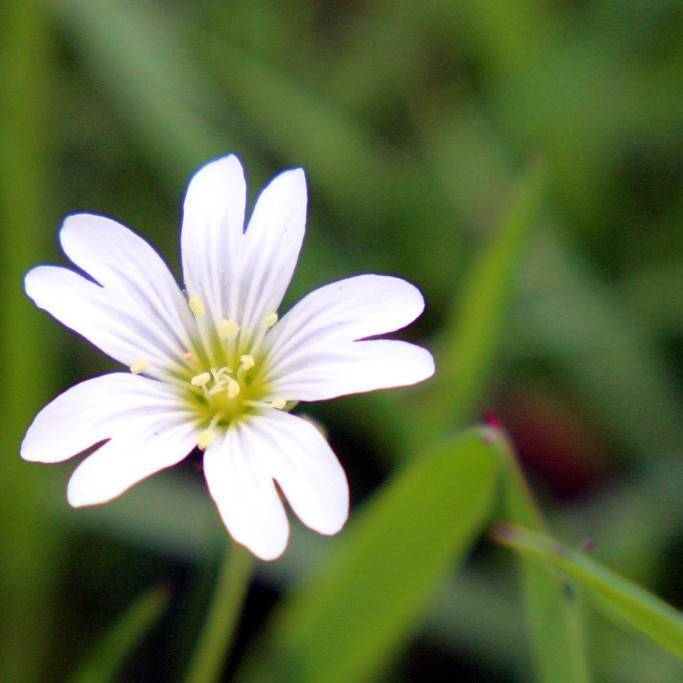
Common Mouse Ear Chickweed is a widespread, adaptive herbaceous plant recognizable by its soft, hairy, oval leaves that resemble a mouse’s ear, and its small, star-shaped white flowers with notched petals that bloom from spring to early fall. It spreads via creeping stems that root at nodes, forming dense, low mats that often thrive in cool, moist conditions, and it is frequently considered a common lawn weed in many temperate regions. Though sometimes viewed as a nuisance, it supports a range of pollinators including small bees, flies, and butterflies, and provides early spring forage for beneficial insects.
Care Guide
Watering
This drought-tolerant species prefers evenly moist, well-drained soil but can survive short dry spells once established, requiring only supplemental watering during extended periods of hot, dry weather. Overwatering or waterlogged soil will lead to root rot, so allow the top 1-2 inches of soil to dry out between waterings, and avoid overhead watering to reduce foliage disease risk.
Light
It thrives in full sun to partial shade, performing best with at least 4 hours of direct sunlight daily to encourage dense growth and abundant flowering. In very hot, arid climates, it benefits from light afternoon shade to prevent leaf scorch and reduce moisture loss during the hottest parts of the day.
Soil
Common Mouse Ear Chickweed is highly adaptable to a wide range of soil types, including sandy, loamy, and clay soils, as well as poor, compacted soils common in lawns and disturbed areas. It prefers a neutral to slightly alkaline pH between 6.0 and 7.5, but will tolerate slightly acidic conditions as long as the soil drains well.
Fertilizer
This low-maintenance plant rarely requires fertilization, as it can thrive in low-nutrient soils, and overfertilization will lead to excessive, leggy growth that is more prone to pest and disease issues. If grown intentionally as a ground cover, a light application of balanced, slow-release fertilizer in early spring is sufficient to support healthy growth.
Temperature
It grows best in cool temperate climates, preferring temperatures between 50-75°F (10-24°C), and can tolerate light frosts down to 20°F (-7°C) without significant damage. In areas with hot, humid summers, it may go partially dormant during the hottest months, resuming active growth once temperatures cool in early fall.
Pruning
If grown as a ground cover, shear back the plants by one-third after the first major flush of flowering to encourage fresh, dense growth and prevent self-seeding if spread is unwanted. For lawns where it is considered a weed, regular mowing will prevent flowering and reduce its ability to spread, though it will tolerate very low mowing heights as low as 1 inch.
Propagation
It is most easily propagated by division in early spring or fall, when established mats can be pulled apart into smaller clumps and replanted directly into prepared soil. It also self-seeds readily under favorable conditions, and seeds can be sown directly outdoors in early spring after the last frost, germinating in 7-14 days at temperatures between 60-70°F (15-21°C).
Humidity
Common Mouse Ear Chickweed tolerates a wide range of humidity levels, from dry continental climates to moderately humid coastal regions, as long as there is adequate air circulation around the foliage. High humidity combined with poor air flow and wet foliage increases the risk of powdery mildew and other fungal diseases, so avoid overcrowding plants and ensure good ventilation in dense plantings.
Repotting
Rarely grown in containers, but if potted as a ground cover for patio planters, repot every 2-3 years in early spring to refresh the soil and prevent root binding. Use a standard, well-draining potting mix, and select a wide, shallow container to accommodate its spreading growth habit, ensuring the pot has adequate drainage holes to prevent waterlogging.
Uses & Symbolism
Common Mouse Ear Chickweed is often used as a low-growing, low-maintenance ground cover for rock gardens, edge plantings, and naturalized areas where it can spread freely without competing with more delicate plants. Its young, mild leaves are edible raw or cooked, often added to salads, soups, or stir-fries, and it has a long history of use in herbal medicine to treat minor skin irritations, inflammation, and digestive issues. It is also a valuable forage plant for pollinators, providing early-season nectar and pollen for small bees, butterflies, and other beneficial insects.
Diseases & Pests
The most common issues affecting Common Mouse Ear Chickweed are fungal diseases including powdery mildew and root rot, which occur primarily in overly wet, poorly drained conditions or when plants are grown in crowded, low-air-flow locations. Common pests include aphids and spider mites, which feed on the soft foliage, typically only causing damage during prolonged hot, dry weather or when plants are stressed. In lawn settings, it is often targeted by broadleaf herbicides, though it is resistant to many common selective weed killers when mature.
Related plants
Other plants you might like if you grow Common Mouse Ear Chickweed.