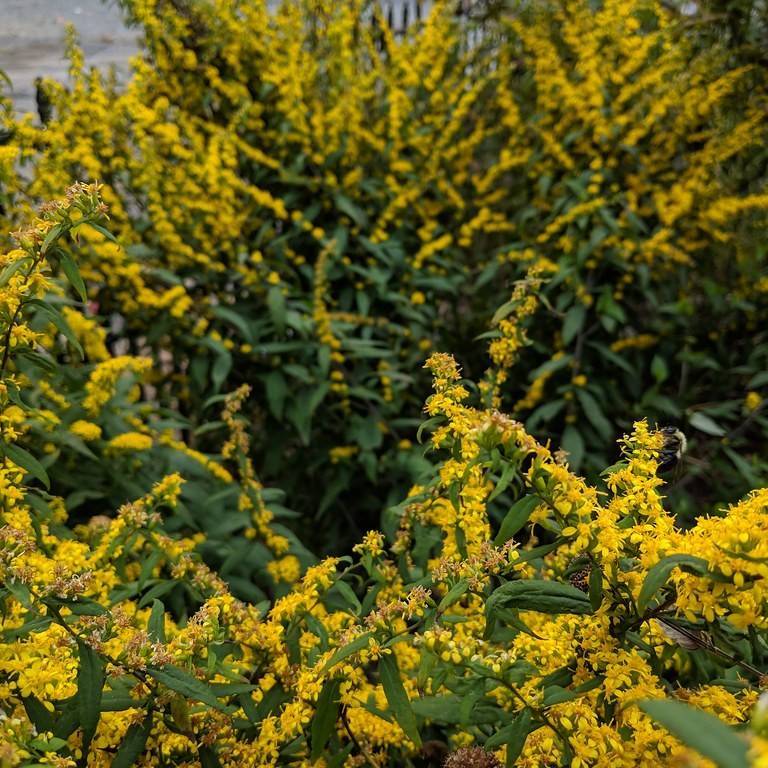
Blue Stem Goldenrod
Solidago caesia
Overview
Blue Stem Goldenrod, also called wreath goldenrod, is a clump-forming wildflower distinguished by its smooth, bluish-purple stems that arch gracefully as the plant matures. Unlike many taller goldenrod species, it has a compact, non-spreading growth habit, making it well-suited for small garden spaces. It produces dense clusters of tiny, bright yellow composite flowers along the upper half of its stems from late summer through mid-fall, a vital late-season nectar source for native pollinators.
Care Guide
Watering
Blue Stem Goldenrod prefers evenly moist, well-drained soil but is highly drought-tolerant once established, requiring only occasional watering during extended dry periods. Avoid overwatering or planting in waterlogged sites, as this can lead to root rot; allow the top 2 to 3 inches of soil to dry out between waterings for mature plants.
Light
This species thrives in full sun to partial shade, performing best with at least 4 to 6 hours of direct sunlight daily to support robust flowering. In hotter southern portions of its range, it benefits from light afternoon shade to prevent leaf scorch and reduce water stress during peak summer heat.
Soil
It adapts to a wide range of soil types, including sandy, loamy, and clay soils, as long as drainage is adequate. It tolerates neutral to slightly acidic pH levels and even thrives in poor, rocky soils where many other ornamental plants struggle, though it will grow more vigorously in moderately fertile soil.
Fertilizer
Blue Stem Goldenrod rarely requires supplemental fertilization, as it is adapted to low-nutrient native soils. Over-fertilization can lead to leggy, weak growth and reduced flowering; if grown in extremely poor soil, apply a thin layer of compost in early spring to provide gentle, slow-release nutrients.
Temperature
It is hardy in USDA zones 3 through 8, tolerating winter temperatures as low as -40°F (-40°C) without special protection. It withstands high summer temperatures up to 95°F (35°C) when provided with adequate moisture, though prolonged extreme heat may cause temporary wilting that recovers as temperatures cool.
Pruning
Pruning is minimal for this species; spent flower stems can be cut back to the ground in late fall after flowering finishes, or left standing through winter to provide seed for birds and shelter for beneficial insect pupae. If plants become leggy in partial shade, they can be pinched back by one-third in early summer to encourage bushier growth and more flower buds.
Propagation
Blue Stem Goldenrod is most easily propagated by division in early spring or late fall, when the plant is dormant; dig up mature clumps, split them into smaller sections with healthy roots, and replant immediately at the same depth they were growing. It can also be grown from seed sown directly outdoors in fall, or cold-stratified for 4 to 6 weeks and sown indoors in early spring, with germination occurring within 2 to 3 weeks.
Humidity
It tolerates a wide range of humidity levels, thriving in the moderate to high humidity common across its native eastern North American range, as well as drier conditions in the central portions of its distribution. No special humidity adjustments are needed for garden-grown plants, though good air circulation around foliage helps prevent fungal diseases in very humid climates.
Repotting
When grown in containers, repot Blue Stem Goldenrod every 2 to 3 years in early spring, before new growth emerges, using a well-draining general-purpose potting mix. Choose a pot with drainage holes that is 1 to 2 inches larger in diameter than the current container to accommodate root growth without holding excess moisture.
Uses & Symbolism
Blue Stem Goldenrod is a popular addition to native pollinator gardens, meadow plantings, and woodland edge landscapes, providing critical late-season nectar for bees, butterflies, and beneficial wasps. Its arching stems and bright yellow blooms make it a charming cut flower for fresh arrangements, and dried seed heads are often used in dried floral crafts. It is also planted for erosion control on sloped sites, as its fibrous root system holds soil effectively.
Diseases & Pests
Blue Stem Goldenrod is relatively pest and disease resistant, though it may occasionally be affected by powdery mildew or leaf spot in humid, poorly ventilated conditions, which can be mitigated by spacing plants to improve air circulation and avoiding overhead watering. Aphids and leaf beetles may feed on foliage in small numbers, but they rarely cause significant damage and can be controlled with insecticidal soap or left to be managed by natural predators like ladybugs. Rust fungi may also appear on leaves in wet weather, which can be addressed by removing and disposing of infected foliage to prevent spread.
Related plants
Other plants you might like if you grow Blue Stem Goldenrod.