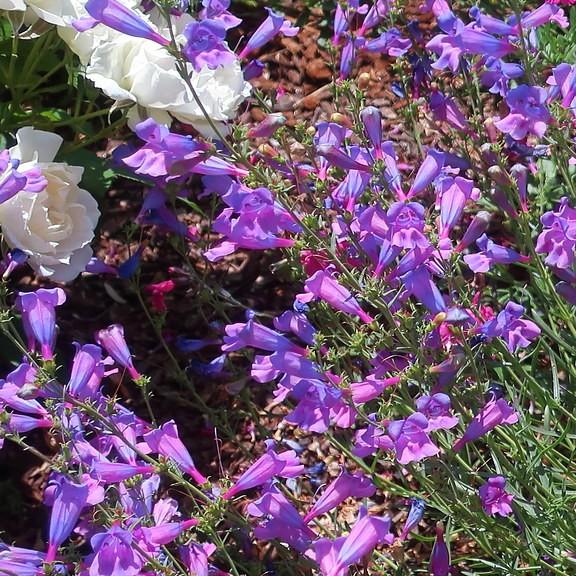
Foothill Penstemon
Penstemon heterophyllus
Overview
Foothill penstemon is a hardy, evergreen subshrub adapted to the dry, sunny conditions of western North American chaparral and oak woodland habitats. It produces narrow, glossy green foliage along upright to gently arching stems, with clusters of tubular, two-lipped flowers that bloom profusely from late spring through early summer. This species is widely valued in water-wise gardens for its low maintenance needs, vibrant floral display, and exceptional value to native pollinators.
Care Guide
Watering
Foothill penstemon is highly drought-tolerant once established, requiring only occasional deep watering during extended periods of hot, dry weather in its first 1-2 years of growth. Overwatering, especially in heavy or poorly draining soil, is the most common cause of decline, so allow the top several inches of soil to dry out completely between waterings. Reduce irrigation almost entirely during the winter dormant period to prevent root rot.
Light
This species thrives in full sun, requiring at least 6 hours of direct sunlight daily to produce dense foliage and abundant blooms. It can tolerate very light, dappled shade, but too much shade will lead to leggy growth, reduced flowering, and increased susceptibility to fungal disease. Plant in an unobstructed south or west-facing location for best performance.
Soil
Foothill penstemon requires sharply draining, low-fertility soil, ideally sandy, loamy, or gravelly with a neutral to slightly acidic pH. It is well-adapted to poor, rocky soils that hold minimal moisture, and will struggle in heavy clay or compacted soils that stay wet after rainfall. Amend heavy planting sites with coarse sand or gravel to improve drainage before installation.
Fertilizer
This native species is adapted to low-nutrient soils and rarely requires fertilization, which can encourage overly lush, weak growth and reduce flowering. If growth is particularly stunted, apply a dilute, balanced slow-release fertilizer once in early spring, at no more than half the recommended label rate. Avoid high-nitrogen fertilizers entirely, as they will prioritize foliage over blooms and reduce drought tolerance.
Temperature
Foothill penstemon is well-adapted to warm, dry climates, thriving in temperatures between 60-90°F (15-32°C) during its active growing season. It is winter hardy to USDA zones 7-10, tolerating occasional light frosts down to 10°F (-12°C) without significant damage. In cooler regions, provide a layer of mulch around the base in late fall to insulate roots from extreme cold.
Pruning
Prune back spent flower spikes to just above a set of healthy leaves immediately after blooming to encourage a second, lighter flush of flowers later in the season. In late winter or early spring, cut back woody stems by one-third to one-half to promote fresh, compact new growth and prevent the plant from becoming leggy or bare at the base. Remove any dead, damaged, or diseased stems at any time of year to maintain plant health.
Propagation
Foothill penstemon is most easily propagated from seed, which can be sown directly outdoors in fall or stratified for 3-4 weeks and sown indoors in early spring. Softwood cuttings taken from new, non-flowering growth in late spring or early summer root readily in well-draining potting mix with consistent light moisture. Division is not recommended for this species, as its woody root system does not tolerate disturbance well.
Humidity
This species prefers low to moderate humidity levels between 30-60%, typical of its native Mediterranean climate range. It struggles in high-humidity environments, where prolonged moisture on foliage can lead to powdery mildew and other fungal diseases. Ensure plants have ample air circulation by spacing them 2-3 feet apart from other vegetation to reduce humidity buildup around the foliage.
Repotting
Foothill penstemon is rarely grown in containers long-term, as it prefers to spread its deep root system in open garden soil. If grown in a pot, use a cactus or succulent potting mix with added perlite for extra drainage, and repot only when roots have completely filled the current container and are emerging from the drainage holes, typically every 2-3 years. Repot in early spring before new growth begins, taking care not to damage the fragile root system during the process.
Uses & Symbolism
Foothill penstemon is a staple in water-wise, native plant, and pollinator gardens, providing a critical nectar source for bumblebees, hummingbirds, and native solitary bees throughout its bloom period. Its compact, spreading habit makes it an excellent choice for rock gardens, slope stabilization, border edges, and dry meadow plantings, where its vibrant blue and purple flowers create a striking contrast with gray-green native foliage. It is also occasionally used in cut flower arrangements, as its long-lasting blooms hold up well in vases for up to a week.
Diseases & Pests
Foothill penstemon is relatively pest and disease resistant when grown in its preferred conditions, but overwatering and poor drainage can lead to fatal root rot and crown rot caused by Phytophthora and Pythium fungi. In high-humidity environments or with insufficient air circulation, powdery mildew may develop on foliage, which can be treated with neem oil or copper fungicide and prevented by avoiding overhead watering. Aphids and spider mites may occasionally infest new growth, and can be controlled with a strong jet of water or insecticidal soap.
Related plants
Other plants you might like if you grow Foothill Penstemon.