Green Arrow Arum
Peltandra virginica
Overview
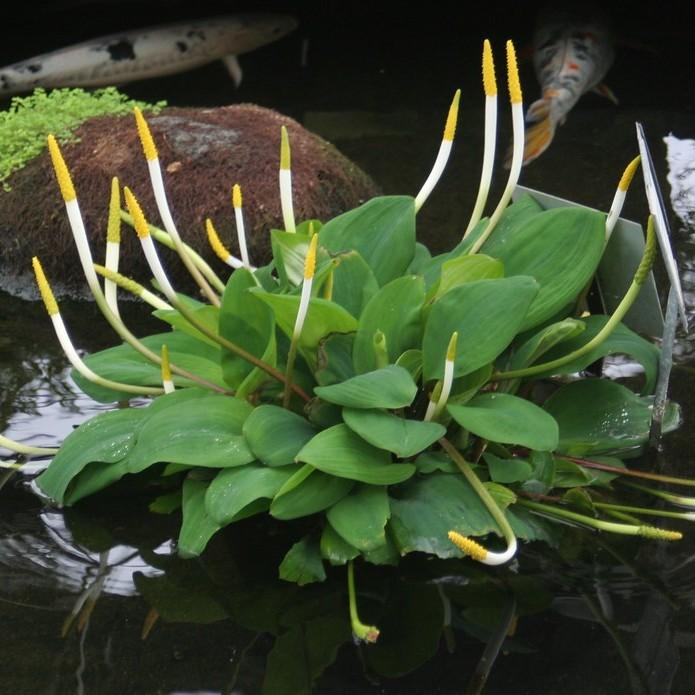
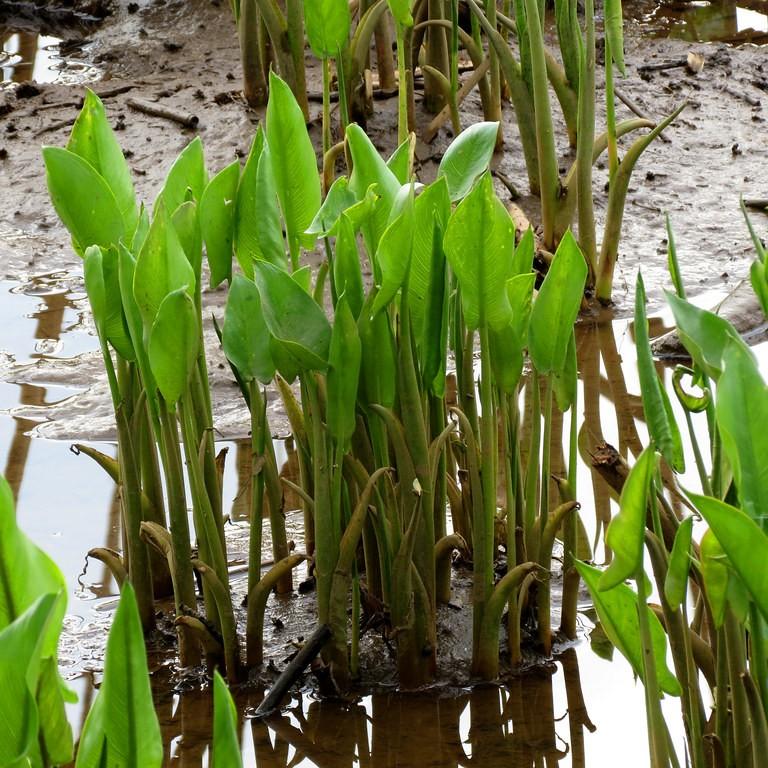
Green Arrow Arum, also called tuckahoe, is a rhizomatous aquatic perennial adapted to shallow, still or slow-moving freshwater habitats. Its glossy, sharply pointed arrowhead-shaped leaves emerge directly from thick, fleshy rhizomes buried in muddy wet soil, forming dense clumps that provide shelter for small aquatic wildlife. In late spring to early summer, it produces a pale green, hooded spathe surrounding a fleshy spadix of tiny flowers, which matures into clusters of green, berry-like fruits that turn dark brown when ripe.
Care Guide
Watering
Requires consistently saturated, shallow water up to 6 inches (15 cm) deep over the root zone; never allow the soil to dry out completely, as the plant cannot tolerate drought conditions. For container cultivation, submerge the pot in a water garden or tub, ensuring the water level stays consistent throughout the growing season. Reduce water depth slightly in winter if grown in areas with freezing temperatures, but keep the root ball damp at all times.
Light
Thrives in full sun to partial shade, with optimal growth occurring in locations that receive 4-6 hours of direct sunlight daily. In hotter southern climates, provide light afternoon shade to prevent leaf scorch during the warmest summer months. It can tolerate deeper shade, but growth will be slower and flowering may be reduced significantly.
Soil
Prefers heavy, nutrient-rich muddy loam or silty wet soil with a slightly acidic to neutral pH between 5.5 and 7.0. It grows well in organic-rich wetland soil with high levels of decomposed plant matter, and does not require well-drained soil, as its roots are adapted to anaerobic, waterlogged conditions. For container planting, use a heavy aquatic potting mix designed for marginal water plants, avoiding light, porous mixes that will float or break down quickly in water.
Fertilizer
Benefits from a slow-release aquatic fertilizer tablet applied to the root zone once in early spring, right as new growth emerges, to support leaf and flower production throughout the growing season. Avoid using standard water-soluble fertilizers that can leach into surrounding water and cause algae blooms. Do not fertilize in late fall or winter, as the plant enters dormancy and does not require extra nutrients during this period.
Temperature
Grows best in temperatures between 60–85°F (15–29°C) during its active growing season from spring to fall. It is hardy in USDA zones 4 through 9, tolerating winter temperatures as low as -30°F (-34°C) as long as the rhizomes are not exposed to freezing air, either submerged below the ice line or covered with a thick layer of mulch in colder regions. In areas with severe winter freezing, lift container-grown rhizomes and store them in damp peat moss in a cool, frost-free location over winter if they cannot be kept submerged.
Pruning
Remove yellowed, damaged, or dead leaves throughout the growing season to keep the plant looking tidy and prevent decaying foliage from fouling the surrounding water. Cut back all foliage to just above the root line in late fall after it dies back naturally for winter, to reduce overwintering pest and disease habitat. Thin out dense clumps every 3-4 years in early spring to prevent overcrowding and maintain vigorous growth.
Propagation
Most easily propagated by division of mature rhizomes in early spring, right before new growth begins: dig up the thick rhizome clump, cut it into sections with at least one healthy growth bud per piece, and replant each section at the same depth it was originally growing. It can also be grown from seed collected from ripe berries in late fall, sown immediately in wet, muddy soil and kept at 70–75°F (21–24°C) until germination occurs, usually within 4-6 weeks. Seed-grown plants typically take 2-3 years to reach maturity and produce flowers.
Humidity
Tolerates high humidity levels common to wetland and water garden environments, with no special humidity requirements when grown in its preferred saturated soil or shallow water. When grown indoors in a container, maintain ambient humidity levels above 50% to prevent leaf tip browning, misting the leaves regularly if indoor air is dry. It cannot tolerate arid conditions for extended periods, which will cause leaf wilting and dieback.
Repotting
Container-grown Green Arrow Arum should be repotted every 2-3 years in early spring before new growth emerges, to refresh the soil and prevent rhizomes from becoming root-bound. Use a wide, heavy aquatic pot with no drainage holes to prevent soil from leaching into the water, planting the rhizome at the same depth it was growing in the old pot, and firming the soil around it well. After repotting, submerge the container back into its water location at the original depth to minimize transplant shock.
Uses & Symbolism
Green Arrow Arum is widely used in water gardens, rain gardens, and restored wetland habitats as a marginal aquatic plant that helps stabilize muddy shorelines and filter excess nutrients from runoff, reducing algae growth. Its dense foliage provides cover for frogs, tadpoles, and small fish, while its fruits are a food source for waterfowl such as ducks and geese. Historically, Indigenous peoples of North America processed the starchy rhizomes through extended cooking or drying to remove toxic calcium oxalate crystals, using the resulting flour as a food staple.
Diseases & Pests
Green Arrow Arum is relatively pest and disease resistant, but may be affected by common aquatic pests such as aphids and spider mites, which feed on leaf sap and cause yellowing or stippling of foliage, treatable with insecticidal soap or by spraying affected leaves with a strong stream of water. Fungal leaf spot diseases can occur in overly humid, stagnant conditions with poor air circulation, causing brown or black spots on leaves; remove affected foliage and improve air flow around the plant to reduce spread. Root rot may develop if the plant is grown in stagnant, low-oxygen water, which can be prevented by ensuring gentle water movement and avoiding excessive buildup of decaying organic matter around the root zone.
Related plants
Other plants you might like if you grow Green Arrow Arum.