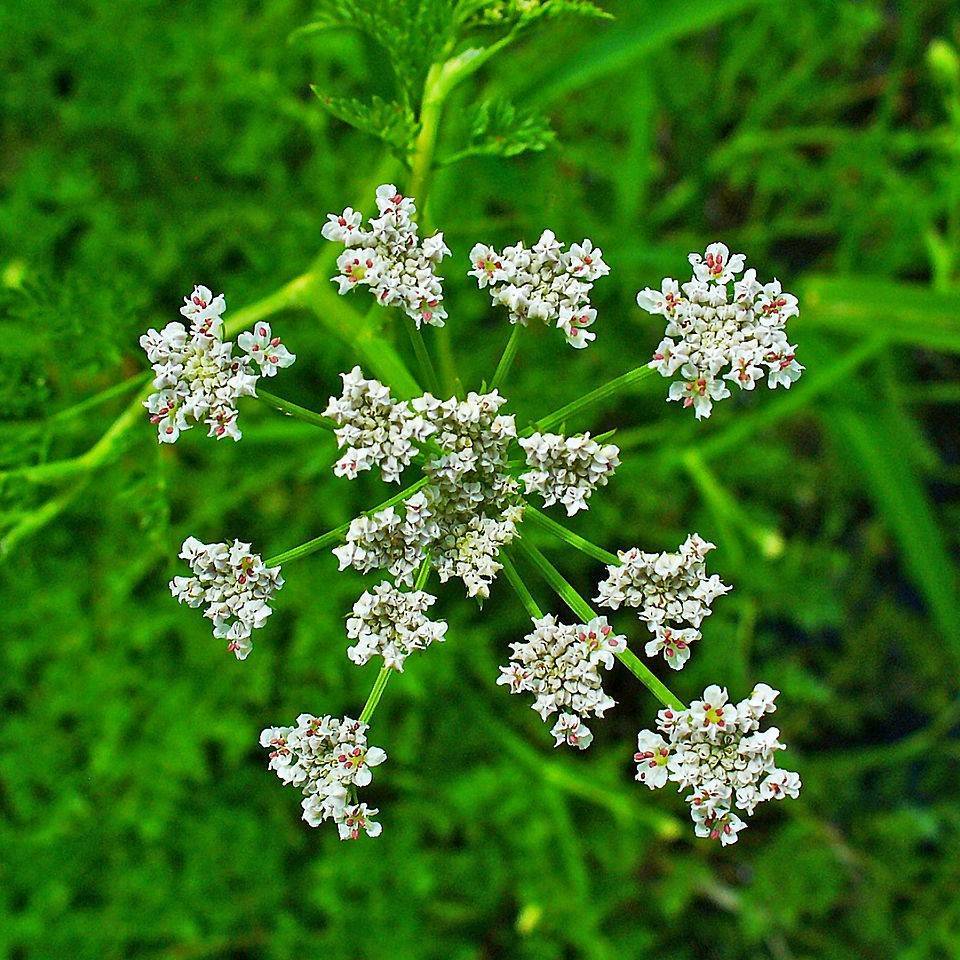
Fine Leaved Water Dropwort
Oenanthe aquatica
Overview
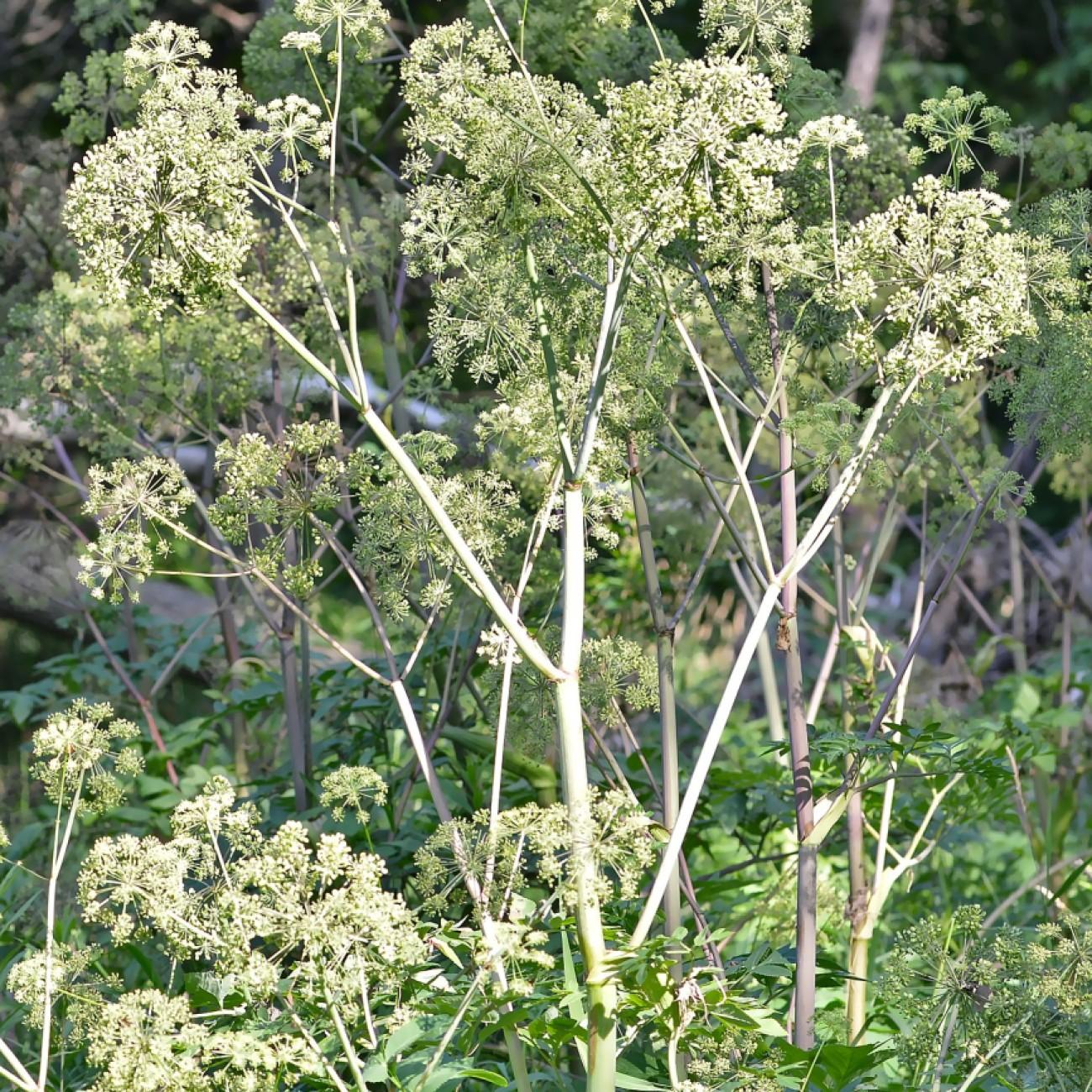
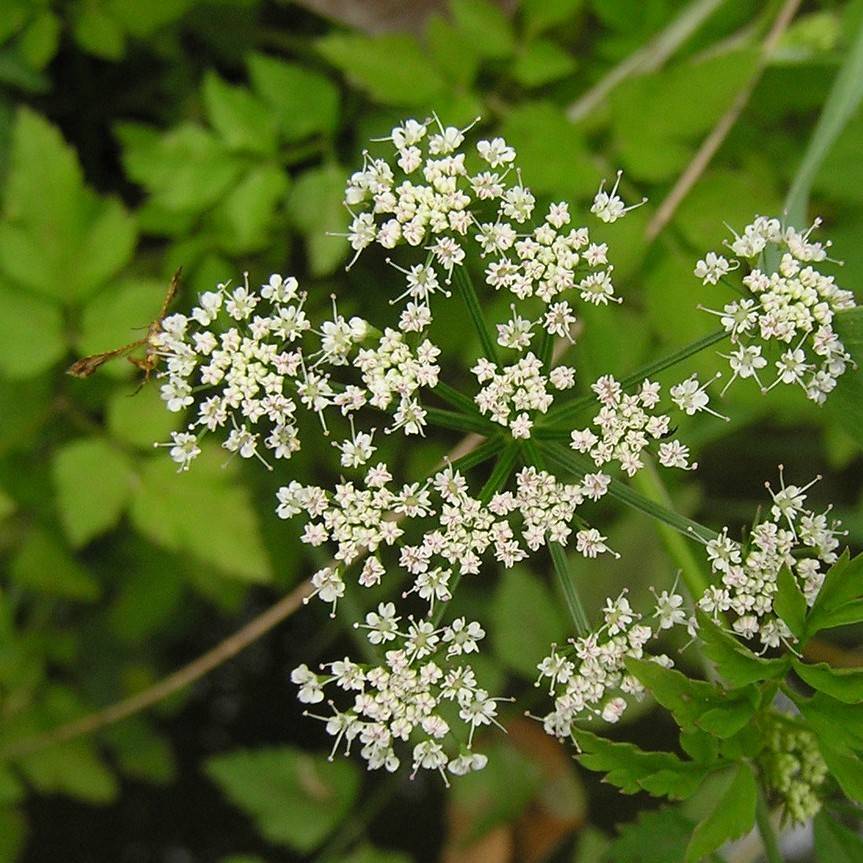
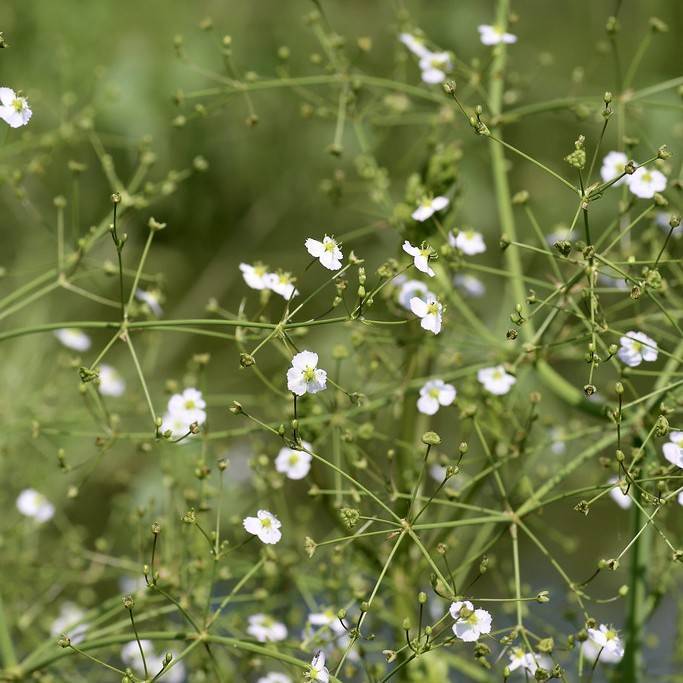
Fine Leaved Water Dropwort is a semi-aquatic flowering plant that thrives in shallow, slow-moving water such as pond edges, marshes, and slow streams. Its feathery, finely dissected submerged and emergent foliage gives it a delicate appearance, though it is highly poisonous. It produces clusters of small white umbel flowers in summer, which attract aquatic pollinators before developing into small ridged fruits.
Care Guide
Watering
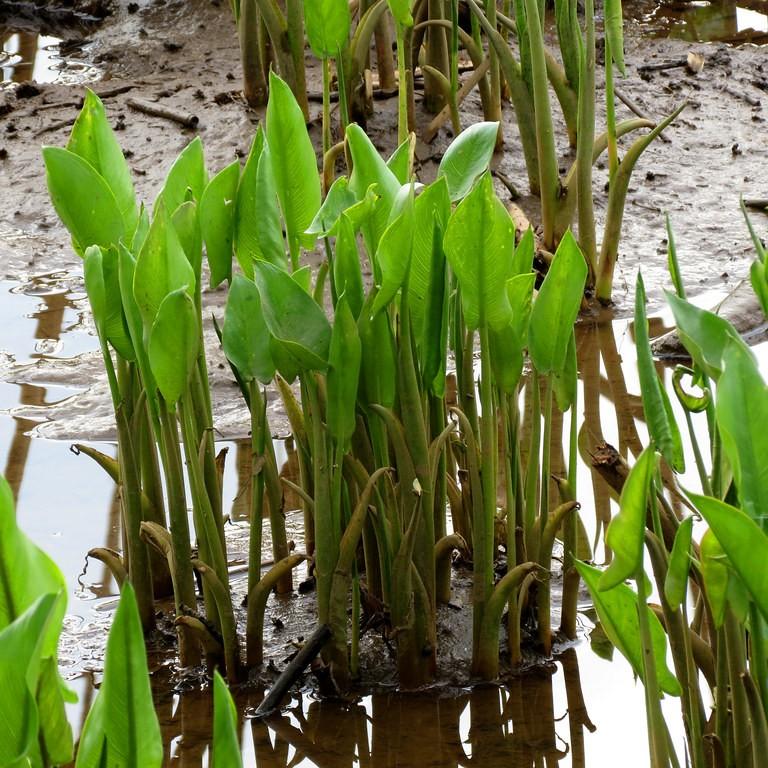
As an aquatic species, it requires constant submersion in 6-18 inches (15-45 cm) of calm, non-flowing or slow-moving freshwater to support healthy growth. Never allow the root system to dry out completely, as this will quickly kill the plant; maintain consistent water levels throughout the growing season.
Light
It performs best in full sun, receiving at least 6 hours of direct unfiltered sunlight daily to support robust foliage and flower production. It can tolerate partial shade, though growth will be sparser and flowering may be reduced in low-light conditions.
Soil
Plant in heavy, nutrient-rich loam or clay sediment typical of wetland environments, with a high organic matter content to support its vigorous root system. It does not require well-drained soil, as it is adapted to permanently waterlogged, anaerobic sediment conditions.
Fertilizer
In natural wetland settings, it rarely needs supplemental fertilization, as it absorbs nutrients directly from sediment and surrounding water. If grown in a contained pond, apply a slow-release aquatic plant fertilizer once annually in early spring to support new growth, avoiding excess nitrogen that can trigger algal blooms.
Temperature
It is adapted to temperate climates, thriving in air temperatures between 50-75°F (10-24°C) during the active growing season. It is cold-hardy to USDA zone 5, with its root system surviving freezing winter temperatures when submerged below ice, while above-ground foliage dies back completely in cold months.
Pruning
Remove dead, yellowed, or damaged emergent foliage periodically throughout the growing season to maintain a neat appearance and prevent decaying plant matter from contaminating surrounding water. Cut back all dead above-ground growth to the sediment line in late autumn after flowering finishes, to prevent self-seeding and reduce overwintering pest habitat.
Propagation
Propagate most reliably by root division in early spring, before new growth emerges, by carefully separating mature root clumps and replanting each section in submerged sediment at the same depth as the parent plant. It can also be grown from seed, though seeds require cold stratification and consistent submersion to germinate, and seed-grown plants take longer to reach maturity.
Humidity
It tolerates high ambient humidity levels typical of wetland and riparian environments, with no additional humidity adjustments needed when grown in its native aquatic habitat. If grown in a greenhouse pond setting, ensure adequate air circulation to prevent fungal growth on emergent foliage, though it rarely suffers from humidity-related stress.
Repotting
If grown in a submerged container for pond cultivation, repot every 2-3 years in early spring to refresh the sediment and prevent root crowding, using a heavy loam aquatic potting mix. Choose a wide, heavy pot without drainage holes to prevent soil from leaching into the surrounding water, and weigh it down to keep it anchored in the pond.
Uses & Symbolism
Due to its extreme toxicity, Fine Leaved Water Dropwort has no edible or medicinal uses, and it is generally removed from recreational or livestock-accessible water bodies to prevent accidental poisoning. It is occasionally planted in contained, inaccessible wildlife ponds to provide habitat for aquatic invertebrates and cover for small fish, as its dense root system stabilizes sediment and supports wetland biodiversity.
Diseases & Pests
It is relatively resistant to most common plant diseases, though it may develop fungal leaf spot in warm, stagnant air conditions with poor circulation around emergent foliage. Common pests include aquatic aphids and leaf-mining larvae that feed on foliage, though infestations are rarely severe enough to damage healthy, established plants.
Related plants
Other plants you might like if you grow Fine Leaved Water Dropwort.