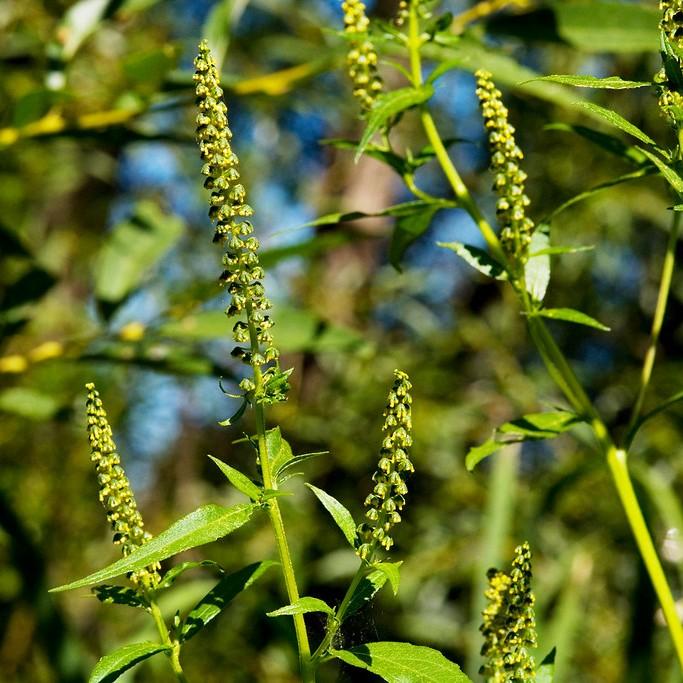
Great Ragweed
Ambrosia trifida
Overview
Great ragweed is an upright, coarse annual native to riparian zones, disturbed areas, and agricultural fields across North America, easily recognized by its large, three-lobed leaves and towering growth habit that can exceed 10 feet in optimal conditions. It produces copious amounts of lightweight, wind-dispersed pollen from late summer to early fall, making it one of the most significant contributors to seasonal allergic rhinitis in regions where it is abundant. Though often classified as a noxious weed due to its ability to outcompete crop plants and trigger allergies, it provides food and habitat for native pollinators, birds, and small mammals in its native range.
Care Guide
Watering
Great ragweed is highly drought-tolerant once established, thriving in both moist and dry soil conditions, and requires no supplemental watering outside of natural rainfall in most regions. It prefers consistent moisture during germination and early growth, but mature plants can survive extended periods of low rainfall with little to no stress. Overwatering or waterlogged soil may lead to root rot, so avoid planting in areas with poor drainage if cultivating intentionally.
Light
This plant grows best in full, direct sunlight, requiring a minimum of 6 hours of unobstructed light per day to reach its full mature height and produce abundant pollen. It can tolerate partial shade, but growth will be stunted, and flower and pollen production will be significantly reduced. It is adapted to open, unshaded habitats such as roadsides, field edges, and abandoned lots where light availability is high.
Soil
Great ragweed is adaptable to a wide range of soil types, including sandy, loamy, clay, and even nutrient-poor, disturbed soils, with a preferred pH range between 5.5 and 7.5. It grows most vigorously in fertile, well-drained loam with high organic matter content, but can easily colonize compacted, low-nutrient soils where many other plants cannot survive. It is tolerant of occasional soil compaction and disturbance, making it a common colonizer of construction sites and tilled agricultural land.
Fertilizer
As a fast-growing annual, great ragweed does not require supplemental fertilization, and will even thrive in low-nutrient soils without additional inputs. If grown in extremely poor soil, a light application of balanced, all-purpose fertilizer in early spring can boost growth, but this is rarely necessary. Excess nitrogen will encourage excessive foliage growth and may increase pollen production, which is undesirable for allergy sufferers.
Temperature
Great ragweed grows best in warm summer temperatures between 70–90°F (21–32°C), and will germinate once soil temperatures consistently reach 50°F (10°C) in late spring. It is tolerant of occasional light frosts in early fall, but a hard freeze will kill the plant entirely, as it is an annual that completes its life cycle in a single growing season. It is adapted to USDA hardiness zones 3 through 9, and will grow in any region with sufficient warm growing days to complete its life cycle.
Pruning
Pruning is not required for great ragweed, but cutting plants back before they flower in late summer can prevent pollen production and reduce the spread of seeds for allergy management and weed control. If removing plants as a weed, pull or cut them before seed heads mature to avoid dispersing thousands of seeds that can remain viable in the soil for up to 5 years. Wear gloves when handling foliage to avoid potential skin irritation from plant sap and surface hairs.
Propagation
Great ragweed propagates exclusively from seed, which is produced in large quantities on female flower heads after wind pollination in late summer and early fall. Seeds naturally disperse via wind, water, wildlife, and human activity, and can remain dormant in the soil for several years until conditions are optimal for germination. For intentional propagation, sow seeds directly on the soil surface in early spring after the last frost, as they require light to germinate successfully.
Humidity
Great ragweed is adaptable to a wide range of humidity levels, thriving in both arid and humid climates across its native range. It has no specific humidity requirements, and will grow equally well in the dry Great Plains region and the humid eastern United States. High humidity during pollen season may reduce pollen dispersal, but does not negatively impact plant health or growth.
Repotting
Repotting is not applicable for great ragweed, as it is an annual plant that is almost exclusively grown outdoors in natural or disturbed habitats. If grown in a container for research purposes, repotting is unnecessary, as the plant will complete its full life cycle in a single growing season. Use a large, deep container with drainage holes to accommodate its extensive root system and avoid waterlogging.
Uses & Symbolism
While most often considered a noxious weed, great ragweed has a history of use in traditional Indigenous medicine, with preparations of the roots and leaves used to treat fevers, insect bites, and gastrointestinal issues. Its deep, extensive root system helps prevent soil erosion in disturbed areas, and its seeds are a valuable food source for songbirds, game birds, and small mammals throughout the fall and winter months. It is also used in ecological restoration projects to stabilize disturbed soils and provide early habitat for native wildlife in recently cleared or damaged areas.
Diseases & Pests
Great ragweed is relatively resistant to most pests and diseases, though it may occasionally be affected by powdery mildew, rust, and leaf spot fungi in humid, poorly ventilated conditions. Common insect pests include aphids, spider mites, and ragweed beetles, which feed on foliage but rarely cause significant damage to healthy, established plants. It is also a host plant for several species of native moth and butterfly caterpillars, which feed on its leaves as part of their natural life cycle.
Related plants
Other plants you might like if you grow Great Ragweed.