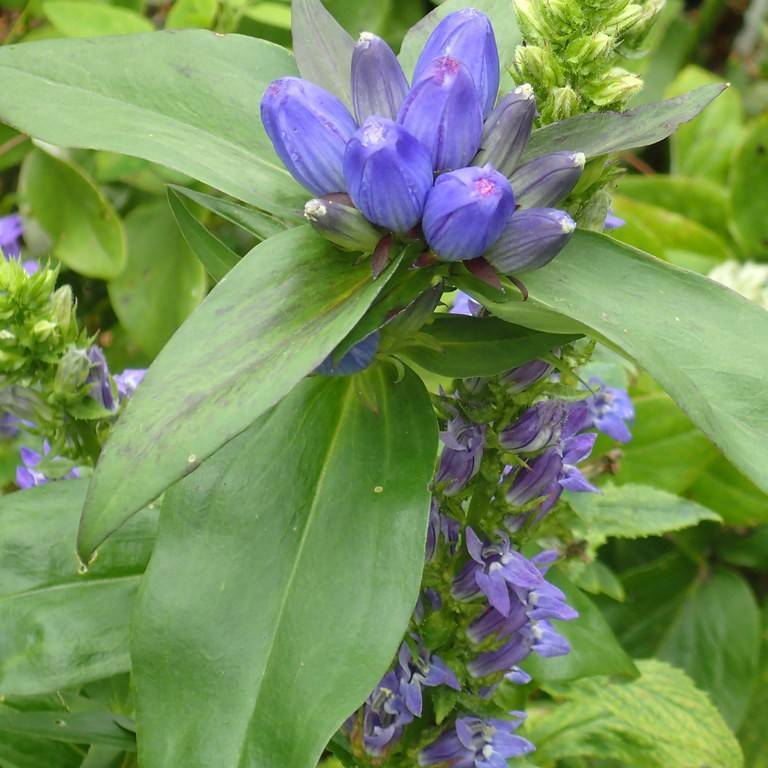
Closed Gentian
Gentiana andrewsii
Overview
Closed Gentian, also called bottle gentian, is named for its unique flowers that never fully open, appearing as plump, deep blue to purplish buds even at full maturity. It naturally grows in moist prairies, meadows, wood edges, and wetland margins, forming clumps of upright, unbranched stems with glossy, lance-shaped opposite leaves. Unlike most wildflowers, its closed blooms are only accessible to strong pollinators such as bumblebees, which can pry open the petals to reach the nectar inside.
Care Guide
Watering
Closed Gentian prefers consistently moist, well-drained soil and does not tolerate prolonged drought; water regularly to keep the root zone evenly damp, especially during hot, dry summer periods. Avoid overwatering or allowing the plant to sit in standing water, as this can cause root rot, particularly in heavy clay soils. In its native habitat, it receives regular rainfall, so replicate this moisture level for best growth.
Light
This species thrives in full sun to partial shade, though it benefits from light afternoon shade in regions with very hot summer temperatures to prevent leaf scorch. In cooler northern portions of its range, full sun exposure encourages more abundant flowering and sturdier stem growth. Too much deep shade will result in leggy growth and reduced bloom production.
Soil
Closed Gentian requires rich, loamy, slightly acidic to neutral soil with high organic matter content that retains moisture well while draining effectively. It can tolerate heavy clay soils as long as they are not waterlogged for extended periods, and it will not grow well in sandy, fast-drying soils that cannot hold consistent moisture. Amend planting sites with compost or well-rotted leaf mold before planting to boost organic content and improve soil structure.
Fertilizer
This wildflower has low fertilizer needs and usually thrives without regular feeding if planted in organically rich soil. If growth is sparse or foliage is pale, apply a balanced, slow-release organic fertilizer in early spring before new growth emerges, taking care not to overfertilize, which can cause leggy growth and reduced flowering. Avoid high-nitrogen fertilizers, as they promote excessive foliage growth at the expense of blooms.
Temperature
Closed Gentian is well-adapted to temperate climates, growing reliably in USDA hardiness zones 3 through 8, and can withstand winter temperatures as low as -40°F (-40°C). It experiences a period of winter dormancy, dying back to the ground each fall and re-emerging in spring when soil temperatures warm. It does not perform well in extreme, prolonged heat above 90°F (32°C) without adequate moisture and partial shade.
Pruning
Pruning needs are minimal for Closed Gentian; spent flowers can be deadheaded if desired to prevent self-seeding, though many gardeners leave them in place to allow natural reseeding in wildflower gardens. Cut back dead stems to the ground in late fall or early spring before new growth emerges to keep the planting area tidy and reduce overwintering pest habitat. Avoid pruning green, growing stems during the growing season, as this will remove developing flower buds.
Propagation
Closed Gentian is most easily propagated by seed sown outdoors in fall, as the seeds require a period of cold stratification to germinate; sow seeds directly on the soil surface, as they need light to sprout. It can also be propagated by careful root division in early spring before new growth begins, though the plant has a deep taproot that does not tolerate disturbance well, so division should be done infrequently. Cuttings are generally not successful for this species, as the stems do not root readily.
Humidity
This species prefers average to moderate humidity levels typical of its native North American prairie and woodland edge habitats, and does not require special humidity adjustments when grown in appropriate outdoor conditions. It can tolerate short periods of low humidity as long as soil moisture levels are maintained, but extended very dry air may cause leaf tip browning. In excessively humid, poorly ventilated sites, it may be more prone to foliar fungal diseases.
Repotting
Closed Gentian is rarely grown in containers, as its deep taproot requires ample space to grow, and it prefers to remain undisturbed in permanent garden plantings. If grown in a pot, use a deep, wide container to accommodate the taproot, and repot only when the plant has completely outgrown its current container, doing so in early spring while it is still dormant to minimize root stress. Use a rich, loamy potting mix with good drainage when repotting, and water thoroughly after planting to settle the soil around the roots.
Uses & Symbolism
Closed Gentian is a popular addition to native wildflower gardens, pollinator gardens, and rain gardens, where its unique blooms provide late-season nectar for bumblebees and other native pollinators. Historically, some Indigenous North American communities used parts of the plant for medicinal purposes to treat digestive ailments and as a bitter tonic, though it is not widely used for this purpose today. It also makes an unusual, long-lasting cut flower for fresh floral arrangements, as its closed blooms retain their shape and color for several weeks in water.
Diseases & Pests
Closed Gentian is relatively pest and disease resistant when grown in appropriate conditions, but may be susceptible to root rot if planted in poorly drained, waterlogged soil. Fungal leaf spots and powdery mildew can occur in very humid, poorly ventilated growing sites, especially if the foliage remains wet for extended periods. Slugs and snails may occasionally feed on young, tender foliage in spring, particularly in damp, shaded areas.
Related plants
Other plants you might like if you grow Closed Gentian.