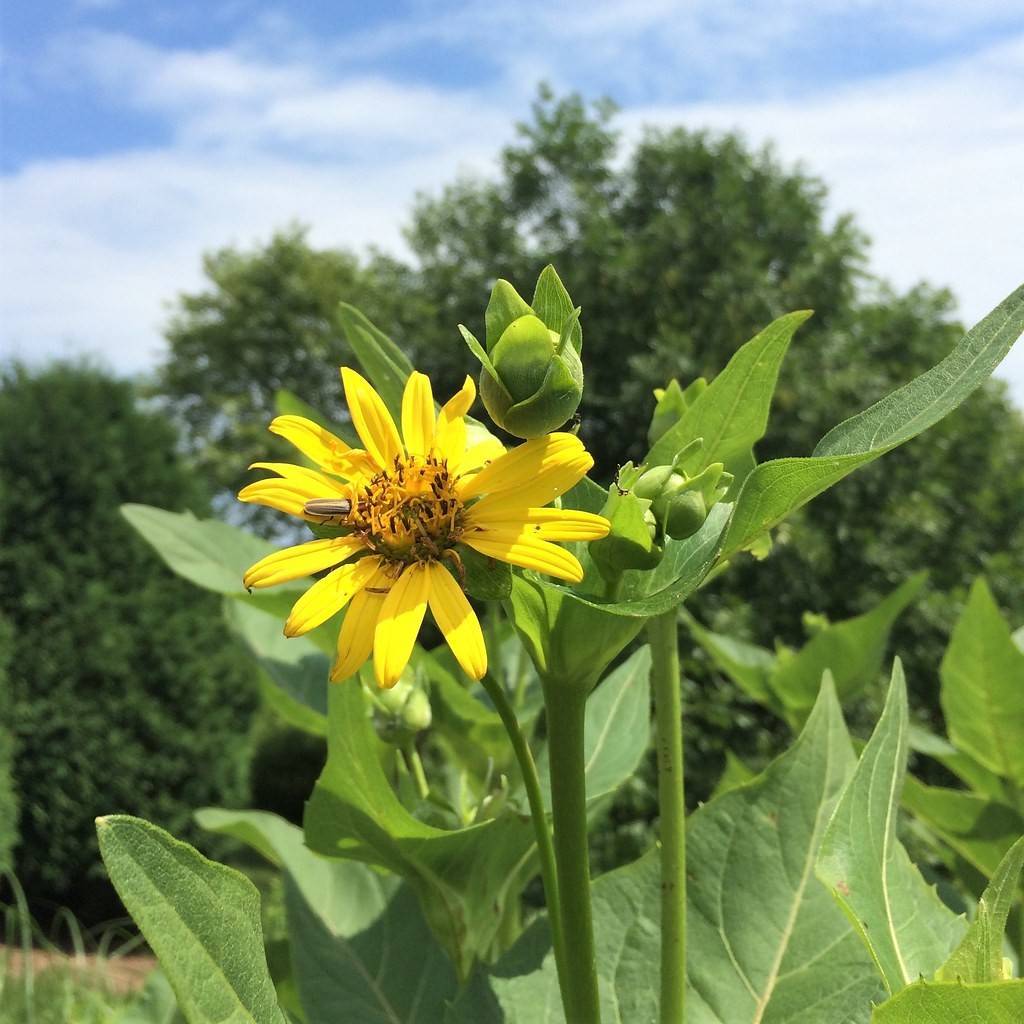
Cup Plant
Silphium perfoliatum
Overview
The cup plant gets its common name from the way its opposite, broadly ovate leaves fuse at the stem, creating a natural reservoir that holds rainwater and dew, providing a critical water source for pollinators, birds, and small insects. It is a robust, clump-forming plant that thrives in prairie, meadow, and riparian habitats, and is a staple in native pollinator gardens across its native range. From mid to late summer, it produces abundant 2-3 inch wide yellow daisy-like flowers that draw in a wide range of bees, butterflies, and beneficial insects, followed by seed heads that feed songbirds through fall and winter.
Care Guide
Watering
Cup plants prefer consistently moist, well-drained soil and can tolerate periodic flooding, making them well suited to low-lying or rain garden areas. While they have some drought tolerance once established, prolonged dry periods will cause wilting and reduced flowering, so supplemental watering is recommended during extended hot, dry spells. Avoid overwatering in poorly drained heavy clay soils, as this can lead to root rot over time.
Light
This species performs best in full sun, requiring at least 6 hours of direct unfiltered sunlight daily to produce strong, sturdy stems and abundant blooms. It can tolerate light partial shade, though plants grown in shadier conditions may become leggy, require staking, and produce fewer flowers. Full sun exposure also helps promote strong disease resistance and reduces the risk of foliar fungal issues.
Soil
Cup plants adapt to a wide range of soil types, including clay, loam, sandy, and silty soils, as long as moisture is consistent. They prefer a neutral to slightly alkaline soil pH between 6.0 and 7.5, but can tolerate mildly acidic conditions as well. Amending heavy clay soils with organic matter like compost will improve drainage while retaining needed moisture for optimal growth.
Fertilizer
Cup plants are low-feeders that rarely require supplemental fertilizer when grown in average to fertile garden soils. Over-fertilizing, particularly with nitrogen-rich products, will cause excessive, weak stem growth that is prone to flopping, especially in partial shade. If growing in very poor, nutrient-depleted soil, apply a thin layer of compost around the base of plants in early spring to provide slow-release nutrients for the growing season.
Temperature
This hardy perennial is adapted to USDA growing zones 3 through 9, tolerating winter temperatures as low as -40°F (-40°C) without additional protection. It thrives in warm summer temperatures between 65°F and 85°F (18°C and 29°C), and can tolerate short periods of extreme heat above 95°F (35°C) if adequate moisture is available. Frost will kill back above-ground foliage in fall, which can be left in place through winter to provide habitat for beneficial insects and insulation for the root system.
Pruning
Little pruning is required for cup plants, though deadheading spent flowers can encourage a second, smaller flush of blooms later in the season, and prevent unwanted self-seeding if spread is a concern. In late fall or early spring, cut back dead, woody stems to 2-3 inches above the soil line to make room for new growth. If plants become leggy or floppy, you can pinch back stem tips in late spring when they are 1-2 feet tall to encourage bushier, more compact growth.
Propagation
Cup plants are most commonly propagated by seed, which can be sown directly outdoors in fall or stratified in the refrigerator for 30-60 days before spring sowing to break dormancy. Established clumps can also be divided in early spring just as new growth emerges, by digging up the root mass and separating it into smaller sections with at least 2-3 growing points each. Stem cuttings taken from new growth in early summer can also root successfully if kept consistently moist and provided with indirect light until established.
Humidity
Cup plants tolerate a wide range of humidity levels, from the dry summers of the Great Plains to the humid conditions of the southeastern United States. Average ambient humidity between 40% and 70% is ideal for healthy growth, though they can tolerate higher humidity if provided with good air circulation to prevent foliar fungal diseases. No supplemental humidity is required when grown outdoors, and indoor-grown seedlings only need standard household humidity levels to thrive.
Repotting
Cup plants are rarely grown in containers long-term due to their large size and deep, extensive root system, which can quickly outgrow even large planters. If growing in a container temporarily, repot young plants annually in early spring before new growth begins, using a pot at least 2 inches larger in diameter than the previous one and a rich, well-draining potting mix. Once plants reach 3-4 feet tall, they are best transplanted to an outdoor garden location to accommodate their mature size and root spread.
Uses & Symbolism
Cup plants are a staple in native pollinator gardens, rain gardens, and prairie restorations, providing critical nectar for bees and butterflies, water for small wildlife, and seed for songbirds in fall and winter. Their deep, extensive root system helps stabilize soil, reduce erosion, and improve water infiltration in low-lying or flood-prone areas, making them valuable for stormwater management projects. Historically, Indigenous peoples used the plant for a variety of medicinal purposes, including treating lung ailments, digestive issues, and as a topical remedy for wounds and skin irritations.
Diseases & Pests
Cup plants are relatively pest and disease resistant, though they can be susceptible to foliar fungal diseases like powdery mildew and leaf spot in conditions of high humidity and poor air circulation. Aphids and leaf miners may occasionally feed on foliage, though infestations are rarely severe and can be controlled with insecticidal soap or by attracting natural predators like ladybugs and lacewings to the garden. Root rot can occur in poorly drained, waterlogged soils, so ensuring adequate drainage is the best prevention for this issue.
Related plants
Other plants you might like if you grow Cup Plant.