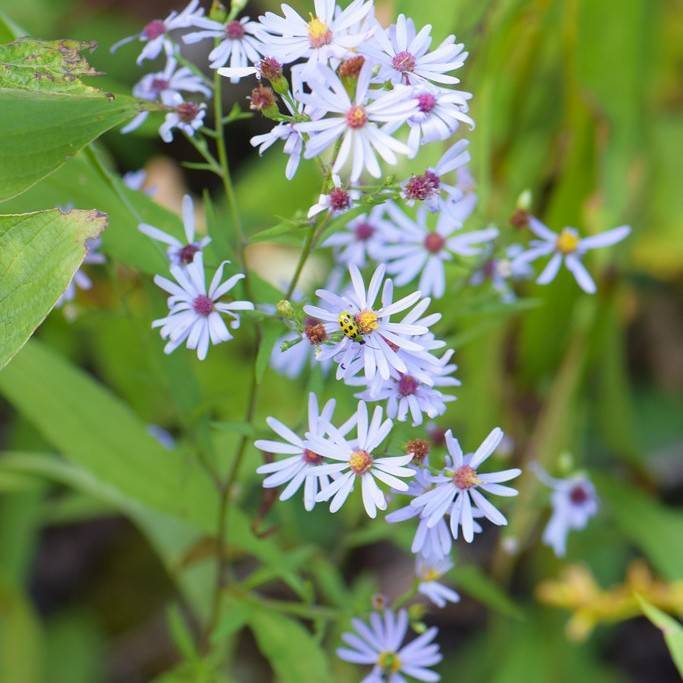
Blue Wood Aster
Symphyotrichum cordifolium
Overview
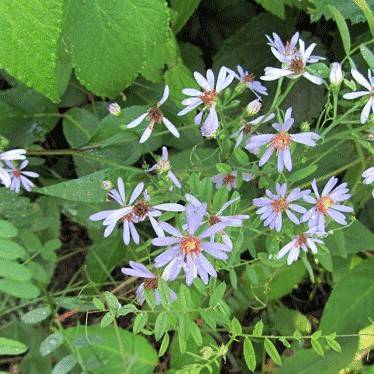
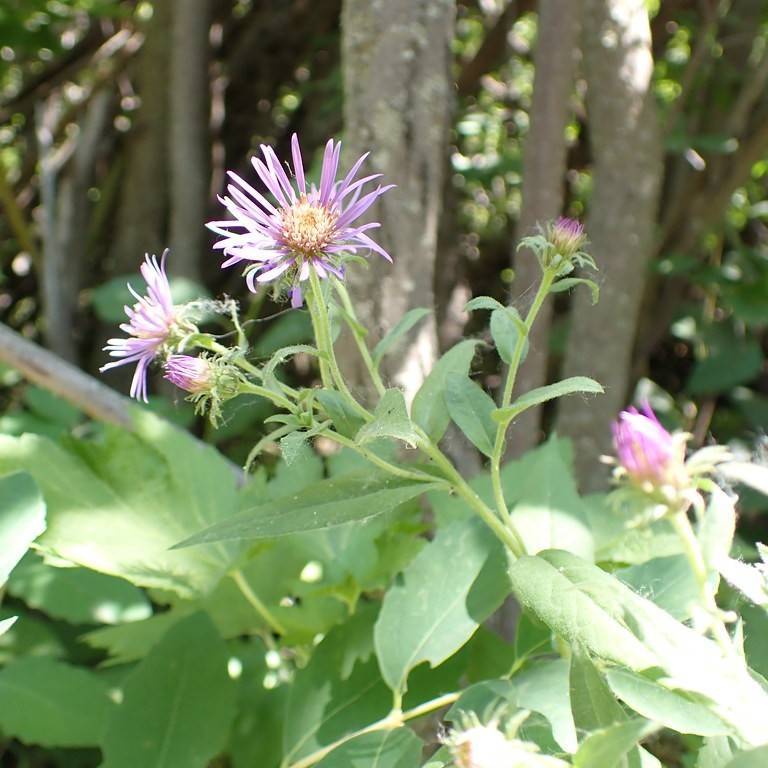
Blue wood aster, formerly classified under the genus Aster, thrives in woodland edges, open forests, and roadside slopes across its native eastern North American range. It produces heart-shaped, toothed basal leaves and branching upper stems that support abundant small flowers, making it a standout in late-season landscapes when many other blooms have faded. This hardy plant supports a wide range of native pollinators, including bees, butterflies, and beneficial wasps, and provides seed food for songbirds in fall and winter.
Care Guide
Watering
Blue wood aster has average water needs, requiring approximately 1 inch of water per week from rainfall or supplemental irrigation during active growth. It is moderately drought tolerant once established, though prolonged dry periods may cause leaf scorch and reduce flowering. Avoid overwatering or planting in poorly drained sites, as saturated soil can lead to root rot.
Light
This adaptable aster grows best in partial shade, where it produces consistent blooms and maintains lush foliage without scorching. It can tolerate full sun in cooler northern climates if provided with consistent moisture, but benefits from afternoon shade in regions with hot, intense summer sun. Too much deep shade will cause leggy growth and reduced flower production.
Soil
Blue wood aster adapts to a wide range of soil types, including loam, sandy soil, and clay, as long as the site offers good drainage. It prefers slightly acidic to neutral soil pH between 5.5 and 7.0, but will tolerate mildly alkaline conditions. It is tolerant of dry, rocky, or poor fertility soils that many other perennials struggle in.
Fertilizer
Blue wood aster has low fertilizer needs, and excessive feeding will cause weak, leggy growth and reduced flowering. In poor soil, apply a balanced, slow-release granular fertilizer in early spring just as new growth emerges, at half the manufacturer’s recommended rate. Avoid fertilizing after mid-summer, as this can encourage tender new growth that is damaged by early fall frost.
Temperature
This hardy perennial thrives in USDA zones 3 through 8, tolerating winter temperatures as low as -40°F (-40°C) without additional protection. It prefers moderate summer temperatures between 60°F and 80°F (15°C to 27°C), and may go dormant early if exposed to extended periods above 90°F (32°C) without supplemental water. Frost will kill back above-ground growth in late fall, which can be cut back to prepare for winter dormancy.
Pruning
In late spring or early summer, pinch back the top 2 to 3 inches of stem growth to encourage bushier, more compact growth and increase flower production later in the season. After flowering ends in late fall, cut back all above-ground stems to 2 to 3 inches above the soil line to prevent overwintering pests and disease pathogens. Remove any dead, diseased, or damaged stems throughout the growing season to maintain good air circulation.
Propagation
Blue wood aster is most easily propagated by division, done in early spring just as new growth emerges or in late fall after flowering finishes. Dig up mature clumps, split them into sections with at least 3 to 5 healthy growth buds and a portion of the root system, and replant immediately at the same depth as the original plant. It can also be grown from seed sown directly outdoors in fall or cold-stratified for 4 to 6 weeks and sown indoors 6 to 8 weeks before the last expected frost date.
Humidity
Blue wood aster tolerates a wide range of humidity levels, thriving in the average 40% to 70% humidity common across its native range. It can tolerate low humidity in arid regions if provided with adequate moisture, and high humidity in southeastern climates as long as it is planted in a site with good air circulation to prevent foliar diseases. Prolonged periods of very high humidity combined with poor air flow increase the risk of powdery mildew.
Repotting
Blue wood aster is rarely grown in containers, but when potted, it should be repotted every 2 to 3 years in early spring before new growth begins. Select a pot with drainage holes that is 2 to 3 inches larger in diameter than the current container, and use a well-draining, loamy potting mix amended with compost. After repotting, water thoroughly and place in a partially shaded site for 1 to 2 weeks to allow the plant to acclimate before resuming regular care.
Uses & Symbolism
Blue wood aster is a popular choice for native pollinator gardens, woodland gardens, and naturalized landscapes, where its late-season blooms provide critical nectar for bees and butterflies preparing for winter. It makes an excellent cut flower, with sturdy stems and long-lasting blooms that work well in both fresh and dried floral arrangements. In ecological restoration projects, it is used to stabilize slopes, restore woodland edge habitats, and provide food and cover for native wildlife.
Diseases & Pests
Blue wood aster is relatively pest and disease resistant, though it can be susceptible to powdery mildew in high humidity conditions with poor air circulation, which appears as a white, powdery coating on leaf surfaces. It may also be affected by aster yellows, a bacterial disease spread by leafhoppers that causes yellowed, distorted growth and stunted flowering. Common pests include aphids, spider mites, and slugs, which can be controlled with insecticidal soap, neem oil, or organic slug baits as needed.
Related plants
Other plants you might like if you grow Blue Wood Aster.