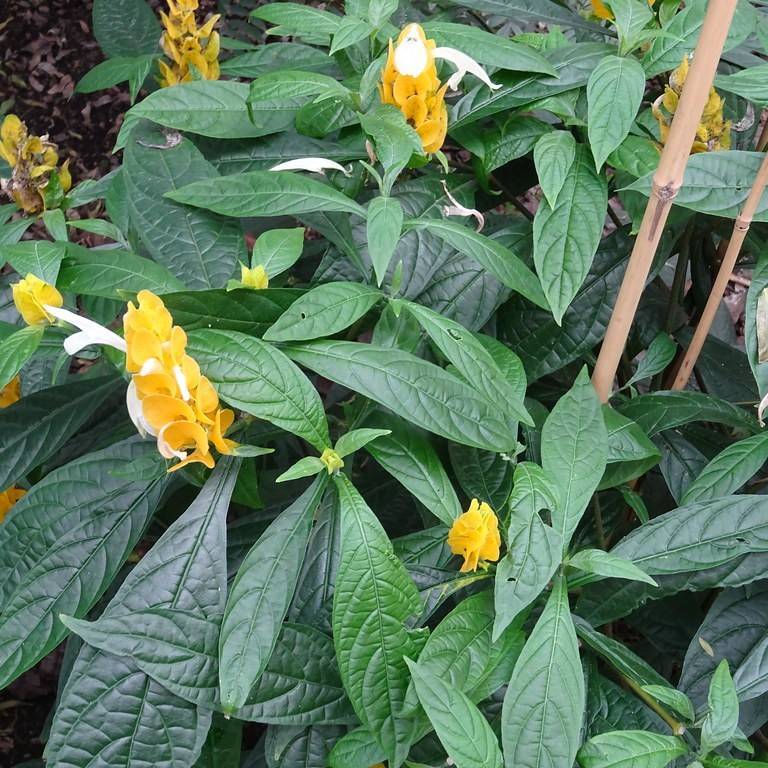
Golden Shrimp Plant
Pachystachys lutea
Overview
The golden shrimp plant is a lush, bushy evergreen native to tropical South American understories, named for its overlapping, drooping golden bracts that resemble the curved shape of shrimp. The actual small, delicate white flowers emerge from between the bracts, attracting hummingbirds, butterflies, and other pollinators in its native range. It is widely cultivated as an ornamental for its long-lasting, vibrant bract displays, which can persist for months during the growing season. While it thrives outdoors in frost-free climates, it is also a popular, eye-catching houseplant for bright indoor spaces.
Care Guide
Watering
Water golden shrimp plants regularly during the growing season, keeping the soil consistently moist but never waterlogged to prevent root rot. Reduce watering frequency in the winter, allowing the top 1-2 inches of soil to dry out between waterings when growth slows. Use lukewarm, filtered water if possible to avoid shocking the plant’s tropical root system.
Light
Provide bright, indirect light for optimal growth and bract production, such as a spot near a south or west-facing window with a sheer curtain to filter harsh direct sun. Outdoors, grow it in partial shade, as prolonged direct midday sunlight can scorch its leaves and fade the bright golden bracts. Too little light will result in leggy growth and sparse, pale bract production.
Soil
Plant in a well-draining, nutrient-rich, loamy potting mix with a slightly acidic to neutral pH between 6.0 and 7.0. Amend heavy garden soil with compost, perlite, or peat moss to improve drainage and aeration for the plant’s fine, fibrous root system. For potted specimens, use a high-quality general houseplant mix with added perlite to prevent compaction over time.
Fertilizer
Feed every two weeks during the active growing season (spring through summer) with a balanced, water-soluble fertilizer diluted to half the recommended strength. Avoid over-fertilizing, as excess nitrogen can promote lush leaf growth at the expense of bract production. Stop fertilizing entirely in the fall and winter when the plant enters a period of dormancy.
Temperature
Golden shrimp plants thrive in warm temperatures between 65-80°F (18-27°C), which mimic their native tropical habitat. They are extremely frost-sensitive, and temperatures below 50°F (10°C) will cause leaf drop and potential plant death, so bring outdoor potted specimens indoors well before the first frost. Avoid placing the plant near cold drafts from windows, doors, or air conditioning units.
Pruning
Prune back the plant by up to one-third of its height in late winter or early spring before new growth begins to encourage a bushier, more compact shape and increased bract production. Pinch off spent bract clusters regularly throughout the growing season to promote continuous blooming and prevent the plant from expending energy on seed production. Remove any yellowed, damaged, or leggy stems as needed to maintain the plant’s appearance and health.
Propagation
The easiest method of propagation is via softwood stem cuttings taken in spring or early summer, when the plant is actively growing. Cut 4-6 inch long sections of healthy, non-flowering stem, remove the lower leaves, dip the cut end in rooting hormone, and plant in moist, well-draining rooting medium, keeping it warm and humid until roots form in 3-4 weeks. It can also be grown from seed, though seed production is rare in cultivated specimens and germination is slower than cutting propagation.
Humidity
Maintain moderate to high humidity levels between 50-70% to keep the golden shrimp plant’s foliage lush and prevent leaf browning at the edges. For indoor plants, increase humidity by placing the pot on a tray filled with pebbles and water, using a room humidifier, or grouping it with other tropical plants. Low humidity levels will cause the small white flowers to drop prematurely and may stunt new growth.
Repotting
Repot potted golden shrimp plants every 1-2 years in spring, when the roots have filled the current pot and begin to emerge from the drainage holes. Choose a pot that is 1-2 inches larger in diameter than the current one, with ample drainage holes to prevent water accumulation at the root zone. After repotting, water thoroughly and place the plant in its usual bright, indirect light location to minimize transplant shock.
Uses & Symbolism
The golden shrimp plant is primarily grown as an ornamental for its long-lasting, vibrant golden bracts, used in outdoor tropical garden beds, borders, and container displays in frost-free regions, or as a colorful houseplant in temperate climates. Its flowers and bracts make it a popular addition to pollinator gardens, as they reliably attract hummingbirds and butterflies during the blooming season. Cut stems with intact bracts also make long-lasting, eye-catching additions to fresh floral arrangements.
Diseases & Pests
Golden shrimp plants are relatively pest-resistant, but they can be affected by common houseplant pests including aphids, spider mites, and whiteflies, which suck sap from the foliage and cause stunted growth or leaf yellowing; these can be treated with insecticidal soap or neem oil applications. Overwatering or poor drainage leads to root rot, the most common fungal disease, which causes wilting, yellowing leaves, and eventual plant death if not addressed by adjusting watering habits and repotting in fresh, dry soil. In overly humid, poorly ventilated conditions, it may also develop powdery mildew, a white fungal growth on leaf surfaces that can be prevented by ensuring good air circulation around the plant.
Related plants
Other plants you might like if you grow Golden Shrimp Plant.