Brazilian Nightshade
Solanum seaforthianum
Overview
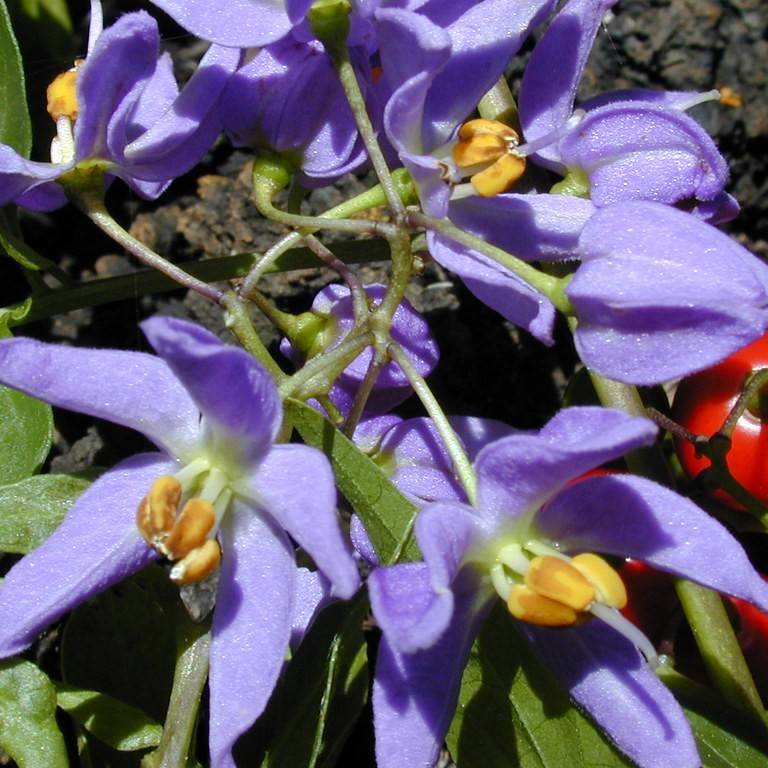
Brazilian nightshade, also called St. Vincent lilac, is a fast-growing evergreen vine in the nightshade family, distinguished by its drooping clusters of fragrant, five-petaled purple flowers with prominent yellow stamens that bloom almost year-round in warm climates. After flowering, it produces glossy, round bright red berries that persist on the vine for months, adding decorative value but posing a significant toxicity risk to children and pets. Native to tropical South American rainforest edges, it has naturalized in many subtropical and tropical regions worldwide, where it is sometimes considered an invasive weed due to its aggressive climbing and self-seeding habits.
Care Guide
Watering
Water Brazilian nightshade regularly during the active growing season, allowing the top 1 to 2 inches of soil to dry out between waterings to prevent root rot. Reduce watering frequency in cooler winter months, providing just enough moisture to keep the root ball from drying out completely, as overwatering during dormancy can cause leaf drop and fungal issues. Avoid wetting the foliage when watering to minimize the risk of foliar fungal diseases.
Light
Grow Brazilian nightshade in full sun to partial shade for optimal flowering, with at least 4 to 6 hours of direct sunlight daily to encourage abundant bloom production. In extremely hot, arid climates, provide light afternoon shade to protect the delicate foliage and flowers from scorching, which can cause browning of leaf edges and reduced bloom duration. Indoor specimens should be placed near a bright south or west-facing window, supplemented with grow lights if natural light is insufficient to prevent leggy growth.
Soil
Brazilian nightshade thrives in well-draining, fertile loamy soil with a slightly acidic to neutral pH range of 6.0 to 7.0. It tolerates a wide range of soil types, including sandy and clay soils, as long as drainage is adequate to prevent waterlogging around the root system. For container-grown plants, use a high-quality general-purpose potting mix amended with perlite or coarse sand to improve drainage and aeration.
Fertilizer
Feed Brazilian nightshade every 4 to 6 weeks during the active growing season (spring through fall) with a balanced, water-soluble fertilizer formulated for flowering vines, diluted to half the recommended strength to avoid burning the roots. Do not fertilize during the winter dormant period, as new growth produced in cool, low-light conditions will be weak and susceptible to pest damage. For outdoor plants, top-dress the root zone with a 2-inch layer of compost in early spring to provide slow-release nutrients throughout the growing season.
Temperature
Brazilian nightshade is a tender tropical plant that prefers average temperatures between 65°F and 85°F (18°C to 29°C) for optimal growth and flowering. It cannot tolerate frost, and temperatures below 32°F (0°C) will kill the above-ground growth, though established outdoor plants in mild climates may resprout from the roots if frost exposure is brief. Indoor specimens should be kept away from cold drafts from windows, doors, or air conditioning units, as sudden temperature drops can cause leaf drop and stress the plant.
Pruning
Prune Brazilian nightshade in late winter or early spring before new growth emerges to control its size, remove dead or damaged stems, and encourage bushier, more floriferous growth. Cut back overgrown vines by up to one-third of their length, and remove any self-sown seedlings around the base of the plant to prevent unwanted spread. Throughout the growing season, snip off spent flower clusters to promote continuous blooming and prevent the formation of toxic berries if there is a risk of ingestion by children or pets.
Propagation
Brazilian nightshade is most easily propagated from semi-hardwood stem cuttings taken in late spring or early summer, using 4 to 6 inch long cuttings with at least two sets of leaves, dipped in rooting hormone and placed in moist, well-draining potting mix under high humidity. It can also be grown from fresh seed collected from ripe berries, though seeds require a 24-hour soak in warm water to improve germination rates, and seedlings will take 2 to 3 years to reach flowering maturity. Note that both cuttings and seeds should be handled with gloves to avoid exposure to toxic sap, and any resulting plants should be kept away from areas accessible to children and pets.
Humidity
Brazilian nightshade prefers moderate to high humidity levels between 50% and 70%, typical of its native tropical rainforest edge habitat. In dry indoor environments, increase humidity around the plant by placing it on a pebble tray filled with water, using a room humidifier, or grouping it with other humidity-loving plants to create a microclimate. Misting the foliage is not recommended, as it can increase the risk of fungal leaf spots on this species.
Repotting
Repot container-grown Brazilian nightshade every 1 to 2 years in early spring, moving it to a pot one size larger than the current container if the roots have filled the existing pot and are growing out of the drainage holes. Use fresh potting mix amended with compost to provide nutrients, and ensure the new pot has adequate drainage holes to prevent waterlogging. After repotting, water the plant thoroughly and keep it in a shaded spot for a few days to allow it to acclimate to its new container before returning it to its normal growing location.
Uses & Symbolism
Brazilian nightshade is primarily grown as an ornamental vine for trellises, arbors, fences, or hanging baskets, valued for its long bloom period, fragrant purple flowers, and attractive red berries that provide year-round visual interest in warm climates. In its native range, small doses of the plant have been used in traditional folk medicine to treat inflammatory conditions and skin ailments, though its toxicity makes medicinal use extremely risky without professional guidance. It is sometimes grown as a fast-growing temporary screen for unsightly garden structures, as it can cover a 10-foot trellis in a single growing season under ideal conditions.
Diseases & Pests
Brazilian nightshade is susceptible to common garden pests including aphids, whiteflies, spider mites, and caterpillars, which feed on the sap of the foliage and can cause yellowing, leaf drop, and stunted growth if left untreated, and can be controlled with insecticidal soap or neem oil applications. Fungal diseases such as powdery mildew, leaf spot, and root rot are common in poorly draining soil or high-humidity conditions with poor air circulation, and can be prevented by avoiding overwatering, spacing plants to allow airflow, and removing infected foliage promptly. In areas where it is naturalized, it may be affected by tomato spotted wilt virus and other pathogens common to the Solanaceae family, which can cause mottled foliage, stunted growth, and reduced flowering.
Related plants
Other plants you might like if you grow Brazilian Nightshade.