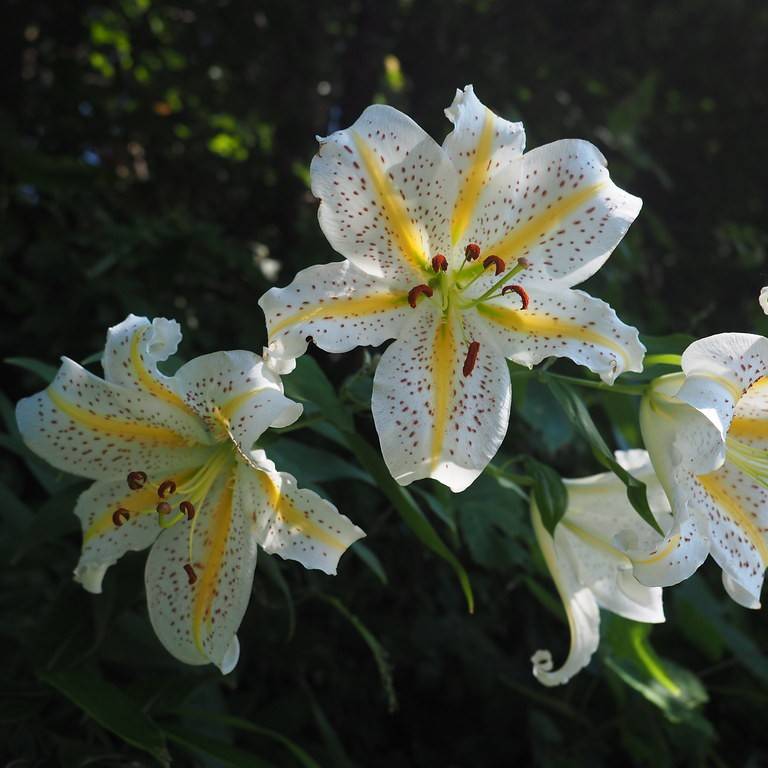
Golden Rayed Lily
Lilium auratum
Overview
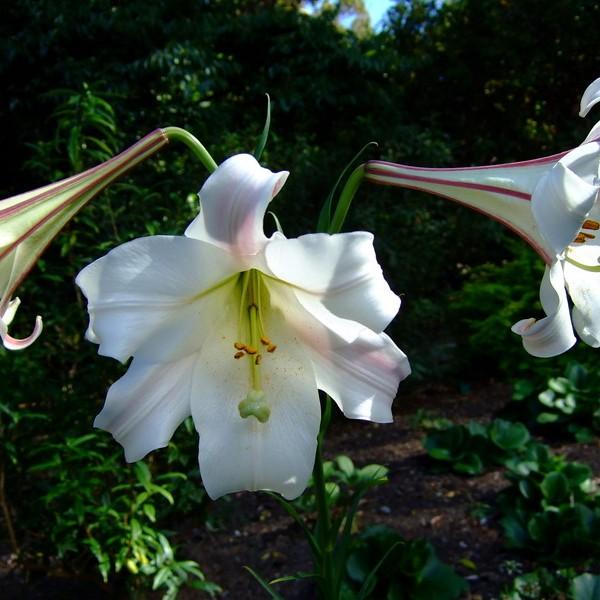
Lilium auratum, widely called the golden rayed lily, is one of the most recognizable lily species prized for its large, outward-facing flowers that emit a rich, sweet fragrance. Each bloom can reach up to 12 inches (30 cm) across, with crisp white petals that curve backward, a bold golden stripe running down the center of each petal, and scattered deep crimson spots. It grows from scaly bulbs, producing tall, sturdy stems lined with glossy, lance-shaped green leaves, and is a popular cut flower and ornamental garden plant in temperate regions worldwide.
Care Guide
Watering
Water golden rayed lilies regularly to keep the soil evenly moist but not waterlogged, as soggy conditions will cause bulb rot. Reduce watering gradually after the flowering season ends and foliage begins to yellow, letting the soil dry out slightly during the dormant winter period. Avoid wetting the foliage when watering to lower the risk of fungal leaf diseases.
Light
Grow golden rayed lilies in full sun to partial shade, with at least 6 hours of direct sunlight daily to support robust flowering. In regions with extremely hot, intense summer sun, provide light afternoon shade to prevent petal scorch and keep the root zone cool. If grown indoors as a potted plant, place it near a south or west-facing window that receives bright, filtered light.
Soil
Plant golden rayed lily bulbs in well-drained, loamy soil with a slightly acidic to neutral pH between 5.5 and 7.0. Amend heavy clay soils with compost, peat moss, or perlite to improve drainage, as bulbs will rot quickly in compacted, poorly draining substrates. Add a layer of organic mulch over the root zone to help retain moisture, suppress weeds, and keep the roots cool during warm weather.
Fertilizer
Apply a balanced, slow-release 10-10-10 fertilizer in early spring as new shoots emerge from the soil, working it gently into the top layer of soil around the base of the plant. Feed once more with a high-potassium fertilizer just before the flowering period starts to support larger, more fragrant blooms. Avoid over-fertilizing, as this can lead to weak, leggy growth and reduce flowering.
Temperature
Golden rayed lilies thrive in temperate climates with average summer temperatures between 60–75°F (15–24°C), and require a cold dormant period of 8–12 weeks at temperatures below 45°F (7°C) to bloom reliably the following season. They are cold-hardy down to USDA zone 4, tolerating winter lows as low as -30°F (-34°C) when bulbs are planted deep enough and protected with a layer of mulch. In regions with very hot summers, provide extra shade and water to prevent heat stress.
Pruning
Remove spent flower heads as soon as they fade to prevent the plant from expending energy on seed production, but leave the entire stem and foliage intact until it turns completely yellow and dies back naturally in late fall. Once foliage is fully dormant, cut stems down to 1–2 inches (2.5–5 cm) above the soil line to tidy the planting area. Dispose of any diseased or damaged foliage immediately to prevent the spread of pathogens to healthy plants.
Propagation
Golden rayed lilies are most commonly propagated by dividing bulb offsets that form around the main parent bulb during the dormant season, in late fall or early spring. Carefully dig up the main bulb, detach the small, fully formed offsets, and replant them immediately at a depth 3 times their size, spaced 12–18 inches (30–45 cm) apart. They can also be grown from seed, though seed-grown plants may take 3–4 years to reach maturity and produce flowers.
Humidity
Golden rayed lilies prefer moderate humidity levels between 40–60%, which is typical of most temperate garden environments. If grown indoors as a potted plant, avoid placing it near dry heating or cooling vents that can cause low humidity and crisped leaf edges. Extra humidity is rarely needed outdoors, but during extended periods of very dry weather, light misting of the surrounding air can help support healthy growth.
Repotting
Potted golden rayed lilies should be repotted every 2–3 years during the dormant winter period, when bulbs are not actively growing. Gently remove the bulbs from their old pot, separate any new offsets, and replant the bulbs in fresh, well-drained potting mix in a container that is at least 2 inches (5 cm) larger in diameter than the previous one. Ensure the pot has adequate drainage holes to prevent waterlogging and bulb rot, and plant bulbs at a depth 3 times their diameter.
Uses & Symbolism
Golden rayed lilies are highly valued as ornamental garden plants, planted in borders, cottage gardens, and cutting gardens for their large, fragrant, eye-catching blooms. They are a popular cut flower for floral arrangements, with their long vase life and strong, sweet scent making them a staple in both fresh and dried flower displays. In their native Japan, some cultivars are grown for their edible bulbs, which are used in traditional cuisine when properly prepared to remove bitter compounds.
Diseases & Pests
Golden rayed lilies are susceptible to lily mosaic virus, which causes yellow mottling of leaves, stunted growth, and distorted flowers, and is spread by aphids; there is no cure for infected plants, which should be removed and destroyed immediately to prevent spread. Fungal diseases such as botrytis blight and bulb rot are common in overly wet, poorly drained conditions, causing gray mold on foliage and mushy, decaying bulbs; improve drainage and avoid overwatering to reduce risk. Common pests include aphids, lily beetles, and slugs, which feed on foliage, stems, and flowers; treat infestations with insecticidal soap, neem oil, or hand-pick pests as soon as they are spotted.
Related plants
Other plants you might like if you grow Golden Rayed Lily.