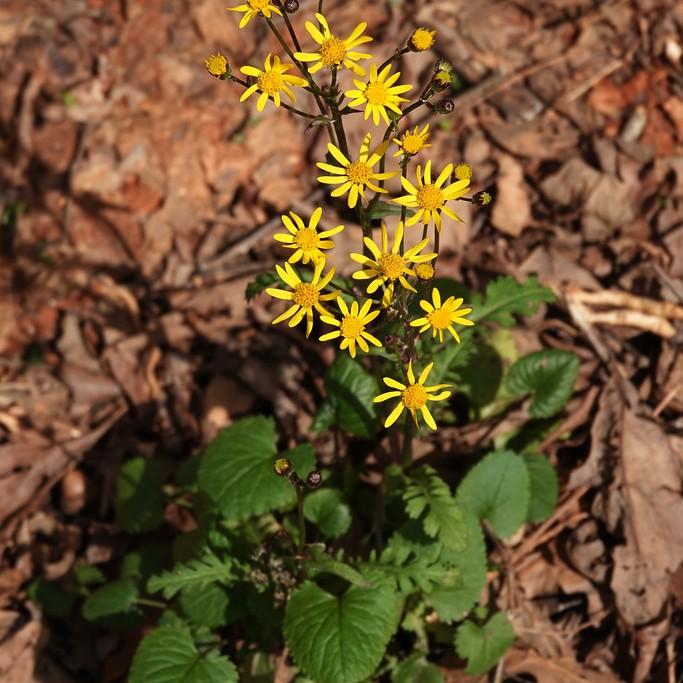
Golden Ragwort
Packera aurea
Overview
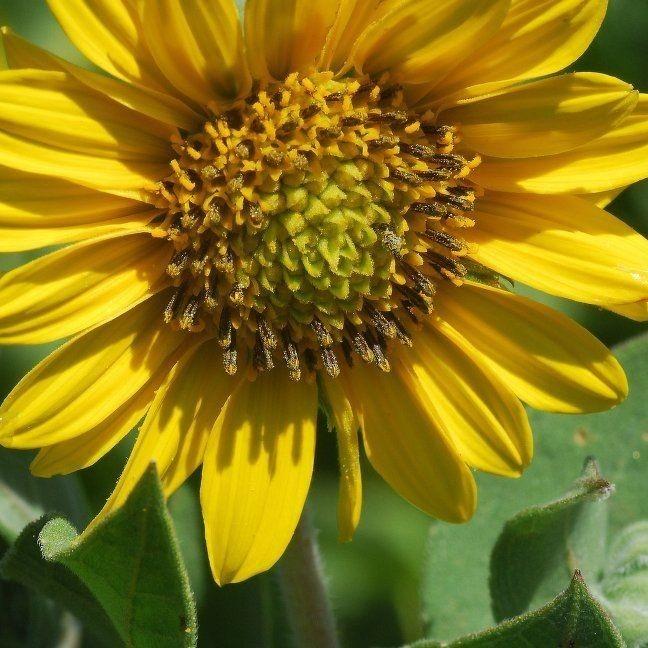
Golden ragwort, formerly classified as Senecio aureus, is a herbaceous perennial that spreads via creeping rhizomes to form dense, low-growing colonies in its native woodland, meadow, and stream bank habitats. Its heart-shaped, evergreen basal foliage is deep green, often tinged with purple on the undersides, providing year-round ground cover in mild climates. In early spring, upright, leafless flower stalks emerge bearing clusters of bright yellow, 1-inch wide daisy-like blooms that attract native bees, butterflies, and other pollinators. It is well-adapted to moist, partially shaded sites, making it a popular choice for native plant landscapes, erosion control, and pollinator gardens in eastern North America.
Care Guide
Watering
Golden ragwort prefers consistently moist, well-drained soil and tolerates occasional flooding, making it suitable for rain gardens and low-lying areas. Water regularly during dry spells to prevent the soil from drying out completely, especially for plants grown in full sun, which require more frequent moisture than those in shaded sites. Once established, it has moderate drought tolerance, but prolonged dry conditions will cause foliage to wilt and may reduce flowering the following season.
Light
This species thrives in partial to full shade, making it ideal for understory plantings and north-facing garden beds. It can tolerate full sun if grown in consistently moist, cool soil, but foliage may scorch and growth may stunted in hot, dry, full-sun locations. Dappled sunlight, such as that filtered through deciduous tree canopies, supports the most vigorous growth and abundant flowering.
Soil
Golden ragwort adapts to a wide range of soil types, including loam, clay, and sandy soils, as long as they retain consistent moisture. It prefers slightly acidic to neutral pH levels between 5.5 and 7.0, but tolerates mildly alkaline conditions as well. Poorly drained, waterlogged soils are acceptable for short periods, but extended standing water in winter may cause root rot in colder regions.
Fertilizer
This native perennial generally does not require regular fertilization, as it thrives in average to low-fertility soils. If grown in extremely poor, nutrient-depleted soil, apply a balanced, slow-release organic fertilizer in early spring before new growth emerges to support healthy foliage and flower development. Avoid over-fertilizing, as this can cause excessive, leggy growth and reduce the plant’s ability to spread naturally via rhizomes.
Temperature
Golden ragwort is hardy in USDA zones 3 to 8, tolerating winter temperatures as low as -40°F (-40°C) without additional protection. It prefers cool spring and fall temperatures, and may go partially dormant during extended periods of summer heat above 90°F (32°C), especially if soil moisture is low. Mulching around the base of the plant in late fall helps insulate roots from extreme temperature fluctuations in colder climates.
Pruning
Minimal pruning is required for golden ragwort; spent flower stalks can be cut back to the basal foliage after blooming finishes if a neater appearance is desired, though leaving stalks intact allows seeds to ripen and disperse for natural self-seeding. Remove any yellowed, damaged, or diseased foliage in late winter or early spring before new growth emerges to improve air circulation and reduce pest and disease risk. If colonies spread beyond desired boundaries, dig up and remove excess rhizomatous clumps in early spring or fall to contain growth.
Propagation
Golden ragwort is most easily propagated by division in early spring before flowering or in fall after blooms have faded, by separating clumps of rhizomes and replanting them at the same depth as the original plant. It can also be grown from seed, which requires a 60-day period of cold stratification to germinate; sow seeds outdoors in fall or refrigerate stratified seeds for 60 days before sowing indoors in late winter. Self-seeding is common in optimal growing conditions, with volunteer seedlings easily transplanted to new locations when they are 2 to 3 inches tall.
Humidity
This species tolerates a wide range of humidity levels, thriving in the moderate to high humidity common to its native eastern North American woodland and wetland habitats. It can tolerate average household humidity if grown as a potted houseplant, but will benefit from occasional misting if indoor air is extremely dry during winter months. Good air circulation around foliage helps prevent fungal diseases in high-humidity environments.
Repotting
When grown in containers, golden ragwort should be repotted every 2 to 3 years in early spring before new growth emerges, or when roots begin to grow through the drainage holes of the pot. Use a well-draining, loamy potting mix with added organic matter to retain moisture, and select a pot that is 1 to 2 inches larger in diameter than the current container to accommodate rhizome spread. Divide overcrowded clumps during repotting to maintain healthy growth and prevent the plant from becoming root-bound.
Uses & Symbolism
Golden ragwort is widely used in native plant gardens, pollinator gardens, and rain gardens, where its spreading habit provides excellent erosion control on slopes and moist stream banks. Its early spring blooms provide a critical nectar source for emerging native bees, small butterflies, and other pollinators when few other flowers are in bloom, while its evergreen basal foliage provides year-round ground cover in shaded sites. Historically, it was used in traditional herbal medicine as a treatment for respiratory and reproductive ailments, though its toxic alkaloid content makes internal use unsafe without professional guidance.
Diseases & Pests
Golden ragwort is relatively pest and disease resistant, but can be susceptible to common fungal diseases such as powdery mildew, leaf spot, and rust in humid, poorly ventilated conditions, which can be prevented by spacing plants properly to improve air circulation and avoiding overhead watering. Aphids and leaf miners may occasionally feed on foliage, though infestations are rarely severe and can be controlled with insecticidal soap or by removing affected leaves. Slugs and snails may feed on young foliage in moist, shaded locations, especially during cool, wet spring weather, and can be deterred with organic slug bait or copper barriers around plantings.
Related plants
Other plants you might like if you grow Golden Ragwort.