Gloriosa Lily
Gloriosa superba
Overview
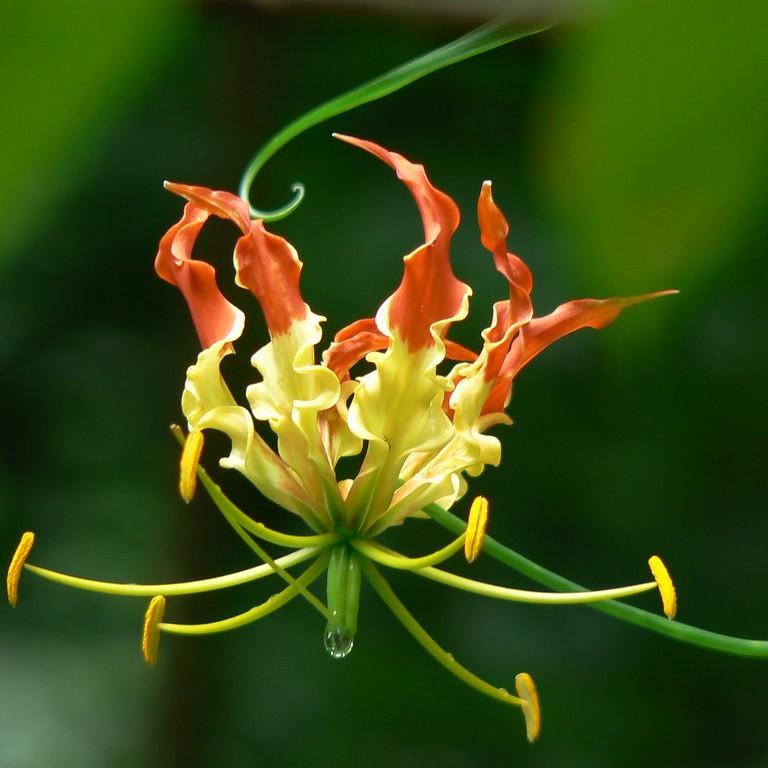
Gloriosa Lily, also called flame lily or glory lily, is a tender tuberous perennial that climbs using tendrils at the leaf tips, making it ideal for trellis support in warm gardens or containers. Its distinctive blooms have swept-back petals in vivid shades of red, orange, and yellow, often with ruffled edges, that appear in mid to late summer. Though widely grown for its dramatic floral display, it carries significant toxicity risks, requiring careful placement away from children and pets.
Care Guide
Watering
Water regularly during the active growing season, keeping the soil consistently moist but not waterlogged to avoid tuber rot. Reduce watering gradually once foliage begins to yellow in fall, and stop watering entirely during the dormant winter period when tubers are stored or left dry in the soil.
Light
Gloriosa Lily thrives in full sun to partial shade, with at least 6 hours of direct sunlight daily for optimal flowering. In extremely hot, arid climates, provide light afternoon shade to prevent leaf scorch and maintain vibrant bloom color.
Soil
Plant in fertile, well-drained loamy soil with a slightly acidic to neutral pH between 5.8 and 7.0. Avoid heavy, compacted soils that retain excess moisture, as these will quickly cause the tuberous roots to rot.
Fertilizer
Feed every 2-3 weeks during the growing season with a balanced, water-soluble fertilizer diluted to half strength to support vine growth and flowering. Switch to a phosphorus-rich fertilizer once buds begin to form to encourage larger, more vibrant blooms, and stop fertilizing once flowering ceases.
Temperature
It prefers warm temperatures between 65-85°F (18-29°C) during the growing season, and cannot tolerate frost or temperatures below 50°F (10°C). In regions with cold winters, lift tubers before the first frost and store them in a cool, dry, dark location at 50-55°F (10-13°C) until spring planting.
Pruning
Remove spent flowers regularly during the blooming period to encourage additional bud formation and extend the flowering season. Once foliage dies back completely in fall, cut back dead stems to ground level before lifting tubers for storage or leaving them dormant in warm climates.
Propagation
Most commonly propagated by dividing mature tubers in late winter or early spring before new growth begins, taking care to ensure each division has at least one growing eye. It can also be grown from seed, though seed-grown plants typically take 2-3 years to reach flowering maturity.
Humidity
Gloriosa Lily prefers moderate to high humidity levels between 40-60% for best growth. In dry indoor or arid outdoor environments, mist foliage regularly or place the potted plant on a tray filled with pebbles and water to raise ambient humidity around the vine.
Repotting
Potted Gloriosa Lilies should be repotted annually in late winter during dormancy, replacing the old potting mix and planting the tuber 2-3 inches deep in a slightly larger container if root bound. Ensure the pot has ample drainage holes to prevent water accumulation around the tuber, and provide a small trellis or support at repotting time for new growth to climb.
Uses & Symbolism
Gloriosa Lily is a popular ornamental plant grown in tropical gardens, container displays, and cut flower arrangements for its unique, long-lasting, flame-shaped blooms. In traditional African and Ayurvedic medicine, carefully controlled, highly diluted extracts are used for treating conditions like gout and inflammation, though improper use is extremely dangerous. It is also the national flower of Zimbabwe, holding cultural significance in its native range.
Diseases & Pests
Common fungal diseases include tuber rot, leaf spot, and powdery mildew, caused by overwatering, poor air circulation, or overly damp conditions. Aphids, spider mites, and thrips are the most frequent insect pests, which can be controlled with insecticidal soap or neem oil applications at the first sign of infestation.
Related plants
Other plants you might like if you grow Gloriosa Lily.