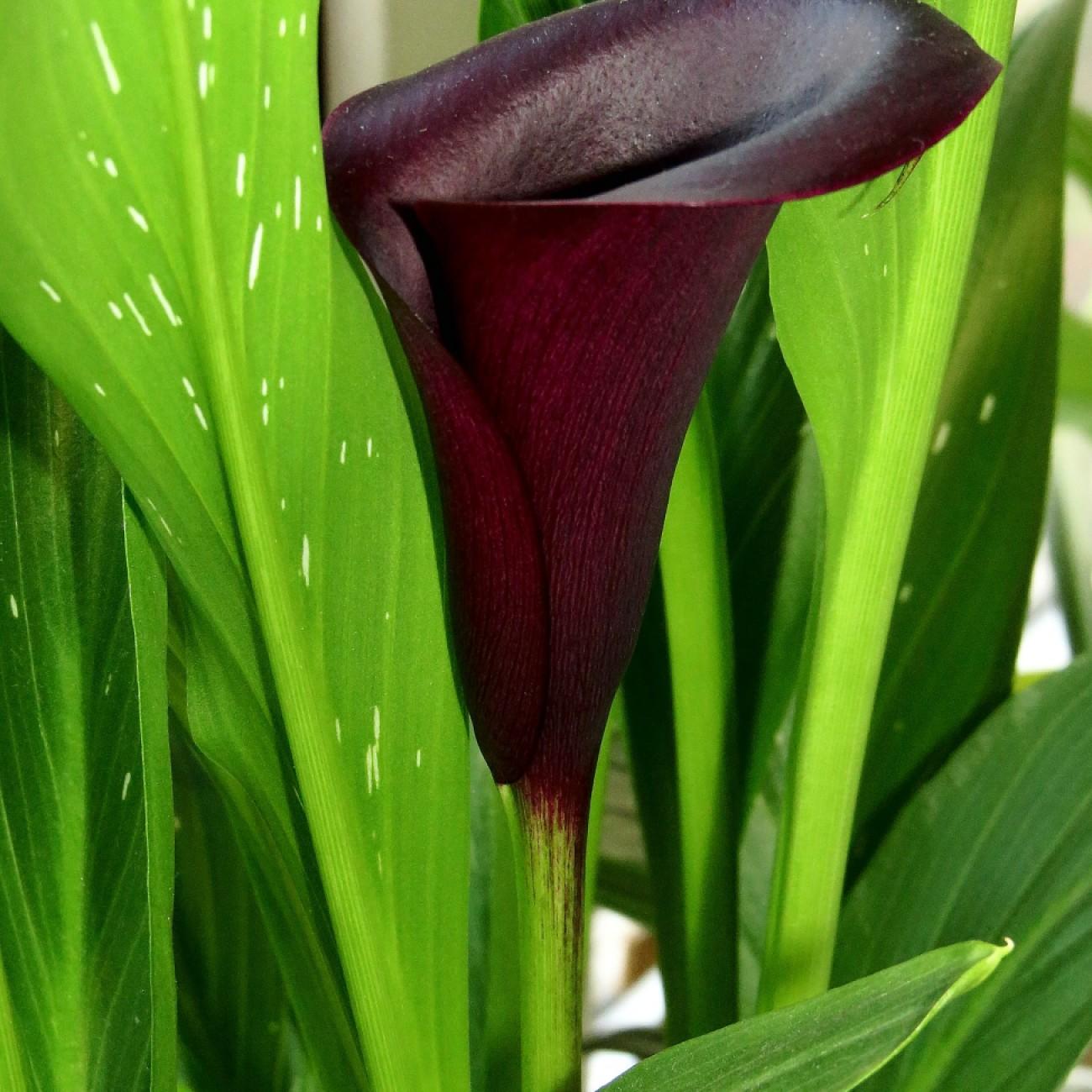
Calla Lily
Zantedeschia aethiopica
Overview
Native to marshy regions of South Africa, calla lilies are not true lilies, belonging instead to the Araceae family alongside peace lilies and philodendrons. Their iconic 'flower' is actually a modified leaf called a spathe, surrounding a central yellow spadix that bears tiny, true flowers. While classic varieties produce pure white spathes, cultivated hybrids are available in shades of pink, yellow, purple, and orange.
Care Guide
Watering
Keep soil consistently moist but not waterlogged during the active growing season, reducing water gradually once foliage begins to yellow in late summer. During dormancy, allow the soil to dry out almost completely to prevent rhizome rot, watering only sparingly if the plant shows signs of shriveling. Avoid watering directly into the center of the leaf rosette to minimize the risk of fungal disease.
Light
Thrives in bright, indirect light; avoid prolonged direct midday sun, which can scorch foliage and cause spathes to fade prematurely. In cooler climates, it can tolerate 2-3 hours of gentle morning sun to support robust flowering. Too little light will result in sparse blooms and leggy, stretched growth.
Soil
Prefers rich, moisture-retentive, well-draining soil with a slightly acidic to neutral pH range of 5.6 to 7.5. A mix of equal parts potting soil, peat moss, and perlite works well for container-grown plants, while garden-grown specimens benefit from the addition of compost or well-rotted manure to improve soil structure and nutrient content. Avoid heavy, compacted soils that hold excess water around the rhizomes.
Fertilizer
Feed every 2-3 weeks during the active growing and flowering period with a balanced, water-soluble fertilizer diluted to half strength, prioritizing formulations with slightly higher phosphorus content to support bloom production. Stop fertilizing once the flowers fade and foliage begins to die back, as the plant enters dormancy and does not require extra nutrients. Over-fertilization can cause leaf tip burn and reduce flowering the following season.
Temperature
Grows best in daytime temperatures between 60-75°F (15-24°C) and nighttime temperatures no lower than 55°F (13°C) during the active growing season. Rhizomes can survive light frost if planted deep in well-drained soil in zones 8-10, but in cooler climates, they should be dug up and stored indoors over winter in a cool, dry location between 45-50°F (7-10°C). Exposure to temperatures below 25°F (-4°C) will kill unprotected rhizomes.
Pruning
Remove spent flower stalks at the base once the spathes fade and begin to brown, to redirect energy back to the rhizome for future growth. Trim away yellowed or damaged leaves at their base throughout the growing season to maintain a tidy appearance and improve air circulation around the plant. Once all foliage dies back naturally in late fall, cut it down to 1-2 inches above the soil line before preparing the rhizomes for dormancy or winter storage.
Propagation
Most commonly propagated by dividing rhizomes in late winter or early spring, before new growth begins: carefully dig up the mature rhizome, separate sections with at least one visible growing eye, allow the cut surfaces to dry for 1-2 days, then plant 2-3 inches deep in moist soil. It can also be grown from seed, though seed-grown plants take 2-3 years to reach flowering size and may not retain the characteristics of the parent hybrid. For best results, keep newly divided rhizomes at 70-75°F (21-24°C) and lightly moist until new growth emerges.
Humidity
Prefers moderate to high humidity levels between 50-70%, which mimics its native marshy habitat. Dry indoor air can cause leaf tip browning and premature spathe drop, so mist foliage regularly, place the pot on a tray of pebbles filled with water, or use a room humidifier to boost moisture levels when grown indoors. Avoid placing plants near heating or cooling vents, which create drafts and dry out the air rapidly.
Repotting
Container-grown calla lilies should be repotted every 1-2 years in late winter, during dormancy, to refresh the soil and provide extra room for growing rhizomes. Choose a pot that is 1-2 inches larger in diameter than the current container, with drainage holes to prevent waterlogging, and plant the rhizome with the growing eyes facing upward, just below the soil surface. After repotting, water lightly and move the plant to a warm, bright location once new growth begins to appear.
Uses & Symbolism
Calla lilies are widely cultivated as ornamental garden plants, container specimens, and cut flowers, prized for their long-lasting, elegant blooms that are a staple in wedding bouquets and formal floral arrangements. In traditional African medicine, preparations of the rhizome have been used topically to treat wounds and inflammation, though ingestion is dangerous due to the plant's toxic calcium oxalate content. They are also planted in rain gardens and along pond edges in suitable climates, as they tolerate wet soil conditions and help stabilize bank edges.
Diseases & Pests
Common fungal diseases include rhizome rot, caused by overwatering or poorly draining soil, and powdery mildew, which appears as a white, powdery coating on foliage in humid, poorly ventilated conditions. Pests that frequently affect calla lilies include aphids, spider mites, and thrips, which suck sap from leaves and can transmit viral diseases that cause mottled foliage and stunted growth. Bacterial soft rot can also occur in wet conditions, causing rhizomes to become mushy and foul-smelling, requiring immediate disposal of infected plants to prevent spread.
Related plants
Other plants you might like if you grow Calla Lily.