Globe Flower
Trollius europaeus
Overview
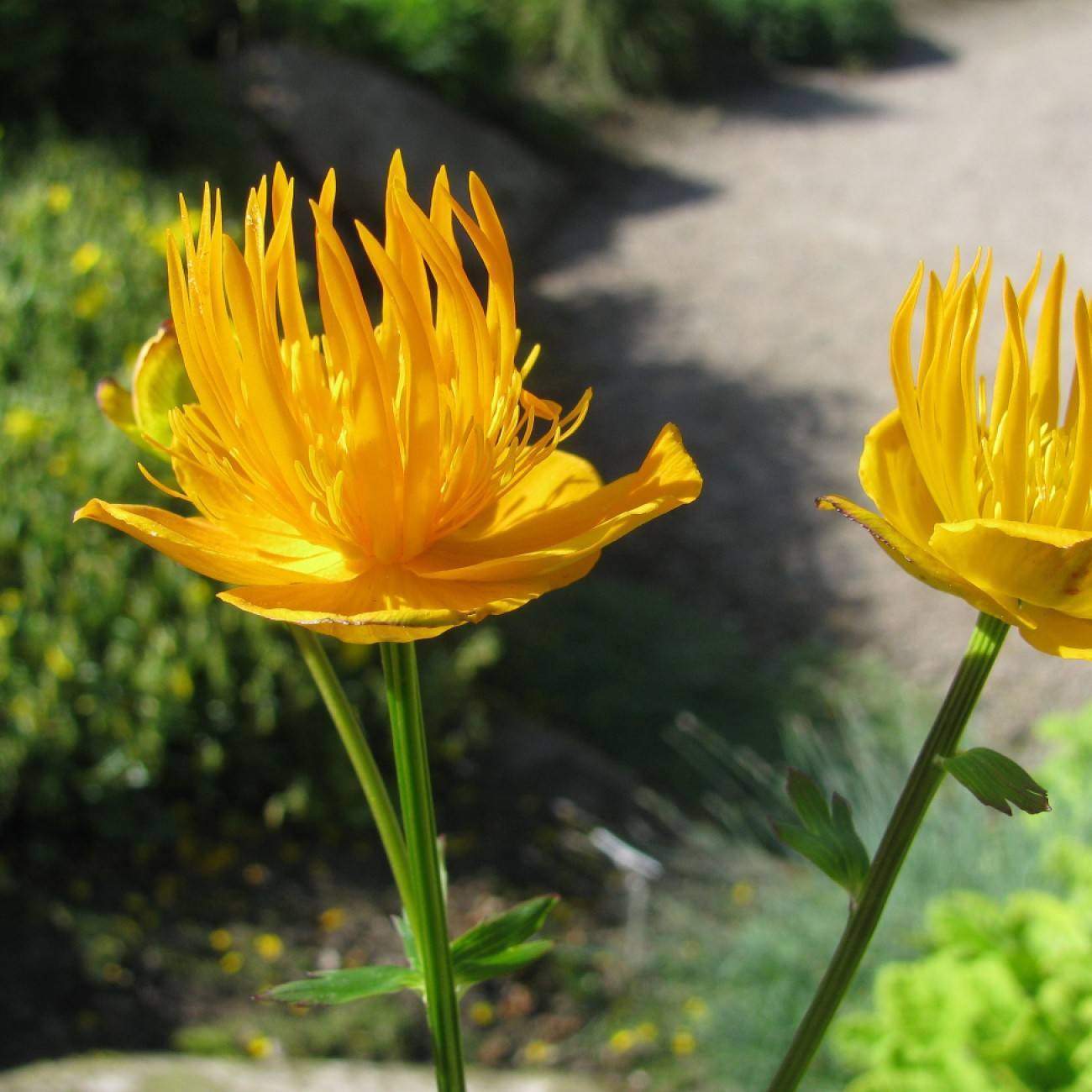
The globe flower is a herbaceous perennial named for its distinctive rounded, pom-pom-shaped flowers that resemble tightly closed buttercups, usually in vivid golden-yellow hues, though some cultivars offer cream or orange blooms. It naturally colonizes wet, nutrient-rich habitats in cooler temperate zones, making it a popular choice for rain gardens, bog plantings, and shaded border edges where soil moisture remains consistent. Its deep green, lobed foliage forms a dense basal clump that stays attractive throughout the growing season even after blooms fade.
Care Guide
Watering
Globe flowers require consistently moist, never waterlogged soil to thrive; water regularly during dry spells, ensuring the top 1-2 inches of soil do not dry out completely between waterings. Reduce watering frequency slightly in winter when the plant is dormant, but do not allow the root zone to dry out entirely, as prolonged drought will cause foliage to brown and the plant to decline.
Light
Grow globe flowers in partial shade for best performance, especially in regions with hot summer sun, as intense direct sunlight can scorch foliage and cause blooms to fade prematurely. In cooler northern climates, they can tolerate full sun as long as soil moisture remains adequate; avoid deep, heavy shade, which will reduce flowering and lead to leggy, sparse growth.
Soil
Plant in rich, humus-heavy, loamy soil with a neutral to slightly acidic pH, ideally amended with well-rotted compost or leaf mold to boost moisture retention and nutrient content. The soil must drain well to prevent root rot, but should hold consistent moisture; sandy or fast-draining soils should be amended with organic matter to improve their water-holding capacity before planting.
Fertilizer
Feed globe flowers once in early spring, just as new growth emerges, using a balanced, slow-release granular fertilizer or diluted liquid organic fertilizer to support healthy foliage and bloom development. Avoid over-fertilizing, especially with high-nitrogen formulas, as this can encourage excessive leaf growth at the expense of flowers and make the plant more prone to flopping. No additional fertilization is needed during the active growing season if the soil is already rich in organic matter.
Temperature
Globe flowers prefer cool temperatures between 55-75°F (13-24°C) during the growing season, and are hardy down to USDA zone 3, tolerating winter temperatures as low as -40°F (-40°C) when dormant. They struggle in hot, humid summer climates above 85°F (29°C), where they may go dormant early or die back if not provided with extra shade and consistent moisture. Provide a layer of mulch around the base of the plant in summer to keep root zones cool, and in winter to protect roots from extreme temperature fluctuations.
Pruning
Deadhead spent flower stems promptly after blooming to encourage a potential second flush of smaller blooms later in the season and prevent self-seeding if you do not want volunteer seedlings. Cut back all foliage to ground level in late autumn after it has yellowed and died back naturally, to keep the planting area tidy and reduce overwintering sites for pests and diseases. Thin out overcrowded clumps every 3-4 years during division to improve air circulation and maintain vigorous growth.
Propagation
Globe flowers are most commonly propagated by division in early spring or late autumn, when the plant is dormant; dig up the entire clump, separate it into smaller sections with at least 2-3 healthy growth buds each, and replant immediately at the same depth as the original plant. They can also be grown from fresh seed sown outdoors in autumn, as seeds require a period of cold stratification to germinate; seeds sown in spring will need 8-12 weeks of refrigeration before sowing, and may take 1-2 years to produce flowers. Take softwood cuttings from new growth in early summer for smaller-scale propagation, though division is far more reliable and produces mature flowering plants faster.
Humidity
Globe flowers thrive in moderate to high humidity levels between 50-70%, matching the moist, cool conditions of their native riparian habitats. They tolerate average household humidity if grown indoors, but will benefit from occasional misting or placement on a pebble tray filled with water to boost surrounding moisture levels during dry periods. Avoid placing them near heating vents, air conditioners, or drafty windows, which can cause dry air that browns leaf edges and stresses the plant.
Repotting
If grown in containers, repot globe flowers every 2-3 years in early spring before new growth emerges, using a pot with drainage holes and a rich, moisture-retentive potting mix amended with compost. Choose a pot only 1-2 inches larger than the current root ball to avoid excess soil that holds too much moisture and increases the risk of root rot. Water thoroughly after repotting, and keep the plant in partial shade for 1-2 weeks to allow it to adjust to its new container before resuming normal care.
Uses & Symbolism
Globe flowers are a popular ornamental choice for rain gardens, bog borders, stream edges, and shaded cottage gardens, where their bright yellow blooms add cheerful color in late spring and early summer. Their long, sturdy stems make them excellent cut flowers for fresh arrangements, with blooms lasting up to 10 days in a vase if cut when just partially open. Historically, some indigenous European communities used small, highly diluted amounts of the plant for topical treatments for swelling and wounds, though its toxicity makes internal consumption unsafe.
Diseases & Pests
Globe flowers are relatively pest and disease resistant when grown in proper conditions, but may develop powdery mildew or leaf spot if air circulation is poor or foliage remains wet for extended periods. Aphids and slugs may occasionally feed on young new growth, especially in cool, moist spring weather; aphids can be removed with a strong spray of water, while slugs can be controlled with bait, copper barriers, or hand picking. Root rot is the most serious issue, occurring when plants are grown in waterlogged, poorly draining soil; prevent this by amending soil with organic matter before planting and avoiding overwatering.
Related plants
Other plants you might like if you grow Globe Flower.