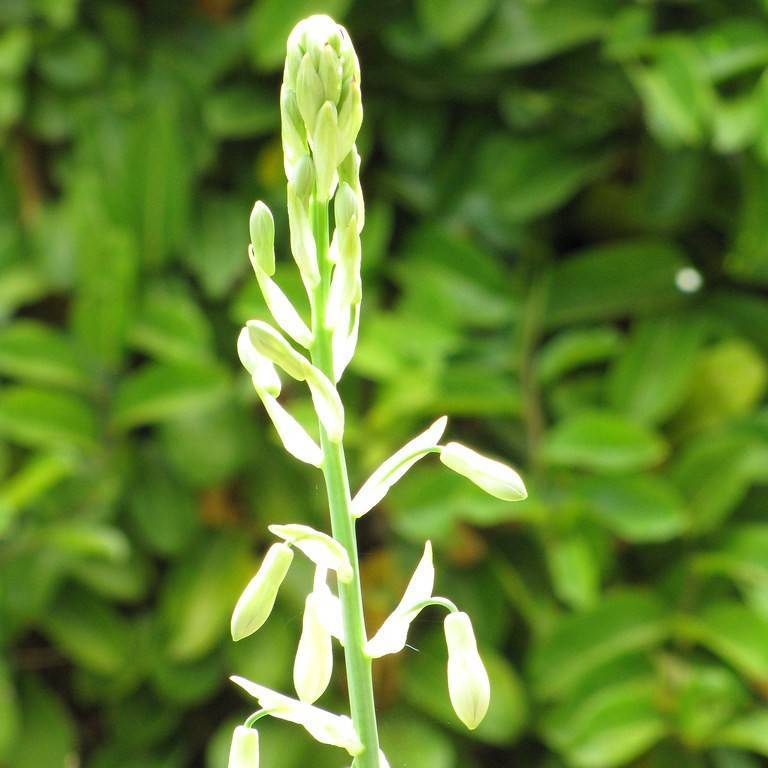
Giant Summer Hyacinth
Ornithogalum candicans
Overview
Giant Summer Hyacinth, sometimes classified as Galtonia candicans, is a striking warm-season bulb grown for its stately floral spikes and sweet, honey-like fragrance. Each bulb produces 5-10 strap-shaped, glossy green basal leaves that emerge in late spring, followed by a rigid, unbranched flower spike holding up to 30 drooping, waxy white blooms. Native to South African grasslands, it is adapted to warm, sunny climates and goes dormant in winter after foliage dies back.
Care Guide
Watering
Water regularly during the active growing season from spring to early fall, keeping the soil evenly moist but not waterlogged to prevent bulb rot. Reduce watering gradually once flowers fade and leaves start to yellow, and stop watering entirely during the winter dormant period when bulbs are stored or left in dry soil.
Light
Plant Giant Summer Hyacinth in full sun, with at least 6 hours of direct sunlight daily, to encourage strong, sturdy stems and abundant flowering. It can tolerate very light partial shade, but too much shade will result in weak, floppy growth and reduced bloom production.
Soil
Grow in well-drained, loamy or sandy soil with a neutral to slightly acidic pH of 6.0 to 7.0. Heavy clay soils that hold moisture should be amended with compost, perlite, or grit to improve drainage, as soggy winter soil will cause bulbs to rot.
Fertilizer
Apply a balanced, slow-release 10-10-10 fertilizer in early spring when new foliage first emerges, to support healthy leaf and flower development. Avoid high-nitrogen fertilizers, which can encourage excessive leaf growth at the expense of blooms. No fertilizer is needed during the dormant season.
Temperature
Thrives in warm summer temperatures between 65–85°F (18–29°C), and is winter hardy in USDA zones 7 to 10. In zones cooler than 7, dig up bulbs after foliage dies back in fall, store them in a cool, dry, frost-free location at 45–55°F (7–13°C) over winter, and replant in spring after the last frost.
Pruning
Snip off spent flower spikes after blooms fade to prevent seed formation and redirect energy back to the bulb for the next year’s growth. Leave the green foliage intact until it turns completely yellow and dies back naturally, as the leaves photosynthesize to store nutrients in the bulb. Remove dead foliage in late fall or early winter once it is fully dry.
Propagation
Giant Summer Hyacinth is most easily propagated by dividing small offset bulbs that form around the base of mature parent bulbs during the dormant season. Separate offsets from the main bulb in fall or early spring, replant them immediately at the same depth as the parent bulb, and expect them to reach flowering size in 1 to 2 years. It can also be grown from seed, but seed-grown plants take 3 to 4 years to produce their first flowers.
Humidity
Adaptable to average ambient humidity levels between 40% and 60%, typical of its native grassland habitat. It does not require extra humidity, and overly humid conditions combined with poor air circulation can increase the risk of fungal leaf spot diseases.
Repotting
If grown in containers, repot every 2 to 3 years during the dormant season, to refresh the soil and separate overcrowded bulbs. Plant bulbs 4 to 6 inches deep in a well-drained potting mix, with at least 2 inches of space between each bulb to allow for offset development. Ensure containers have drainage holes to prevent standing water around the bulbs.
Uses & Symbolism
Giant Summer Hyacinth is a popular addition to sunny perennial borders, cottage gardens, and cutting gardens, where its tall white spikes add vertical interest and contrast with brightly colored summer blooms. Its long-lasting, fragrant flowers are highly valued for cut flower arrangements, staying fresh in vases for up to 10 days. In warm climates, it can be naturalized in meadow or grassland plantings where it will spread slowly over time.
Diseases & Pests
The most common issue is bulb rot, caused by overwatering or poorly drained soil, which can be avoided by amending heavy soils and reducing watering during dormancy. Aphids and spider mites may occasionally infest new foliage and flower spikes, which can be controlled with insecticidal soap or a strong jet of water. Fungal leaf spot diseases may occur in overly humid, crowded conditions, which can be prevented by providing adequate spacing between plants for air circulation.
Related plants
Other plants you might like if you grow Giant Summer Hyacinth.