Flowering Tobacco
Nicotiana alata
Overview
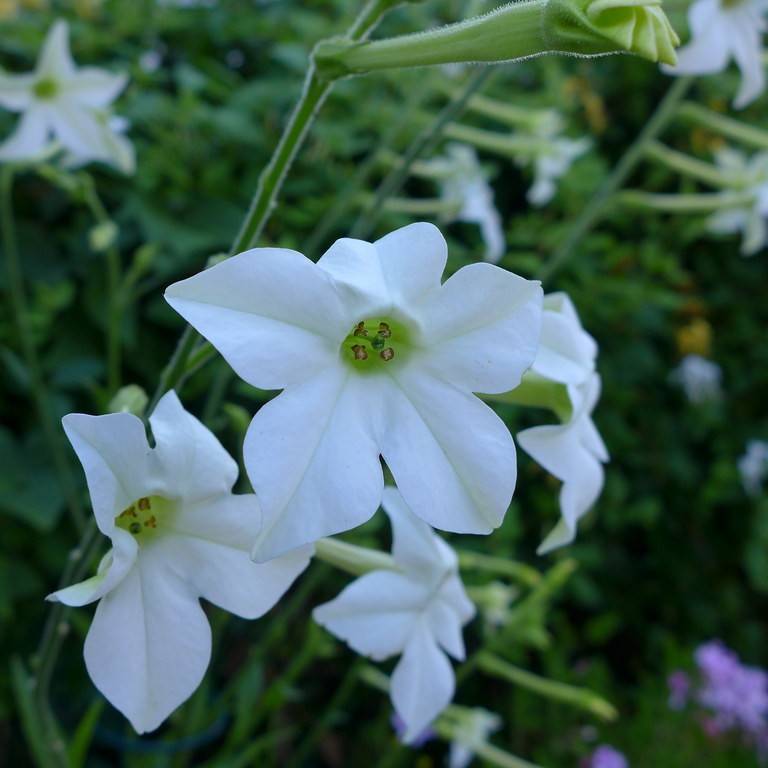
Flowering tobacco is a beloved ornamental annual grown for its showy, sweetly scented tubular blooms that open most fully at dusk to attract moths and other night pollinators. It has large, fuzzy, light green leaves that form a dense basal rosette before tall, branching flower stalks emerge in mid-summer. Though closely related to commercial tobacco, it is not cultivated for human consumption, instead valued for its long bloom period and ability to add height and fragrance to mixed borders and cottage gardens.
Care Guide
Watering
Water flowering tobacco regularly to keep soil consistently moist but not waterlogged, providing approximately 1 inch of water per week during active growth. Reduce watering frequency in cooler, cloudy periods to prevent root rot, and water at the base of the plant to avoid wetting foliage and triggering fungal issues.
Light
Plant flowering tobacco in full sun to partial shade, with at least 6 hours of direct sunlight daily for the most abundant blooms. In regions with intense, scorching midday sun, provide light afternoon shade to prevent leaf scorch and extend the life of delicate flowers.
Soil
Flowering tobacco thrives in fertile, well-drained loamy soil with a slightly acidic to neutral pH between 6.0 and 7.0. Amend heavy clay or sandy soils with compost or well-rotted manure before planting to improve nutrient content and drainage, as poor drainage can lead to rapid root rot.
Fertilizer
Feed flowering tobacco with a balanced, all-purpose liquid fertilizer diluted to half strength every 2 to 3 weeks during the active growing season. Avoid over-fertilizing with high-nitrogen formulas, as this will encourage lush leaf growth at the expense of flower production.
Temperature
Flowering tobacco grows best in warm temperatures between 65 and 85°F (18 and 29°C), and is highly sensitive to frost, which will kill the plant immediately. It can tolerate brief periods of temperatures up to 95°F (35°C) if provided with adequate water and partial shade during the hottest parts of the day.
Pruning
Deadhead spent flower stalks regularly to encourage continuous blooming throughout the summer and prevent the plant from expending energy on seed production. Cut back overgrown or leggy stems by one-third in mid-summer to promote bushier, more compact growth and a fresh flush of blooms in late summer.
Propagation
Flowering tobacco is most commonly propagated from seed, sown indoors 6 to 8 weeks before the last expected frost date, or directly sown outdoors after all danger of frost has passed. Seeds require light to germinate, so press them gently into the soil surface without covering, and keep the growing medium consistently moist until seedlings emerge in 10 to 20 days.
Humidity
Flowering tobacco adapts well to average outdoor humidity levels between 40 and 70%, with no special humidity requirements for healthy growth. In extremely dry, arid climates, occasional misting or placing a tray of water near potted specimens can help prevent leaf edge browning, though this is rarely necessary for in-ground plants.
Repotting
Potted flowering tobacco should be repotted only if it outgrows its container before the end of the growing season, as it is an annual that will die after frost. Use a well-draining potting mix when repotting, and choose a container with drainage holes to avoid waterlogged soil, and note that most plants will not need repotting if planted in an appropriately sized pot at the start of the season.
Uses & Symbolism
Flowering tobacco is primarily grown as an ornamental plant, adding height, fragrance, and vibrant color to cottage gardens, mixed borders, cutting gardens, and container displays. Its night-blooming, highly fragrant flowers make it a popular addition to moon gardens and outdoor spaces used in the evening, where its scent is most prominent. It is also a valuable pollinator plant, attracting hummingbirds, bees, and nocturnal moths to support local ecosystem health.
Diseases & Pests
Flowering tobacco is susceptible to common solanaceous fungal diseases including powdery mildew, leaf spot, and root rot, which occur most often in overly wet conditions or when foliage stays damp for extended periods. Common pests include aphids, whiteflies, spider mites, and tobacco hornworms, which can defoliate plants quickly if left untreated; regular inspections and insecticidal soap or neem oil applications can control most infestations. It may also be affected by tobacco mosaic virus, which is spread by contaminated tools or handling, so avoid planting near commercial tobacco and disinfect tools regularly to prevent spread.
Related plants
Other plants you might like if you grow Flowering Tobacco.