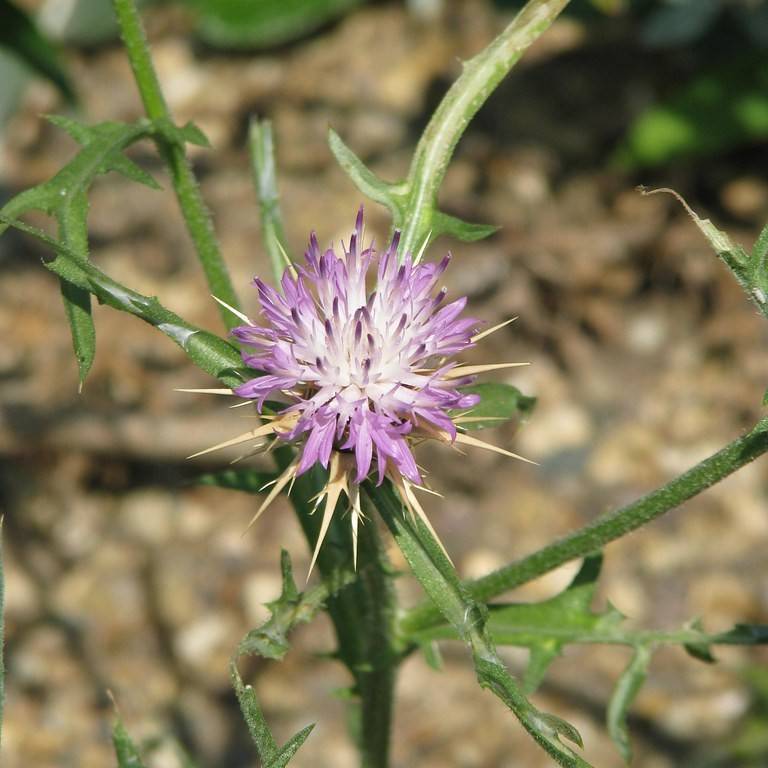
Big Head Purple Star Thistle
Centaurea macrocephala
Overview
Big Head Purple Star Thistle, also called giant knapweed, is a bold ornamental valued for its oversized, spherical purple blooms that draw pollinators including bees, butterflies, and hummingbirds. Its deep green, lobed foliage has soft spines along the margins, and the plant forms dense, upright clumps that spread slowly via rhizomes without being aggressively invasive in most garden settings. Native to mountain meadows of the Caucasus, it is adapted to a wide range of temperate growing conditions and tolerates drought once established.
Care Guide
Watering
Water newly planted specimens regularly to keep soil evenly moist for the first growing season, until the deep taproot is fully established. Mature plants are highly drought-tolerant, requiring only occasional watering during extended periods of hot, dry weather; avoid overwatering, as soggy soil will cause root rot. Reduce watering in fall and winter to allow the plant to enter dormancy with drier soil conditions.
Light
Grow Big Head Purple Star Thistle in full sun, meaning a minimum of 6 hours of direct, unfiltered sunlight per day for the most vigorous growth and abundant flowering. It can tolerate very light partial shade, but too much shade will cause stems to become leggy, flop over, and produce fewer flower heads. In regions with extreme summer heat, it will benefit from light afternoon shade to prevent foliage scorch, though full sun is still preferred for best performance.
Soil
This thistle thrives in well-drained, moderately fertile soil with a neutral to slightly alkaline pH, though it is adaptable to a wide range of soil types including sandy, loamy, and even poor, rocky soils. It cannot tolerate heavy, waterlogged clay soils, so amend heavy garden soil with coarse sand or gravel to improve drainage prior to planting. Avoid overly rich, nitrogen-heavy soils, as these encourage excessive foliage growth at the expense of flowers and weak stems that are prone to flopping.
Fertilizer
Big Head Purple Star Thistle has low nutrient needs and generally does not require regular fertilization if planted in average garden soil. If growing in extremely poor, nutrient-depleted soil, apply a balanced, slow-release granular fertilizer once in early spring as new growth emerges, taking care not to overfertilize. Avoid liquid, high-nitrogen fertilizers entirely, as these will promote soft, leggy growth and reduce flowering.
Temperature
This hardy perennial grows best in temperate climates, and is winter hardy in USDA zones 3 through 8, tolerating winter temperatures as low as -40°F (-40°C) without additional protection once established. It prefers warm summer temperatures between 65°F and 85°F (18°C and 29°C) and tolerates high heat well as long as it has adequate root drainage. In regions with hot, humid summers, ensure plants have good air circulation to prevent fungal foliage diseases.
Pruning
Deadhead spent flower heads regularly throughout the blooming season to encourage the production of additional flowers and prevent unwanted self-seeding, as the plant can spread prolifically via seed if heads are left to mature. Cut back the entire plant to 2-3 inches above the soil line in late fall after foliage dies back for the winter, to tidy the garden bed and reduce overwintering sites for pests. If clumps become too large or spread beyond their desired area, dig and divide rhizomes in early spring to keep growth contained.
Propagation
Big Head Purple Star Thistle is most easily propagated by seed, sown directly outdoors in fall or early spring, or started indoors 6-8 weeks before the last expected frost date; seeds germinate reliably in 14-21 days at temperatures between 60°F and 70°F (15°C and 21°C). It can also be propagated by division of established clumps in early spring, just as new growth begins to emerge, by digging up the entire root mass, separating it into smaller sections with at least one growth bud each, and replanting immediately. Root cuttings taken in late winter while the plant is dormant will also root successfully, though division and seed propagation are simpler for most home gardeners.
Humidity
This plant is adaptable to a wide range of humidity levels, tolerating both dry air in arid regions and moderate humidity in temperate areas without issue. High humidity combined with poor air circulation can increase the risk of powdery mildew and other fungal foliage diseases, so space plants 2-3 feet apart to allow for good airflow around foliage. It does not require any misting or supplemental humidity, even when grown in containers.
Repotting
If grown in containers, repot Big Head Purple Star Thistle every 2-3 years in early spring, just as new growth emerges, moving to a pot one size larger only when the root system has fully filled the existing container. Use a well-drained, sandy potting mix, and ensure the container has multiple drainage holes to prevent water buildup around the roots. Because it develops a deep taproot, choose a deep container to accommodate the root system and prevent the plant from becoming root-bound too quickly.
Uses & Symbolism
Big Head Purple Star Thistle is widely planted in pollinator gardens, meadow plantings, and mixed perennial borders for its showy, long-lasting blooms that support a wide range of beneficial insects and hummingbirds. Its large, sturdy flower heads make excellent cut flowers for fresh arrangements, and they can also be dried for use in everlasting floral crafts by harvesting blooms just as they fully open and hanging them upside down in a cool, dark, well-ventilated space. In its native range, it has been used in traditional folk medicine to treat inflammatory conditions, though its medicinal use is not widespread in modern herbalism.
Diseases & Pests
Big Head Purple Star Thistle is relatively pest and disease resistant, but it can be susceptible to powdery mildew in warm, humid conditions with poor air circulation, which presents as a white, powdery coating on foliage; treat with neem oil or a copper fungicide, and improve airflow around plants to prevent recurrence. Aphids and thrips may occasionally feed on new growth and flower buds, causing stunted growth and distorted blooms; these can be controlled with a strong spray of water to dislodge them, or with insecticidal soap applications. Root rot is the most serious issue, occurring when plants are grown in poorly drained, waterlogged soil, so ensure proper soil drainage and avoid overwatering to prevent this fatal condition.
Related plants
Other plants you might like if you grow Big Head Purple Star Thistle.