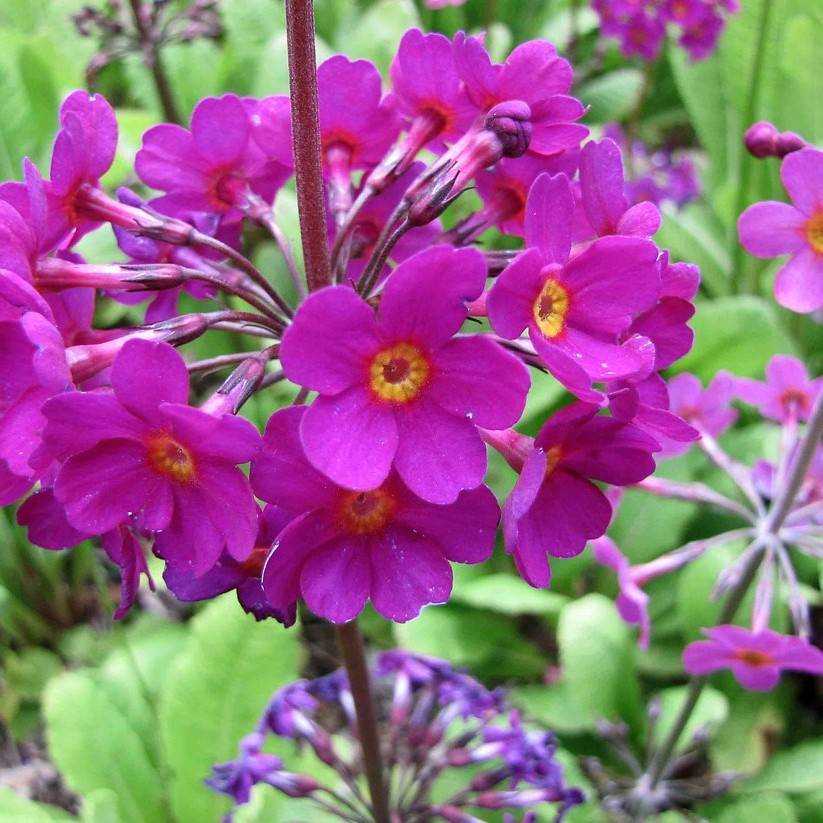
Bee's Primrose
Primula beesiana
Overview
Primula beesiana, commonly called Bee's primrose, is a deciduous herbaceous perennial prized for its distinctive tiered flower clusters that bloom in early to mid summer. A member of the candelabra primrose group, it thrives in cool, damp conditions similar to its native high-altitude Chinese woodland and stream-side habitats. It forms low rosettes of slightly hairy, ovate green leaves before sending up tall, sturdy flower stalks that hold multiple stacked whorls of blooms, each with a bright golden central eye.
Care Guide
Watering
Keep soil consistently moist at all times, never allowing it to dry out completely; in periods of hot, dry weather, water deeply 2-3 times per week to maintain consistent dampness. Avoid overhead watering where possible to reduce risk of leaf rot, directing water at the base of the plant instead. Ensure the planting site never becomes waterlogged, as prolonged standing water can rot the root system.
Light
Prefers partial shade, receiving dappled sunlight for 3-6 hours per day, ideally with protection from harsh midday sun that can scorch leaves and dry out soil too quickly. In cooler, mild summer climates, it can tolerate full morning sun as long as soil moisture remains consistent. Too much deep shade will reduce flowering and lead to leggy growth.
Soil
Requires rich, humus-dense, moisture-retentive soil with a slightly acidic to neutral pH between 5.5 and 7.0. Amend heavy clay or sandy soils with well-rotted leaf mold, compost, or peat moss prior to planting to boost organic content and improve water retention. The ideal soil stays damp but drains well enough to prevent stagnant water around roots.
Fertilizer
Feed in early spring just as new growth emerges with a balanced, slow-release granular fertilizer formulated for flowering perennials, applied at half the recommended strength to avoid burning tender roots. An optional second light application of diluted liquid fertilizer can be given just as flower buds begin to form to support abundant blooming. Avoid fertilizing after mid summer, as this can stimulate tender new growth that is damaged by early frost.
Temperature
Thrives in cool summer temperatures between 55-75°F (13-24°C), and is winter hardy in USDA zones 5 through 8, tolerating winter lows down to -20°F (-29°C) when planted in appropriate conditions. It struggles in regions with hot, humid summers above 85°F (29°C), where it may go dormant early or die if not provided extra shade and moisture. A layer of winter mulch applied after the first frost helps insulate roots and prevent frost heave in cold climates.
Pruning
Remove spent flower stalks after blooming finishes to prevent self-seeding if desired, and to encourage the plant to direct energy back into root and leaf growth. Trim away any yellowed, damaged, or dead leaves throughout the growing season to improve air circulation and reduce risk of fungal disease. Cut back all remaining foliage to ground level in late fall after it dies back naturally for the winter.
Propagation
Most easily propagated by division in early spring just as new growth emerges, or immediately after flowering finishes, splitting mature clumps into smaller sections each with a healthy root system and several leaf shoots. It can also be grown from seed sown in fall directly outdoors, or in late winter after a 4-6 week period of cold stratification to break seed dormancy. Seed-grown plants typically bloom in their second year of growth.
Humidity
Prefers moderate to high humidity levels between 50-70%, similar to its native mountain woodland habitat. In dry indoor or garden conditions, mist surrounding air regularly, or place the plant near a water feature such as a pond or stream to boost ambient humidity. Low humidity will cause leaf edges to brown and reduce overall bloom production.
Repotting
If grown in containers, repot every 1-2 years in early spring before new growth begins, using a fresh, humus-rich potting mix with added perlite or vermiculite to improve drainage. Select a pot that is only 1-2 inches larger than the current root ball, as excess potting soil can hold too much moisture and lead to root rot. Ensure the pot has adequate drainage holes to prevent standing water at the bottom.
Uses & Symbolism
Widely planted in shaded bog gardens, pond edges, woodland borders, and rain gardens where its bright tiered blooms add vertical interest and attract a wide range of pollinators including bees, butterflies, and hummingbirds. It is also a popular cut flower, with sturdy, long-lasting stems that hold up well in floral arrangements. In traditional Chinese medicine, extracts from related Primula species have been used for respiratory support, though P. beesiana is rarely used for medicinal purposes today.
Diseases & Pests
Most susceptible to fungal diseases including powdery mildew, botrytis blight, and root rot, which occur most often in poorly drained soil or conditions with insufficient air circulation. Common pests include aphids, spider mites, and slugs, which feed on tender young leaves and flower buds, especially in damp, shaded conditions. Crown rot can occur if plants are planted too deeply, or if heavy mulch is piled directly against the base of the stem.
Related plants
Other plants you might like if you grow Bee's Primrose.