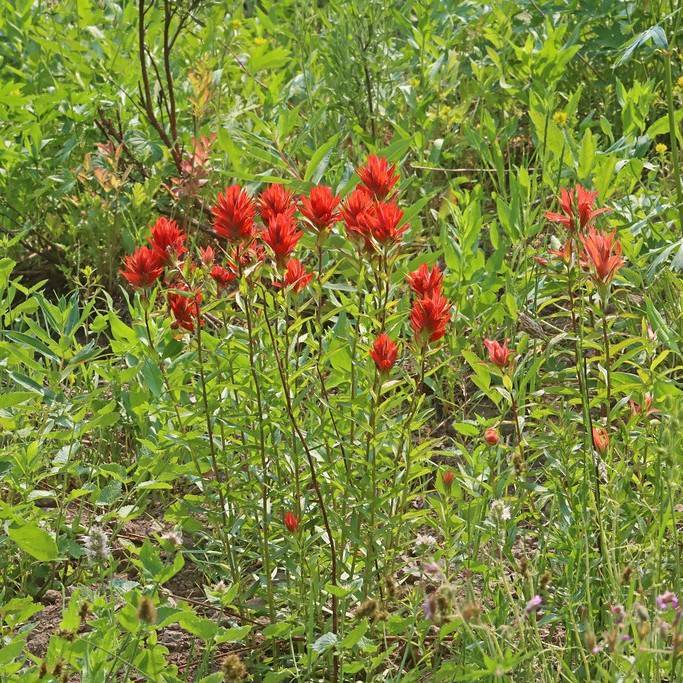
Giant Red Indian Paintbrush
Castilleja miniata
Overview
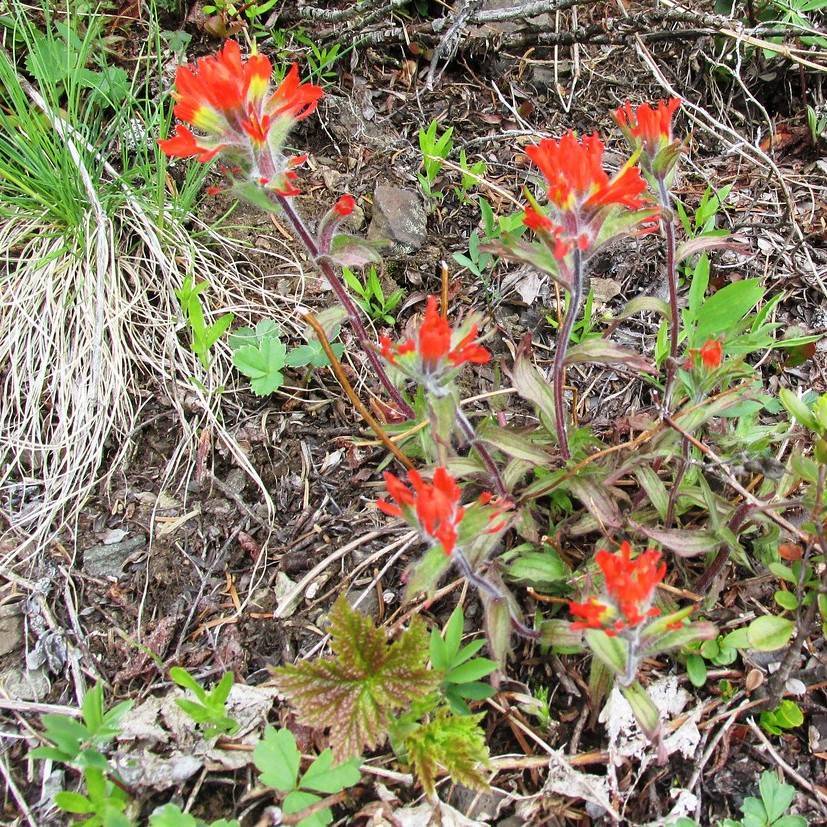
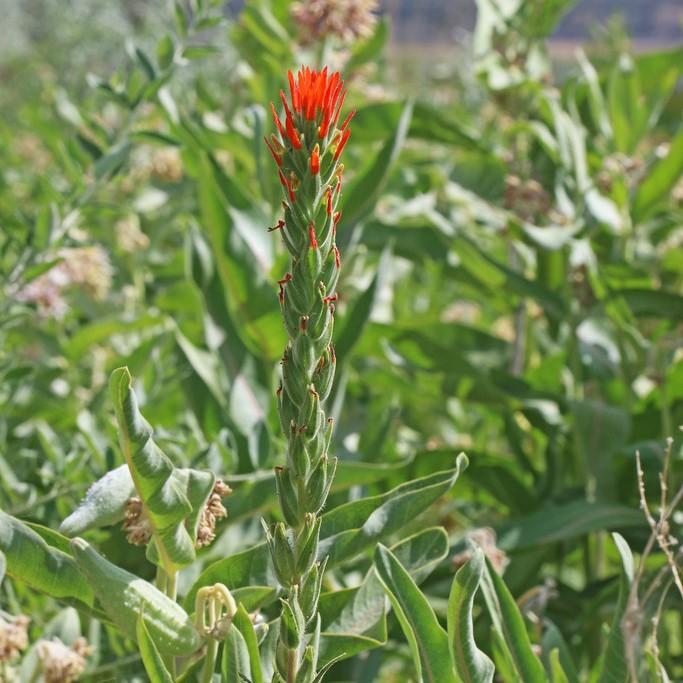
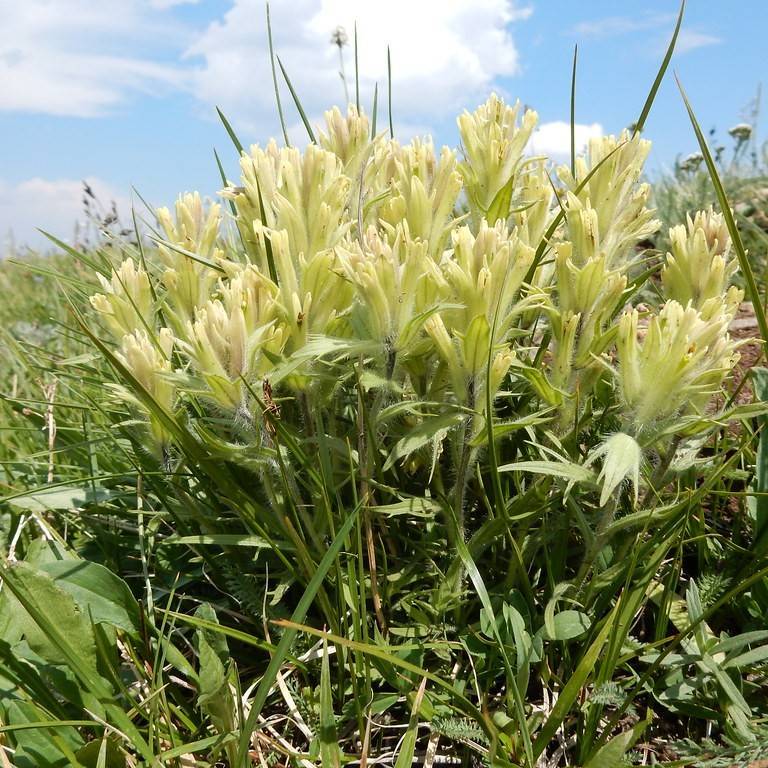
Giant Red Indian Paintbrush is a hemiparasitic plant that draws partial nutrients from the roots of neighboring host species, typically grasses or sagebrush. Its signature showy red structures are modified bracts, with small, inconspicuous greenish-yellow flowers tucked within them, which are highly attractive to hummingbirds and native bees. It thrives in open, sunny habitats including meadows, prairies, mountain slopes, and open woodlands across its native range.
Care Guide
Watering
Requires moderate, consistent moisture during its active growing season in spring and early summer, tolerating occasional short dry spells once established. Avoid overwatering, which can cause root rot, especially in heavy, poorly draining soils. Reduce watering gradually after flowering finishes as the plant enters seasonal dormancy.
Light
Needs full sun for optimal growth and the most vibrant bract color, tolerating very light partial shade in hotter, southern portions of its range. Insufficient light will lead to leggy growth, reduced flowering, and dull, faded bract color. Plant in a location that receives at least 6 hours of direct sunlight per day.
Soil
Prefers well-draining, sandy or loamy soils with a neutral to slightly alkaline pH, typical of its native prairie and mountain habitats. It does not tolerate heavy clay or waterlogged soils, which will quickly kill its delicate root system. Since it is hemiparasitic, it must be grown alongside compatible host plants such as native grasses or Artemisia species to survive long-term.
Fertilizer
Requires very little fertilizer, as excessive nutrients will hinder its ability to form parasitic connections with host plants, leading to poor health or death. If grown in extremely poor soil, a light application of low-nitrogen, slow-release fertilizer in early spring is sufficient to support growth. Avoid high-nitrogen fertilizers entirely, as they promote excessive foliage growth at the expense of bract production and parasitic function.
Temperature
Adaptable to a wide range of temperatures, thriving in USDA hardiness zones 3 through 8, tolerating winter lows as low as -40°F (-40°C) when dormant. It prefers cool to moderate summer temperatures, and may struggle in regions with sustained heat above 90°F (32°C) without occasional afternoon shade. Winter dormancy is a natural part of its life cycle, with above-ground foliage dying back completely in late fall before reemerging in spring.
Pruning
Requires minimal pruning; spent flower stalks can be cut back to the base after blooming finishes to prevent self-seeding if desired, though leaving seed heads supports local bird populations that feed on the small seeds. Avoid cutting back green foliage before it yellows and dies back naturally in fall, as the plant is still storing energy for the next growing season during this period. Remove any damaged or diseased foliage as soon as it appears to prevent the spread of pathogens.
Propagation
Most reliably propagated from seed, which requires a 30-90 day period of cold stratification to break dormancy before sowing in spring. Seeds should be sown directly in the garden near compatible host plants, as transplanting mature plants is rarely successful due to their delicate parasitic root connections. Vegetative propagation from root cuttings is possible but challenging, and only recommended for experienced growers familiar with hemiparasitic plant care.
Humidity
Adaptable to a wide range of humidity levels, thriving in the moderate to dry humidity common to its native western North American habitats. It does not tolerate high, sustained humidity, which increases the risk of fungal leaf diseases and root rot, making it unsuitable for humid subtropical or tropical regions. No supplemental humidity is required when grown in its preferred climate range.
Repotting
Rarely grown in containers, as its hemiparasitic root system requires direct access to host plant roots to survive, making container cultivation extremely difficult. If attempting container growth, use a large, deep pot with well-draining soil and plant alongside a compatible host species such as a native bunchgrass, repotting only every 3-4 years to avoid disturbing the delicate root connections. When repotting, take extreme care not to damage the fine parasitic root haustoria that attach to host roots, as damage will often kill the paintbrush plant.
Uses & Symbolism
Primarily used in native wildflower gardens, pollinator habitats, and restoration projects to support hummingbirds, native bees, and seed-eating bird species, while adding vibrant seasonal color. It has a history of limited medicinal use by some Indigenous tribes for treating rheumatic pain and respiratory ailments, though its toxic selenium content makes unmonitored consumption dangerous. It is also a popular cut flower for native floral arrangements, with its bright red bracts holding their color well for several days in vases.
Diseases & Pests
Most susceptible to root rot in poorly draining, waterlogged soils, which can kill the plant quickly if soil moisture levels are not corrected. Fungal leaf spots and powdery mildew may occur in high humidity or if foliage remains wet for extended periods, which can be managed by improving air circulation around plants and avoiding overhead watering. Aphids and spider mites may occasionally infest new growth, which can be controlled with insecticidal soap or by introducing beneficial predatory insects such as ladybugs.
Related plants
Other plants you might like if you grow Giant Red Indian Paintbrush.