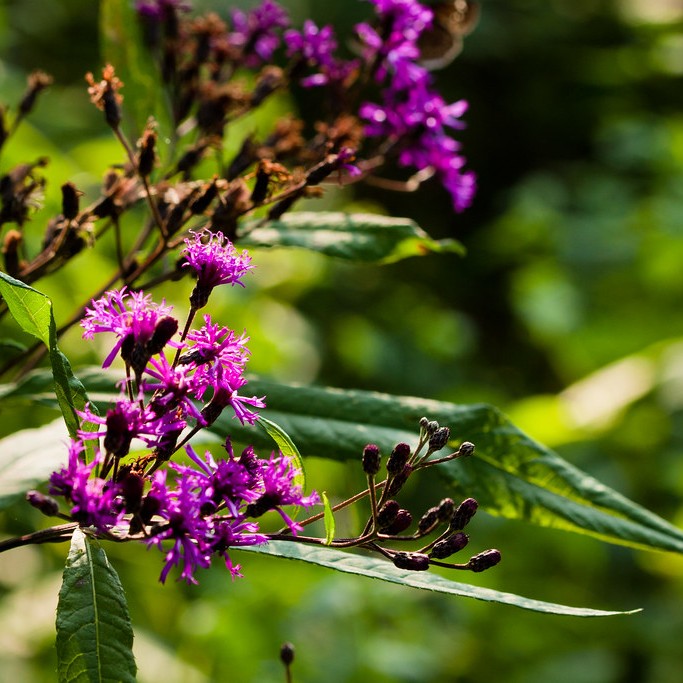
Giant Ironweed
Vernonia gigantea
Overview
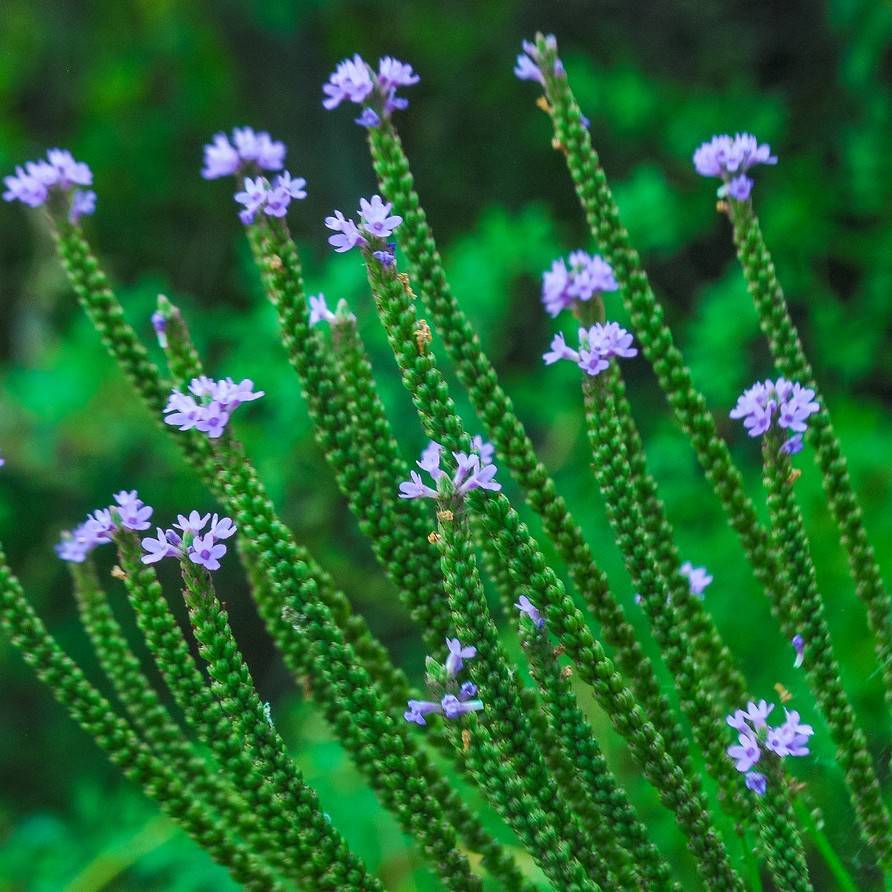
Giant Ironweed is a robust, upright herbaceous perennial named for its tough, rigid stems and rusty brown seed heads that persist through winter. Its flat-topped clusters of tiny, vibrant purple disk flowers bloom from mid-summer to early fall, creating a bold vertical accent in meadows, rain gardens, and native plant borders. It thrives in moist, open habitats including stream banks, wet prairies, and roadside ditches, and is well-adapted to temperate regional climates.
Care Guide
Watering
Giant Ironweed prefers consistently moist, well-drained soil, tolerating occasional flooding and short periods of drought once established. Water newly planted specimens regularly for the first growing season to support deep root development; mature plants only need supplemental watering during extended hot, dry spells. Avoid overwatering in poorly drained sites, as this can cause root rot.
Light
This species grows best in full sun, requiring at least 6 hours of direct sunlight daily to produce sturdy stems and abundant blooms. It can tolerate partial shade, but shaded plants may become leggy, require staking, and produce fewer flowers. Plant in open, unobstructed locations for the most vigorous growth.
Soil
Giant Ironweed adapts to a wide range of soil types, including clay, loam, and sandy soils, as long as moisture is available. It tolerates a pH range from slightly acidic to slightly alkaline, and thrives in rich, moist soils typical of its native wet prairie and riparian habitats. It can handle periodic soil saturation, making it suitable for rain garden plantings.
Fertilizer
Fertilization is rarely needed for plants grown in native soil, as Giant Ironweed is adapted to low to moderate nutrient levels. Excess nitrogen will cause overly lush, leggy growth that requires staking, so avoid high-nitrogen fertilizers. If grown in poor, depleted soil, apply a thin layer of compost in early spring to provide mild, slow-release nutrients.
Temperature
Giant Ironweed is winter hardy in USDA zones 5 to 9, tolerating winter lows down to -20°F (-29°C). It thrives in summer temperatures between 65°F and 90°F (18°C to 32°C), and can withstand short periods of extreme heat if soil moisture is adequate. Frost will kill back above-ground foliage in late fall, but roots remain dormant and regrow reliably in spring.
Pruning
Prune back dead stems to 4-6 inches above the soil line in late winter or early spring before new growth emerges. To encourage bushier growth and reduce the need for staking, you can pinch back stem tips in late spring when plants are 1-2 feet tall. Deadheading spent blooms can prevent aggressive self-seeding if desired, but leaving seed heads provides winter food for birds and visual interest.
Propagation
Giant Ironweed is easily propagated by seed sown directly outdoors in fall, or cold-stratified for 30-60 days and sown indoors in early spring. It can also be propagated by root division in early spring before new growth starts, separating clumps into smaller sections with at least one growing bud each. Stem cuttings taken in early summer root readily when placed in moist potting mix under indirect light.
Humidity
This plant tolerates a wide range of humidity levels, thriving in the moderate to high humidity common to its native eastern North American range. It has no specific humidity requirements when grown in appropriate outdoor conditions, and can handle dry spells as long as soil moisture is sufficient. Indoor cultivation is not common, but average household humidity levels are adequate for potted specimens.
Repotting
Giant Ironweed is rarely grown in containers, as its large size and deep root system make it better suited for in-ground planting. If grown in a large pot, repot every 2-3 years in early spring before new growth emerges, using a rich, well-draining potting mix and upgrading to a container at least 2 inches larger in diameter than the previous one. Ensure pots have adequate drainage holes to prevent waterlogging.
Uses & Symbolism
Giant Ironweed is a staple in native pollinator gardens, providing abundant nectar for monarch butterflies, bees, and other beneficial insects during late summer when other nectar sources are scarce. Its tall, upright form makes it an excellent backdrop for perennial borders, and it is frequently used in rain gardens, meadow restorations, and riparian buffer plantings to control erosion and support local ecosystems. The dried seed heads provide winter forage for songbirds, including finches and sparrows, and add structural interest to dormant winter gardens.
Diseases & Pests
Giant Ironweed is largely pest and disease resistant, with no major common issues affecting healthy plants. It may occasionally develop powdery mildew on foliage in humid, poorly ventilated conditions, which can be prevented by spacing plants properly to encourage air flow. Rare occurrences of leaf spot or aphid infestations are usually mild and can be addressed with neem oil or insecticidal soap if needed.
Related plants
Other plants you might like if you grow Giant Ironweed.