Gentian Sage
Salvia patens
Overview
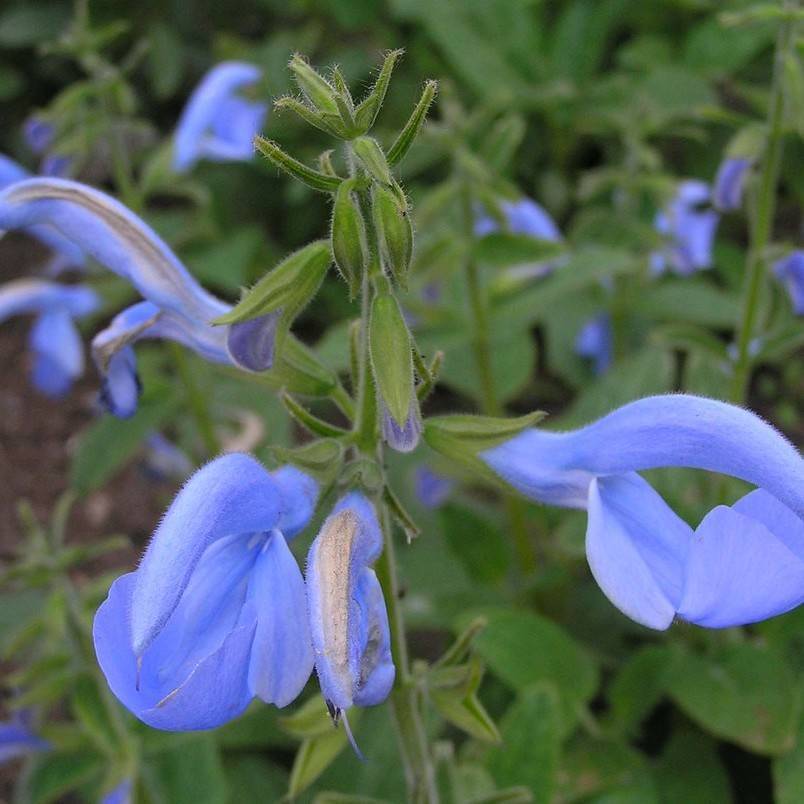
Gentian sage, also called spreading sage, is a tender herbaceous perennial grown worldwide for its striking, saturated blue blooms that stand out in garden beds and container displays. In its native Mexican habitat, it grows in cool, well-drained mountain slopes, where it dies back to underground tubers during dry, cool periods before re-emerging when conditions warm. It is often grown as an annual in temperate regions where winter temperatures drop below freezing, as its tubers cannot survive prolonged frost.
Care Guide
Watering
Water gentian sage regularly to keep soil evenly moist but not waterlogged, allowing the top 1 inch of soil to dry out between waterings to prevent root rot. Reduce watering frequency in fall as growth slows, and withhold almost all water during winter dormancy for overwintered tubers. Container-grown specimens may require more frequent watering during hot summer months to prevent soil from drying out completely.
Light
Plant gentian sage in full sun, receiving at least 6 hours of direct sunlight daily, to encourage dense, bushy growth and maximum flower production. In regions with extremely hot, intense midday sun, it will benefit from light afternoon shade to prevent leaf scorch and extend bloom life. Indoor grown plants need a bright south-facing window or supplemental grow lights to avoid lanky, weak growth.
Soil
Gentian sage thrives in light, well-drained, fertile loamy soil with a neutral to slightly acidic pH between 6.0 and 7.0. Heavy clay soils should be amended with compost, perlite, or coarse sand to improve drainage, as soggy soil will quickly rot the plant’s tuberous roots. For container planting, use a high-quality general-purpose potting mix with added perlite to ensure excess water drains freely.
Fertilizer
Feed gentian sage with a balanced, slow-release granular fertilizer at planting time in spring to support steady early growth. During the active growing season, apply a diluted liquid bloom fertilizer high in phosphorus every 4 to 6 weeks to encourage abundant flower production. Avoid over-fertilizing with high-nitrogen formulas, as this will promote excessive leaf growth at the expense of blooms.
Temperature
Gentian sage grows best in moderate temperatures between 65-80°F (18-27°C) during its active growing season. It is frost tender, and exposure to temperatures below 32°F (0°C) will kill above-ground growth, while prolonged exposure below 20°F (-7°C) will kill underground tubers. In cold climates, dig up tubers before the first frost, store them in a cool, dry place over winter, and replant in spring after all frost risk passes.
Pruning
Deadhead spent flower spikes regularly throughout the blooming season to encourage continuous new flower production and prevent the plant from putting energy into seed development. Cut back lanky or overgrown stems by up to one-third in mid-summer if the plant becomes leggy, to promote denser, bushier growth. After the first killing frost in fall, cut back all dead above-ground growth to 2 inches above the soil line if leaving tubers in the ground in mild climates, or before digging tubers for winter storage.
Propagation
Gentian sage is most commonly propagated from seed, sown indoors 8-10 weeks before the last expected frost date, with seeds pressed lightly into the soil surface as they need light to germinate. It can also be propagated from softwood stem cuttings taken in late spring or early summer, rooted in moist perlite or potting mix under high humidity. Overwintered tubers can be divided in early spring before new growth emerges, with each division containing at least one visible growth bud to ensure successful establishment.
Humidity
Gentian sage prefers moderate humidity levels between 40-60%, which is typical of most temperate garden environments. It tolerates average indoor humidity well when grown as a houseplant, though extremely dry air may cause leaf tips to brown. Avoid placing it in overly humid, poorly ventilated areas, as this increases the risk of fungal leaf spots and root rot.
Repotting
Container-grown gentian sage should be repotted every 1-2 years in early spring before new growth emerges, moving to a pot one size larger if roots are visibly circling the root ball. For overwintered tubers stored indoors, repot each spring into fresh potting mix to replenish nutrients and ensure proper drainage. Ensure all pots have drainage holes to prevent water from pooling around the tuberous roots.
Uses & Symbolism
Gentian sage is a highly popular ornamental plant used in perennial borders, cottage gardens, pollinator gardens, and container displays, where its vivid blue blooms provide a striking contrast to yellow, pink, or white flowering plants. Its nectar-rich flowers attract bees, butterflies, and hummingbirds, making it a valuable addition to wildlife-friendly garden spaces. It also makes an excellent cut flower, with its long, sturdy stems and long-lasting blooms holding up well in fresh arrangements.
Diseases & Pests
Gentian sage is relatively pest resistant, but may be affected by common garden pests including aphids, whiteflies, and spider mites, which can be controlled with insecticidal soap or neem oil applications. Overly wet, poorly drained soil will lead to root rot, the most common and serious disease affecting this plant, which can be prevented by following proper watering and soil amendment practices. In humid, poorly ventilated conditions, it may develop fungal leaf spots or powdery mildew, which can be mitigated by spacing plants to improve air flow and avoiding overhead watering.
Related plants
Other plants you might like if you grow Gentian Sage.
%22%2F%3E%0A%20%20%20%20%20%20%3Ccircle%20cx%3D%22920%22%20cy%3D%22180%22%20r%3D%2290%22%20fill%3D%22%23cfe8d5%22%2F%3E%0A%20%20%20%20%20%20%3Cpath%20d%3D%22M600%20590c-90-180-215-255-310-280%200%20165%20118%20296%20270%20296h40z%22%20fill%3D%22%2379b88e%22%2F%3E%0A%20%20%20%20%20%20%3Cpath%20d%3D%22M600%20590c80-150%20198-212%20302-228-8%20142-123%20255-270%20255h-32z%22%20fill%3D%22%235c9f73%22%2F%3E%0A%20%20%20%20%20%20%3Cpath%20d%3D%22M600%20610V360%22%20stroke%3D%22%234f8c64%22%20stroke-width%3D%2218%22%20stroke-linecap%3D%22round%22%2F%3E%0A%20%20%20%20%20%20%3Ctext%20x%3D%22600%22%20y%3D%22700%22%20text-anchor%3D%22middle%22%20font-family%3D%22Arial%2C%20sans-serif%22%20font-size%3D%2244%22%20fill%3D%22%23365c45%22%3E%0A%20%20%20%20%20%20%20%20Plant%20image%20coming%20soon%0A%20%20%20%20%20%20%3C%2Ftext%3E%0A%20%20%20%20%3C%2Fsvg%3E%0A%20%20)