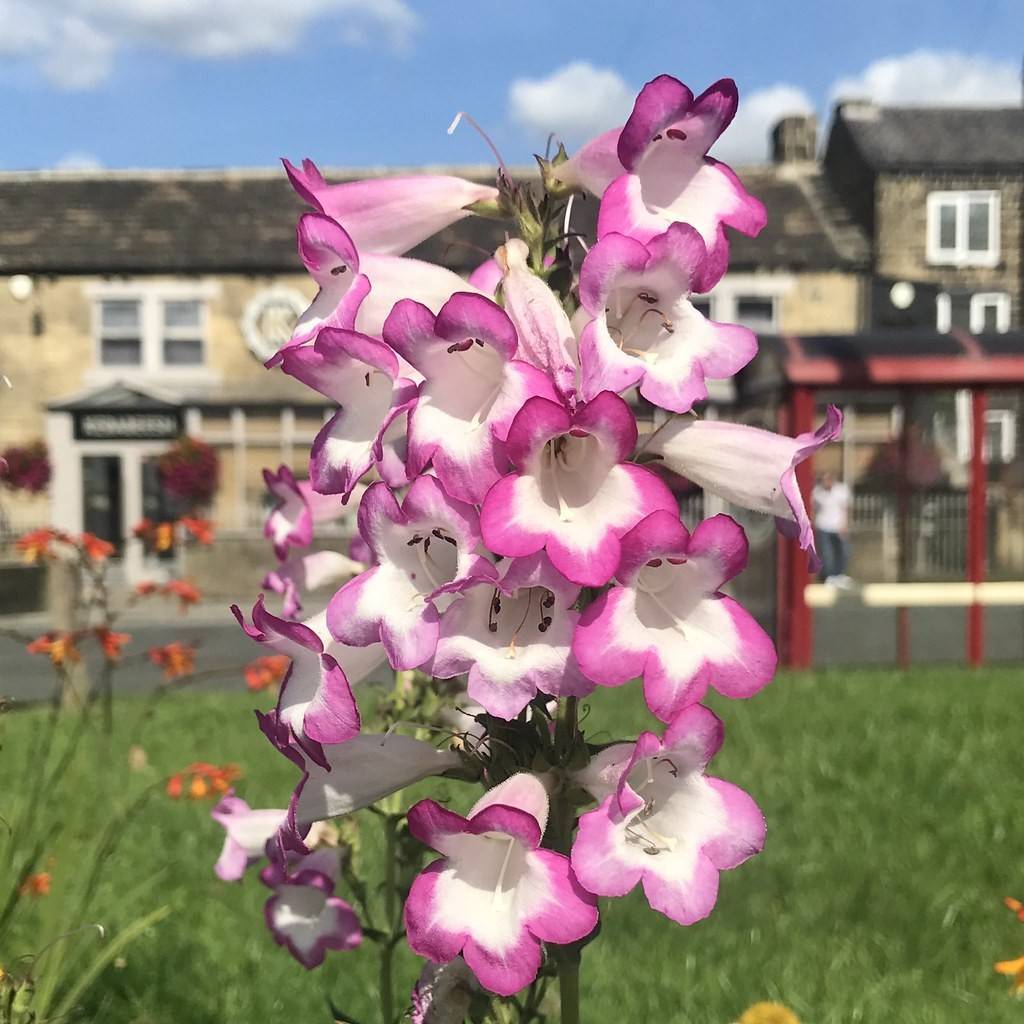
Bellflower Beardtongue
Penstemon campanulatus
Overview
Bellflower Beardtongue is a semi-woody perennial that forms dense, upright clumps of narrow, lance-shaped green foliage. Its distinctive tubular, bell-shaped flowers bloom in loose spikes, attracting hummingbirds, bees, and butterflies throughout its flowering period. Adapted to dry, mountainous native habitats, it tolerates drought and poor soil, making it a low-maintenance choice for sunny garden beds. Though short-lived in overly wet climates, it readily self-seeds to maintain consistent presence in suitable growing conditions.
Care Guide
Watering
Water newly planted Bellflower Beardtongue regularly for the first growing season to establish a deep root system, keeping soil evenly moist but not waterlogged. Once established, it is highly drought-tolerant, requiring only occasional watering during prolonged dry spells, as overwatering quickly leads to root rot. Avoid overhead watering to reduce foliar disease risk, directing water to the base of the plant when possible.
Light
This plant thrives in full sun, requiring a minimum of 6 hours of direct, unfiltered sunlight per day to produce abundant blooms and maintain a compact, sturdy growth habit. It can tolerate very light partial shade, especially in regions with intense midday summer heat, but too much shade will cause leggy growth, reduced flowering, and increased susceptibility to fungal diseases. For indoor cultivation, place it in a south-facing window with consistent bright light.
Soil
Bellflower Beardtongue prefers well-drained, sandy or gravelly soil with a neutral to slightly alkaline pH, though it adapts to most average garden soils as long as drainage is excellent. Heavy clay soils that hold moisture are unsuitable, so amend them with coarse sand, perlite, or crushed gravel before planting to improve drainage. It tolerates low-fertility soils well, and overly rich, organic soil can lead to soft, floppy growth.
Fertilizer
This low-feeding plant requires minimal fertilization; apply a light, balanced slow-release fertilizer once in early spring before new growth emerges, using half the recommended rate on the product label. Avoid high-nitrogen fertilizers, as they promote excess foliage growth at the expense of blooms and can reduce the plant’s drought tolerance. Additional fertilization is not needed during the growing season, as overfeeding can shorten its lifespan.
Temperature
Bellflower Beardtongue grows best in temperatures between 60-85°F (15-29°C) and is hardy to USDA zones 5-9, tolerating winter lows down to -20°F (-29°C) when planted in well-drained soil. It tolerates mild summer heat well, though prolonged temperatures above 90°F (32°C) may cause temporary wilting, which resolves once temperatures cool if the root zone is not overly wet. Mulch lightly around the base in winter to protect roots from extreme temperature fluctuations in colder zones.
Pruning
Deadhead spent flower spikes regularly throughout the blooming season to encourage repeated flowering and prevent unwanted self-seeding if spreading is not desired. Cut back the entire plant to 2-3 inches above the soil line in late fall after foliage dies back, or in early spring before new growth emerges, to promote fresh, compact growth each year. Thin out overcrowded clumps every 2-3 years during spring division to improve air circulation and reduce disease risk.
Propagation
Bellflower Beardtongue is most easily propagated by seed, which can be sown directly outdoors in fall or cold-stratified for 4-6 weeks and sown indoors 8-10 weeks before the last spring frost, with germination occurring in 14-21 days at 65-70°F (18-21°C). It can also be propagated by softwood stem cuttings taken in early summer, dipped in rooting hormone, and placed in well-drained potting mix under bright, indirect light until roots form in 3-4 weeks. Divide mature clumps in early spring every 3-4 years, replanting healthy outer sections at the same depth they were originally growing to rejuvenate older plants.
Humidity
This plant prefers low to moderate humidity levels between 30-50%, typical of its native high-elevation, dry habitats. It does not tolerate high humidity well, as prolonged moist air increases the risk of powdery mildew and other foliar fungal diseases. Ensure plants are spaced adequately for air circulation and avoid planting in enclosed, humid garden areas to prevent disease issues.
Repotting
If grown in containers, repot Bellflower Beardtongue every 1-2 years in early spring before new growth begins, using a well-drained cactus or succulent potting mix amended with extra perlite for drainage. Choose a pot with ample drainage holes that is only 1-2 inches larger in diameter than the current root ball, as overly large pots hold excess moisture that can cause root rot. Gently loosen tangled roots before repotting, and water lightly after planting to settle the soil around the root system.
Uses & Symbolism
Bellflower Beardtongue is a popular addition to pollinator gardens, xeriscapes, rock gardens, and sunny border beds, providing long-lasting color from early to late summer. Its cut flowers are valued for floral arrangements, holding up well in vases for 7-10 days when cut at the peak of bloom. In its native range, it has historically been used in traditional folk medicine to treat minor respiratory and inflammatory ailments, though modern medicinal use is limited.
Diseases & Pests
The most common issues affecting Bellflower Beardtongue are root rot and fungal foliar diseases like powdery mildew and leaf spot, almost always caused by overwatering, poor drainage, or inadequate air circulation in humid conditions. Common pests include aphids, spider mites, and slugs, which can be controlled with insecticidal soap, neem oil, or organic slug baits as needed, though infestations are rare in healthy, properly sited plants. Crown rot may occur in poorly drained soils during prolonged wet winter periods, which is fatal to affected plants and can be prevented by amending soil before planting and avoiding overmulching.
Related plants
Other plants you might like if you grow Bellflower Beardtongue.