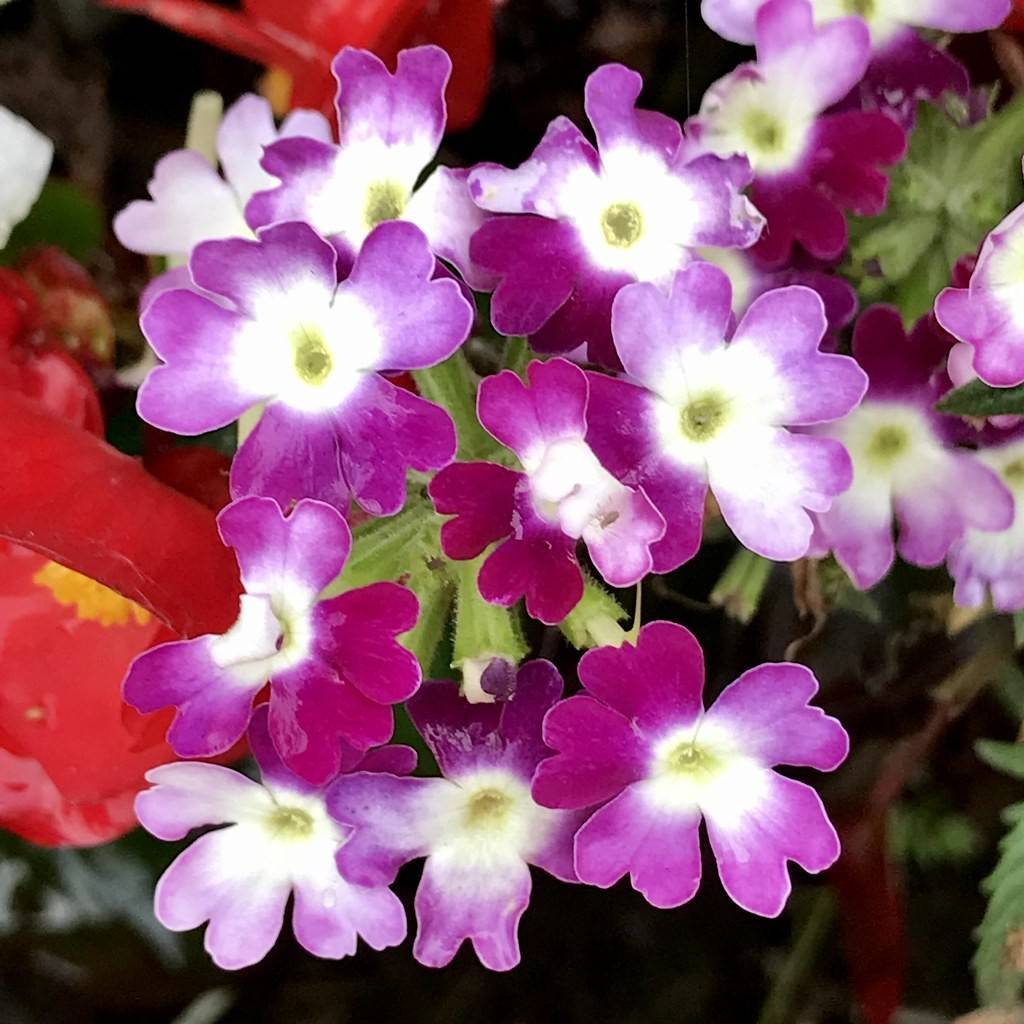
Garden Verbena
Verbena × hybrida
Overview
Garden verbena is a widely cultivated hybrid derived from crossing several South American Verbena species, valued for its extended bloom period and tolerance of warm, sunny conditions. It produces dense, rounded clusters of small five-petaled flowers in shades of purple, pink, red, white, and bicolor patterns, with slightly fuzzy, lance-shaped to oval green foliage. Most often grown as an annual in regions with cold winters, it returns reliably as a short-lived perennial in USDA hardiness zones 8 through 11.
Care Guide
Watering
Water garden verbena regularly during the first growing season to establish a deep root system, aiming for 1 inch of water per week including rainfall. Once established, it is highly drought-tolerant, requiring supplemental watering only during extended periods of hot, dry weather. Avoid overhead watering to reduce fungal disease risk, directing water at the base of the plant instead.
Light
Garden verbena requires full sun, meaning a minimum of 6 to 8 hours of direct, unfiltered sunlight per day to produce abundant blooms. Insufficient light will lead to leggy growth, sparse flowering, and increased susceptibility to pest and disease issues. It can tolerate very light partial shade in extremely hot climates, but flowering will be reduced.
Soil
Grow garden verbena in well-drained, moderately fertile soil with a neutral to slightly alkaline pH range of 6.0 to 7.5. It tolerates poor, rocky, or sandy soils as long as drainage is excellent, and will develop root rot quickly in heavy, waterlogged clay soils. Amending planting sites with compost or coarse sand can improve drainage for dense, heavy soils.
Fertilizer
Feed garden verbena sparingly, as excessive fertilization leads to lush foliage growth at the expense of flowering. Apply a balanced, slow-release 10-10-10 fertilizer at planting time and once per month during the growing season at half the recommended label rate. Avoid high-nitrogen fertilizers, which promote leafy growth over bloom production.
Temperature
Garden verbena thrives in warm temperatures between 60°F and 85°F (15°C to 29°C), and tolerates high summer heat and humidity well when grown in well-drained soil. It can withstand light, short-duration frosts down to 25°F (-4°C), but extended freezing temperatures will kill the plant. In cool climates, it is typically planted outdoors after all risk of frost has passed in spring.
Pruning
Deadhead spent flower clusters regularly throughout the growing season to encourage continuous blooming and prevent self-seeding if undesired. If plants become leggy or sparse mid-season, cut them back by up to one-third of their total height to stimulate new, bushy growth and a fresh flush of flowers. Remove any yellowed or damaged foliage as it appears to maintain plant health and appearance.
Propagation
Garden verbena is most commonly propagated from seed, sown indoors 8 to 10 weeks before the last expected frost date, or directly sown outdoors after all frost risk has passed. Stem cuttings can also be taken from healthy, non-flowering shoots in late summer or early fall, rooted in moist potting mix, and overwintered indoors for planting the following spring. Many hybrid cultivars are sterile, so cuttings are the only way to reliably replicate their specific flower color and growth habit.
Humidity
Garden verbena adapts well to a wide range of humidity levels, thriving in both dry and moderately humid conditions as long as air circulation around the plant is good. High humidity combined with poor air flow and overly wet foliage increases the risk of powdery mildew and other fungal diseases. Avoid overcrowding plants and ensure they have adequate space for air movement to mitigate humidity-related issues.
Repotting
For container-grown garden verbena, repot annually in early spring before new growth begins, using a fresh, well-drained potting mix and a container with drainage holes one size larger than the current pot if the plant has outgrown its space. If growing as an annual, repotting is typically not necessary during the single growing season. Check root-bound container plants periodically, as tightly packed roots can reduce drought tolerance and flowering performance.
Uses & Symbolism
Garden verbena is a popular ornamental plant used in flower beds, border edging, rock gardens, hanging baskets, window boxes, and ground cover plantings, where its trailing habit and bright blooms add long-lasting color. It is highly attractive to pollinators including bees, butterflies, and hummingbirds, making it a common addition to pollinator-friendly and wildlife gardens. Some gardeners also use cut verbena stems in small, fresh floral arrangements, as the blooms hold up well in water for several days.
Diseases & Pests
Common fungal diseases affecting garden verbena include powdery mildew, botrytis blight, and root rot, most often caused by overwatering, poor drainage, or insufficient air circulation. Common pests include aphids, spider mites, whiteflies, and slugs, which feed on foliage and sap, weakening the plant and reducing flowering. Most issues can be prevented by planting in full sun, providing proper spacing, avoiding overhead watering, and treating pests with insecticidal soap or neem oil at the first sign of infestation.
Related plants
Other plants you might like if you grow Garden Verbena.