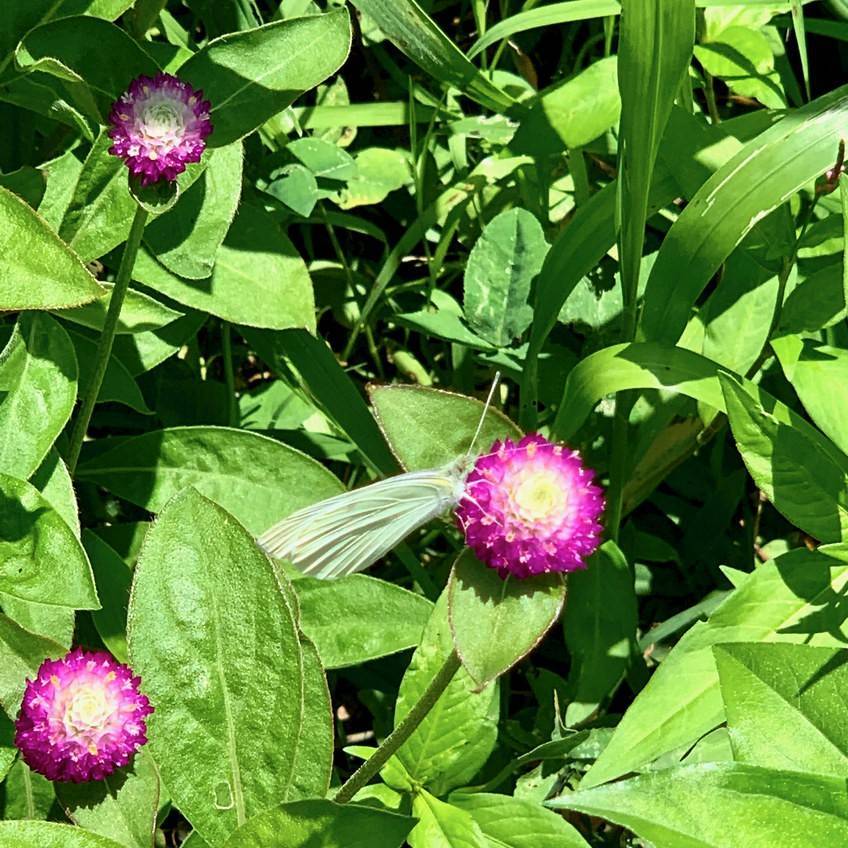
Common Globe Amaranth
Gomphrena globosa
Overview
Common globe amaranth is a sun-loving annual recognized for its dense, spherical flower heads in shades of pink, purple, white, red, and orange. The papery, bract-like blooms retain their color and shape for months, making them a staple for cut flower gardens and dried crafts. Native to tropical Americas, it has naturalized in warm regions worldwide and is a popular low-maintenance addition to borders, containers, and pollinator gardens.
Care Guide
Watering
Water common globe amaranth regularly during its first growing season to establish a deep root system, allowing the top 1-2 inches of soil to dry out between waterings. Once established, it is highly drought-tolerant, requiring only occasional watering during prolonged dry spells to support continuous blooming. Avoid overwatering or soggy soil, as this can lead to root rot and fungal issues.
Light
Grow common globe amaranth in full sun, meaning at least 6 to 8 hours of direct, unfiltered sunlight per day for the most abundant and vibrant blooms. It can tolerate partial shade, but plants grown in low light will become leggy, produce fewer flowers, and be more prone to pest infestations. Indoors, place it in a south-facing window or under grow lights to meet its high light requirements.
Soil
Common globe amaranth adapts to most well-drained soil types, including sandy, loamy, and even poor, nutrient-deficient soils, as long as excess water can drain freely. It prefers a slightly acidic to neutral soil pH between 6.0 and 7.5 for optimal growth. Avoid heavy clay soils that hold standing water, as this will damage the plant’s shallow root system.
Fertilizer
Fertilize sparingly, as over-fertilization will encourage lush leaf growth at the expense of flower production. Apply a balanced, slow-release 10-10-10 fertilizer once at planting time, or use a diluted liquid flowering plant fertilizer once every 4 to 6 weeks during the growing season if soil is particularly poor. Skip fertilization entirely if the plant is already growing and blooming well with no signs of nutrient deficiency.
Temperature
Common globe amaranth thrives in warm temperatures between 70–85°F (21–29°C) and tolerates high humidity and summer heat exceptionally well. It is sensitive to frost and cold temperatures, with growth slowing significantly below 50°F (10°C) and plants dying immediately after exposure to freezing conditions. In cooler climates, plant it outdoors only after all risk of frost has passed in spring.
Pruning
Pinch back young plants when they reach 4-6 inches tall to encourage branching and a bushier growth habit, which will produce more flower stems throughout the season. Deadhead spent blooms regularly to promote continuous flowering and prevent the plant from putting energy into seed production. At the end of the growing season, pull up and discard entire plants, as they will not regrow the following year.
Propagation
Common globe amaranth is most easily propagated from seed, sown directly outdoors after the last frost or started indoors 6-8 weeks before the final frost date for earlier blooms. Sow seeds 1/4 inch deep in moist, well-drained seed starting mix, keeping the soil warm (70-75°F / 21-24°C) until germination, which typically occurs within 7-14 days. Seedlings transplant easily once they have 2-3 sets of true leaves, with no special treatment required for successful establishment.
Humidity
Common globe amaranth tolerates a wide range of humidity levels, from dry arid climates to humid tropical environments, with no special humidity requirements. It performs well in average household humidity levels when grown indoors, and does not require misting or humidity trays. High humidity combined with poor air circulation can increase risk of fungal leaf spots, so space plants adequately to allow air flow around foliage.
Repotting
As an annual, common globe amaranth rarely requires repotting if planted in an appropriately sized container at the start of the growing season. If growing in a container, choose a pot with drainage holes that is at least 6 inches deep to accommodate its shallow root system. If roots begin to grow out of the drainage holes mid-season, you can transplant it to a slightly larger pot, but take care not to disturb the root ball too heavily to avoid transplant shock.
Uses & Symbolism
Common globe amaranth is widely grown for ornamental use in garden borders, container displays, and cut flower gardens, with fresh blooms lasting up to two weeks in vases. Its papery, colorfast blooms are a top choice for dried floral arrangements, wreaths, and crafts, as they retain their shape and hue for years when hung to dry in a dark, well-ventilated space. In traditional medicine across its native range, extracts of the plant are used to treat respiratory issues, inflammation, and urinary tract infections, and its young leaves are occasionally consumed as a cooked green.
Diseases & Pests
Common globe amaranth is relatively pest and disease resistant, though it can be affected by aphids, whiteflies, and spider mites, particularly when grown in partial shade or overly moist conditions. Fungal diseases such as powdery mildew and leaf spot may occur in humid, poorly ventilated areas or if foliage is consistently wet from overhead watering. Root rot is the most common issue in poorly drained soil, and can be prevented by allowing the soil to dry between waterings and avoiding heavy, water-retentive planting media.
Related plants
Other plants you might like if you grow Common Globe Amaranth.