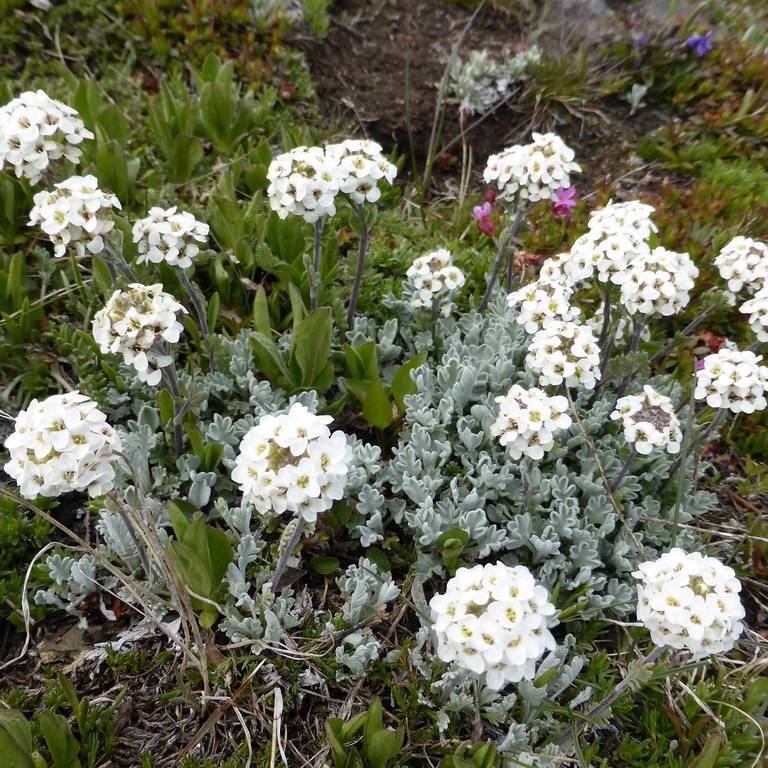
Alpine Candytuft
Iberis sempervirens
Overview
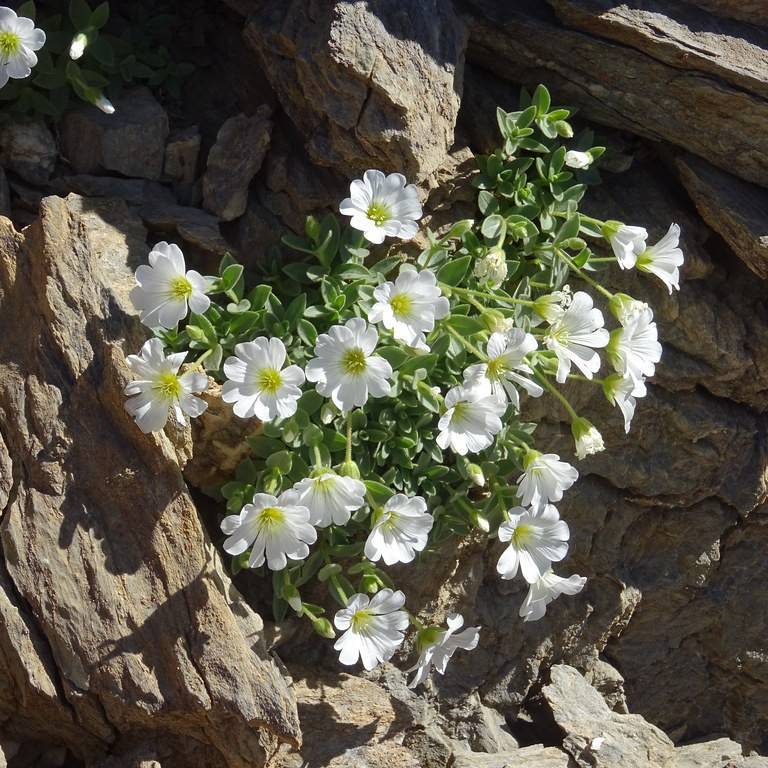
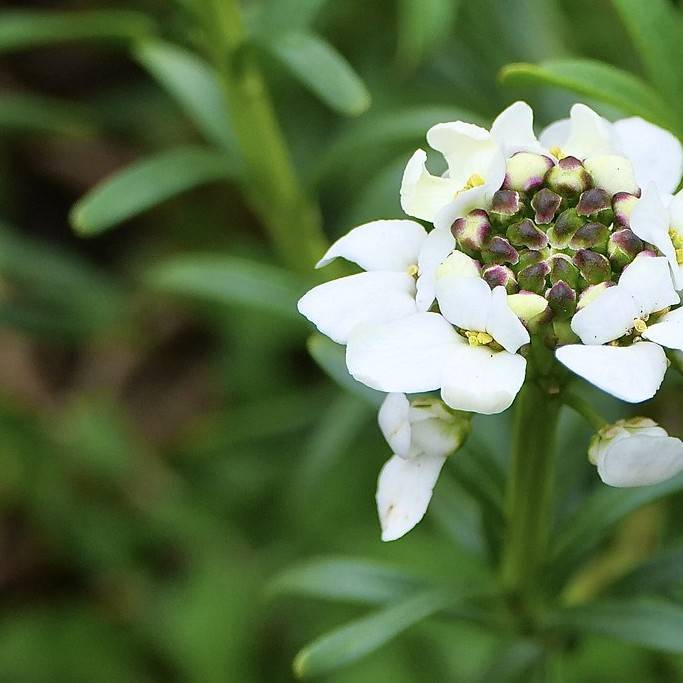
Alpine candytuft is a mat-forming evergreen perennial that produces tight, rounded clusters of small, crisp white flowers from mid to late spring, often with a light pink tinge as blooms age. Its narrow, glossy dark green leaves remain present year-round in mild climates, providing consistent ground cover even when not in flower. Naturally adapted to rocky mountain slopes, it thrives in poor, well-drained soils and is a popular choice for rock gardens, border edges, and slope stabilization.
Care Guide
Watering
Water newly planted alpine candytuft regularly to keep soil evenly moist but not waterlogged for the first growing season, allowing roots to establish. Once mature, it is highly drought tolerant, only requiring supplemental water during extended periods of extreme heat or dryness. Avoid overwatering, especially in heavy soils, as this can quickly lead to root rot.
Light
Alpine candytuft performs best in full sun, receiving a minimum of 6 hours of direct sunlight daily to produce the most abundant and dense flower displays. It can tolerate very light partial shade, especially in hotter growing regions, but too much shade will cause the plant to become leggy, reduce flowering, and make it more susceptible to fungal diseases.
Soil
This species requires sharply drained, slightly alkaline to neutral soil with a low to moderate nutrient content, mimicking its native rocky alpine habitat. It tolerates poor, gravelly, or sandy soils exceptionally well, and will struggle in heavy, clay-heavy soils that retain excess moisture. Amending planting sites with grit or crushed limestone can improve drainage and adjust pH for optimal growth.
Fertilizer
Alpine candytuft has very low nutrient needs, and excessive fertilization will cause leggy growth and reduced flowering. In poor soils, a light application of balanced, slow-release granular fertilizer in early spring, before new growth emerges, is sufficient to support healthy growth and bloom production. Avoid high-nitrogen fertilizers, as these prioritize foliage growth over flowers and can weaken the plant’s compact structure.
Temperature
It is hardy in USDA zones 3 through 9, tolerating winter temperatures as low as -40°F (-40°C) when planted in well-drained soil. It thrives in cool to moderate summer temperatures, and may suffer from heat stress or dieback in regions with prolonged, extreme summer heat above 90°F (32°C), especially if combined with high humidity. In areas with heavy winter snow, the low mat of foliage is usually protected under snow cover, but sharp winter winds without snow can cause leaf scorch.
Pruning
Immediately after flowering finishes in late spring, shear back the entire plant by one-third to one-half of its height to encourage dense, compact new growth and prevent the center of the mat from becoming woody and bare. Lightly trim any stray or leggy stems throughout the growing season to maintain the desired shape, but avoid heavy pruning after mid-fall, as new growth produced late in the season may be damaged by winter frost. Every 3 to 4 years, if the center of the plant becomes woody and unproductive, cut the entire plant back to within 2 inches of the ground in early spring to rejuvenate growth.
Propagation
Alpine candytuft is most easily propagated by softwood cuttings taken from new, non-flowering growth in early summer, which root readily in moist, gritty potting mix under indirect light. It can also be propagated by seed sown directly outdoors in fall or early spring, though seed-grown plants may take 2 to 3 years to reach mature flowering size. Division of established clumps can be done in early spring or immediately after flowering, but is less common because the woody root system does not divide as easily as softer herbaceous perennials.
Humidity
This species prefers low to moderate humidity levels, and is well-adapted to the dry air of alpine environments. High humidity, especially combined with warm temperatures and poor air circulation, increases the risk of fungal leaf spots and root rot, so ensure plants are spaced properly to allow airflow around foliage. Avoid overhead watering in humid climates to keep leaves dry and reduce fungal risk.
Repotting
Alpine candytuft is rarely grown in containers long-term, but if planted in pots, repot every 2 to 3 years in early spring before new growth begins, using a fast-draining, gritty potting mix formulated for alpine or rock garden plants. Choose a container with multiple drainage holes to prevent standing water, and avoid overpotting, as excess unused potting mix will hold moisture that can damage the plant’s roots. When repotting, gently loosen any circling roots and trim away any rotten or dead root tissue before placing in fresh soil.
Uses & Symbolism
Alpine candytuft is a staple of rock gardens, alpine troughs, and border edging, where its low, spreading habit and bright white spring flowers provide contrast against darker rocks and colorful spring bulbs. It is also used for erosion control on sunny, dry slopes, as its dense mat of roots holds soil in place effectively, and its evergreen foliage provides year-round ground cover. The long-lasting cut flowers are occasionally used in small spring floral arrangements and boutonnieres.
Diseases & Pests
Alpine candytuft is relatively pest and disease resistant when grown in appropriate conditions, but root rot is the most common issue, caused by overwatering or poorly drained heavy soils. Fungal leaf spots and downy mildew can occur in high humidity or if plants are grown in shaded, poorly ventilated sites, leading to brown or yellow spotting on foliage and premature leaf drop. Aphids and slugs may occasionally feed on new spring growth, but damage is rarely severe and can be managed with hand removal or targeted organic controls.
Related plants
Other plants you might like if you grow Alpine Candytuft.