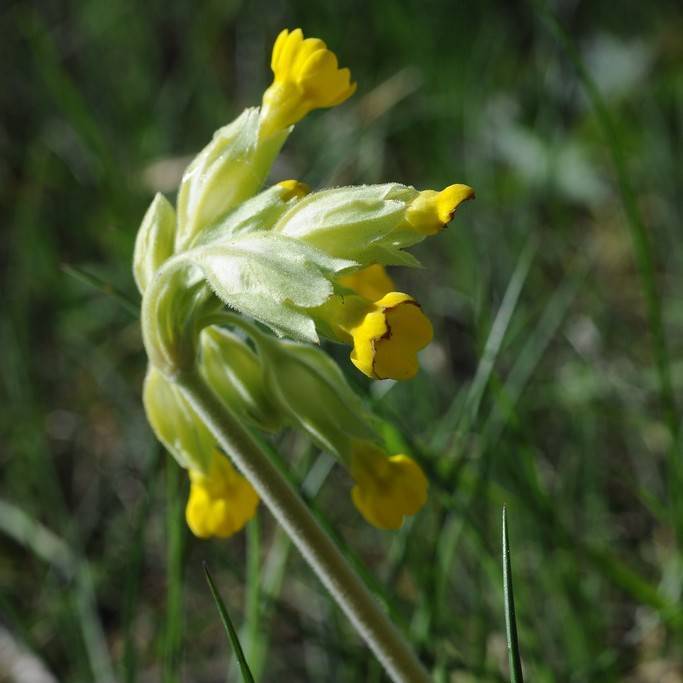
Cowslip
Primula veris
Overview
Cowslip is a low-growing, clump-forming primrose that thrives in cool, temperate grasslands, meadows, and open woodland edges. Its nodding, golden-yellow flowers emit a sweet, honeyed fragrance that attracts early-season pollinators including bees, butterflies, and hummingbird moths. Long valued in traditional herbalism, it was once a common wildflower across Europe, though habitat loss has reduced its wild populations in some regions.
Care Guide
Watering
Keep soil consistently moist but not waterlogged during the active growing season in spring and early summer; reduce watering after foliage dies back in late summer, allowing the root zone to stay slightly drier through dormancy. Avoid overhead watering to prevent fungal leaf spots, directing water directly to the base of the plant whenever possible.
Light
Grow best in partial shade, such as dappled sunlight under deciduous trees, though it tolerates full sun in cooler, northern climates with consistent moisture. In warmer regions, protect plants from intense midday sun, which can scorch foliage and cause premature dormancy.
Soil
Prefers well-drained, humus-rich, slightly alkaline to neutral soil with a pH between 6.5 and 7.5; amend heavy clay soils with compost or well-rotted manure to improve drainage and boost organic content. Avoid waterlogged, acidic soils, which can cause root rot and stunt growth.
Fertilizer
Apply a balanced, slow-release organic fertilizer in early spring just as new growth emerges, to support healthy foliage and abundant flowering. Avoid high-nitrogen fertilizers, which can encourage excessive leaf growth at the expense of blooms; no additional feeding is required after the flowering period ends.
Temperature
Thrives in cool temperatures between 40-65°F (4-18°C) during the growing season, and is winter hardy in USDA zones 3 through 8. It requires a period of cold winter dormancy to bloom reliably the following spring, so it is not suited to tropical or subtropical climates without artificial chilling.
Pruning
Remove spent flower stalks after blooming to prevent self-seeding if desired, and trim back yellowing foliage in late summer once it begins to die back naturally. Leave any remaining green foliage intact through the growing season, as it photosynthesizes to store energy in the roots for the next year’s growth.
Propagation
Easiest to propagate by division of mature clumps in early autumn, after flowering has finished and the plant has entered early dormancy; separate rooted offsets from the parent clump and replant immediately at the same depth they were growing. It can also be grown from seed sown outdoors in autumn, as seeds require a 6-8 week period of cold stratification to germinate successfully.
Humidity
Adaptable to average outdoor humidity levels between 40-70%, requiring no extra humidity when grown in garden settings. When grown temporarily indoors as a potted flowering plant, avoid placing it near dry heating vents, which can cause foliage to wilt prematurely.
Repotting
Potted cowslips should be repotted every 2-3 years in early autumn, using a well-draining, humus-rich potting mix amended with a small amount of ground limestone to raise pH to neutral. Ensure pots have adequate drainage holes to prevent root rot, and keep repotted plants in a cool, shaded spot until new growth resumes the following spring.
Uses & Symbolism
Cowslip flowers are used to make sweet syrups, cordials, and traditional country wines, as well as to add a mild, floral flavor to salads and desserts. In herbal medicine, it has been used historically to treat coughs, headaches, and anxiety, though modern medicinal use is limited due to its mild toxicity. It is also a popular ornamental plant for cottage gardens, wildflower meadows, and rock gardens, valued for its early spring blooms and pollinator-friendly properties.
Diseases & Pests
Cowslip is relatively pest-resistant, but can be affected by aphids, spider mites, and slugs, which feed on young foliage and flower buds in damp conditions. Fungal diseases including leaf spot, powdery mildew, and root rot can occur in overly wet, poorly drained soils or in areas with poor air circulation. Crown rot may develop if plants are planted too deeply or covered with heavy mulch during dormant periods.
Related plants
Other plants you might like if you grow Cowslip.