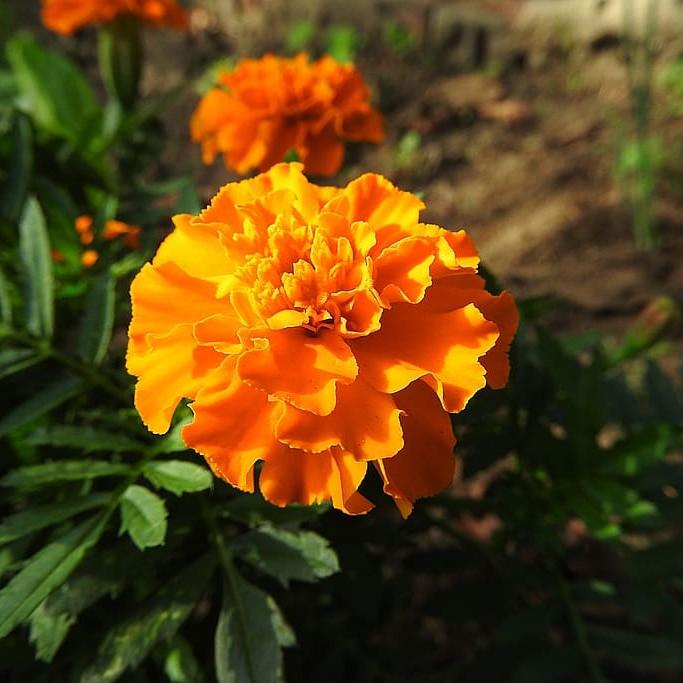
French Marigold
Tagetes patula
Overview
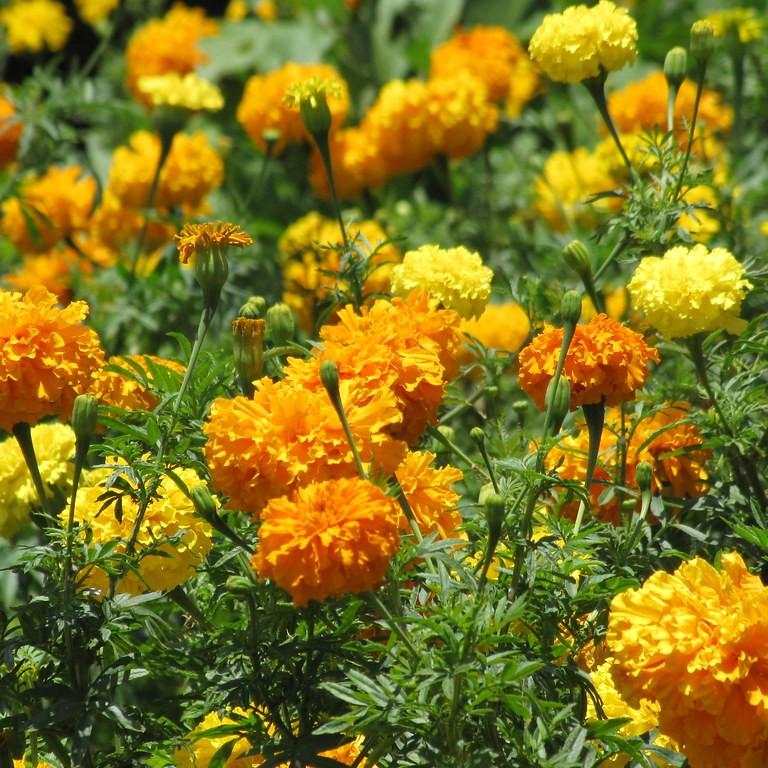
French marigolds are popular warm-season annuals boasting vibrant, ruffled blooms in shades of yellow, orange, red, and bicolor combinations from late spring until the first frost. More compact than their African marigold relatives, they form dense, bushy mounds of aromatic, fern-like foliage that repels many common garden pests. Widely cultivated as ornamental border plants, container specimens, and companion crops, they are beloved by home gardeners for their durability and extended bloom period.
Care Guide
Watering
Water French marigolds deeply when the top 1 to 2 inches of soil feels dry to the touch, taking care to avoid wetting the foliage to reduce fungal disease risk. Established plants are moderately drought tolerant, but consistent soil moisture will encourage the most abundant and prolonged flowering; avoid overwatering or waterlogged soil, which can cause root rot.
Light
Grow French marigolds in full sun, meaning at least 6 to 8 hours of direct, unfiltered sunlight per day for the healthiest growth and maximum bloom production. Plants grown in partial shade will become leggy, produce far fewer flowers, and are more susceptible to fungal diseases and pest infestations.
Soil
French marigolds adapt well to most well-drained garden soils, but thrive in moderately fertile, loamy soil with a pH between 6.0 and 7.0. They do not tolerate heavy, poorly draining clay soils that hold excess moisture; amend heavy soils with compost or perlite to improve drainage before planting. Avoid overly rich soils, which can encourage excessive foliage growth at the expense of blooms.
Fertilizer
French marigolds are light feeders and rarely require regular fertilization if planted in average garden soil. If growing in poor soil or containers, apply a balanced, slow-release granular fertilizer at half the recommended strength once at planting time. Avoid high-nitrogen fertilizers, as they will promote lush leaf growth and reduce flowering.
Temperature
French marigolds are warm-season plants that grow best in air temperatures between 70°F and 85°F (21°C to 29°C). They are highly frost sensitive, and will die back quickly if exposed to temperatures below 32°F (0°C). Established plants can tolerate short periods of high heat above 90°F (32°C) if provided with consistent soil moisture.
Pruning
Deadhead spent blooms regularly by pinching or cutting off faded flowers just above a leaf node to encourage continuous blooming throughout the growing season. If plants become leggy or overgrown mid-season, trim them back by up to one-third of their total height to stimulate dense, bushy new growth and more flower buds. No major pruning is required outside of deadheading and occasional shaping.
Propagation
French marigolds are most commonly propagated from seed, which can be sown directly outdoors after all risk of frost has passed, or started indoors 4 to 6 weeks before the last expected frost date. Sow seeds 1/4 inch deep in moist, well-drained seed starting mix, and keep them at 70°F to 75°F (21°C to 24°C) for germination, which typically occurs within 5 to 7 days. Stem cuttings can also be taken from healthy parent plants, rooted in moist potting mix, and grown as new specimens.
Humidity
French marigolds prefer average to low humidity levels between 40% and 60%, which matches typical outdoor summer conditions in most temperate regions. High humidity above 70% can increase the risk of fungal leaf spot and powdery mildew, especially if plants are overcrowded or have poor air circulation. No additional humidity is required for plants grown outdoors or in standard indoor household conditions.
Repotting
French marigolds grown in containers may need repotting if they outgrow their current pot, indicated by roots growing out of the drainage holes or stunted growth. Choose a pot only 1 to 2 inches larger than the current one, with adequate drainage holes, and use a standard, well-drained potting mix. As annuals, they only live for one growing season, so most will not require repotting after their initial planting.
Uses & Symbolism
French marigolds are widely planted as ornamental bedding, border, and container plants for their long-lasting, colorful blooms and low maintenance needs. They are a popular companion plant in vegetable gardens, as their aromatic foliage repels nematodes, aphids, whiteflies, and other common garden pests, reducing the need for chemical controls. Extracts from their flowers and leaves are used in some traditional herbal medicines, natural dyes, and insect repellent formulations.
Diseases & Pests
French marigolds are relatively pest and disease resistant, but can be susceptible to fungal diseases including powdery mildew, leaf spot, and botrytis blight in humid, poorly ventilated conditions or if foliage is consistently wet. Common pests that may affect them include spider mites, aphids, and whiteflies, especially when grown in shaded locations or under stress from drought or overwatering. Root rot can occur if plants are grown in poorly draining soil or overwatered consistently.
Related plants
Other plants you might like if you grow French Marigold.