African Marigold
Tagetes erecta
Overview
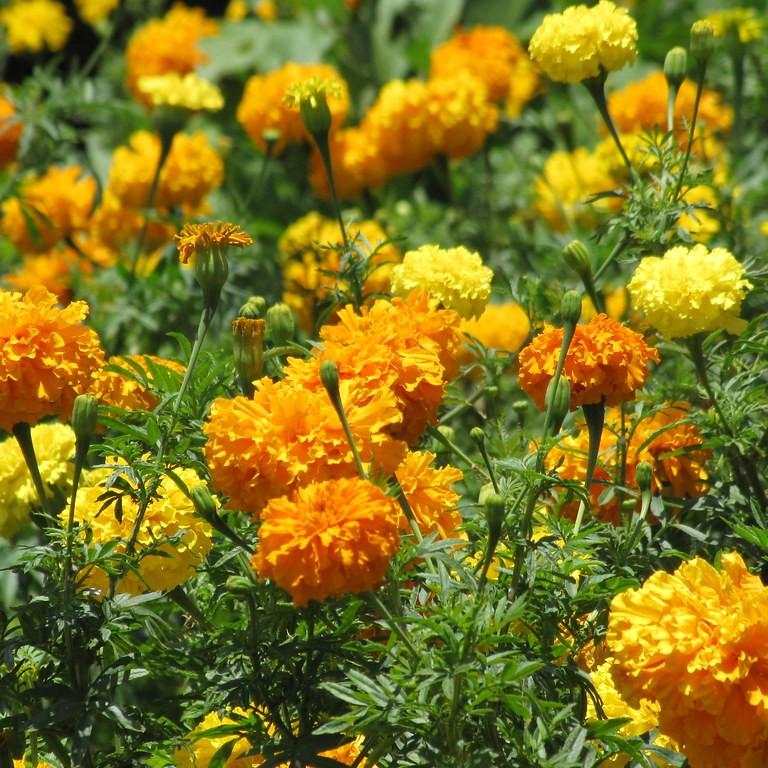
African marigold, despite its common name, is native to Mexico and Central America, where it has been cultivated for ceremonial, medicinal, and ornamental purposes for thousands of years. Its large, pom-pom-like blooms, which can measure up to 5 inches across, sit atop sturdy, branching stems lined with fern-like, aromatic foliage. It is a staple of summer garden beds, borders, and container plantings, valued for its long bloom period from late spring until the first frost.
Care Guide
Watering
African marigolds are relatively drought-tolerant once established, but require regular watering during extended dry spells to support continuous blooming, aiming to keep soil evenly moist but not waterlogged. Water at the base of the plant to avoid wetting foliage, which can reduce the risk of fungal diseases. Allow the top 1 to 2 inches of soil to dry out between waterings to prevent root rot.
Light
These plants thrive in full sun, requiring a minimum of 6 to 8 hours of direct sunlight daily to produce robust stems and abundant blooms. Insufficient light will lead to leggy growth, sparse flowering, and increased susceptibility to pests and diseases. They can tolerate very light partial shade in extremely hot climates, but full sun is preferred for optimal performance.
Soil
African marigolds adapt well to most well-draining garden soils, but perform best in moderately fertile, loamy soil with a pH between 6.0 and 7.5. They do not tolerate heavy, waterlogged clay soils, which can quickly cause root rot in young and mature plants alike. Amending poor soil with compost or well-rotted manure before planting will improve drainage and nutrient content to support healthy growth.
Fertilizer
Excess fertilizer will encourage lush foliage growth at the expense of blooms, so African marigolds require only minimal feeding throughout the growing season. Incorporate a balanced, slow-release 10-10-10 fertilizer into the soil at planting time, and avoid additional feedings unless growth is extremely stunted. Over-fertilizing, particularly with high-nitrogen formulas, will also make plants more susceptible to pest damage.
Temperature
African marigolds are warm-season annuals that thrive in temperatures between 70°F and 85°F (21°C to 29°C), and can tolerate short periods of higher heat up to 100°F (38°C) if provided with adequate water. They are extremely sensitive to frost, and all growth will die back immediately when exposed to freezing temperatures. Seeds should only be sown outdoors after all risk of frost has passed in spring.
Pruning
Deadhead spent blooms regularly by pinching or cutting off faded flower heads just above the nearest set of leaves to encourage continuous blooming throughout the growing season. Pinch back the tips of young plants when they are 4 to 6 inches tall to promote bushier, more compact growth and more flowering stems. Remove any yellowed or damaged foliage as needed to improve air circulation around the plant.
Propagation
African marigolds are most commonly propagated from seed, which can be sown directly outdoors after the last frost or started indoors 4 to 6 weeks before the last expected frost date for earlier blooms. Seeds germinate quickly in 5 to 7 days when kept in warm, moist soil at temperatures between 70°F and 75°F (21°C to 24°C). Cuttings can also be rooted in moist potting mix, but seed propagation is far more efficient for most home gardeners.
Humidity
These plants tolerate a wide range of humidity levels, from dry arid conditions to moderate tropical humidity, as long as they have good air circulation around their foliage. High humidity combined with poor air flow can increase the risk of powdery mildew and other fungal leaf diseases. Avoid misting the foliage, as this can create the moist conditions that encourage fungal growth.
Repotting
For container-grown African marigolds, use a well-draining potting mix and select a pot with drainage holes at least 10 to 12 inches in diameter to accommodate their mature root system. Since they are annuals, they generally do not require repotting during their single growing season, unless they outgrow their initial container. If repotting is necessary, do so gently to avoid disturbing the root ball, and water thoroughly after transplanting.
Uses & Symbolism
African marigolds are widely planted as ornamental garden plants for their bright, long-lasting blooms, which also make excellent cut flowers for fresh arrangements. Their aromatic foliage repels a wide range of common garden pests including aphids, whiteflies, and nematodes, making them a popular companion plant for vegetable gardens, particularly near tomatoes, peppers, and eggplants. In many cultures, the flowers are used in ceremonial decorations, natural dyes, and traditional herbal remedies for skin conditions and minor inflammation.
Diseases & Pests
African marigolds are relatively pest-resistant, but may be affected by common garden pests including spider mites, aphids, and slugs, particularly in stressed, overcrowded, or shaded growing conditions. Fungal diseases such as powdery mildew, botrytis blight, and root rot are the most common issues, usually caused by overwatering, poor drainage, or insufficient air circulation around the foliage. Their natural pest-repellent properties make them less susceptible to insect damage than many other garden annuals, but stressed plants may still attract infestations that can be treated with insecticidal soap or neem oil.
Related plants
Other plants you might like if you grow African Marigold.