Freesia
Freesia refracta
Overview
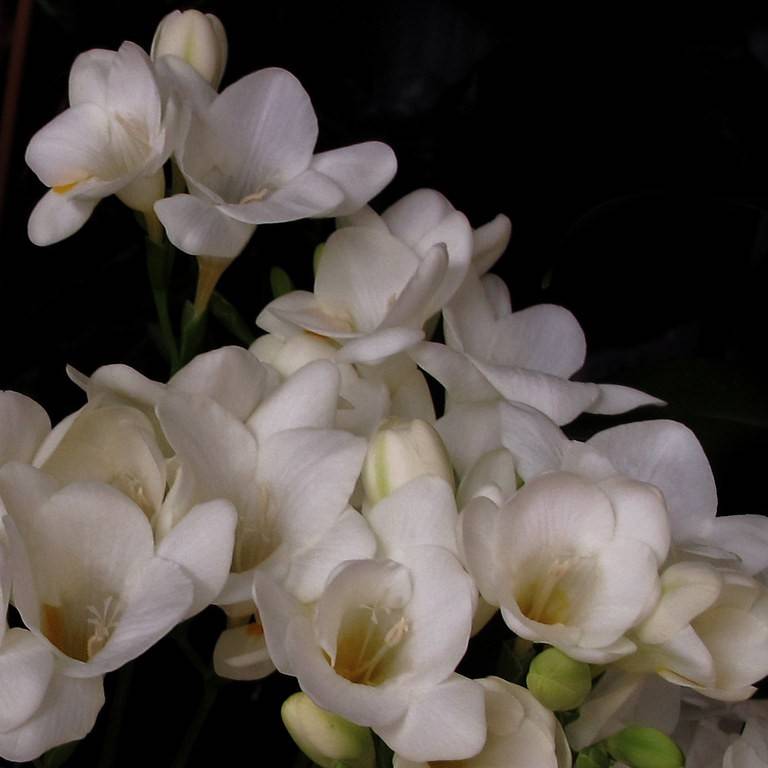
Freesia is a tender cormous perennial celebrated for its intensely sweet, citrusy fragrance and clusters of upward-facing, bell-shaped blooms that grow along arching stems. Most cultivated varieties are hybrids, producing blooms in shades of white, yellow, pink, red, purple, and bi-colors, with each stem bearing up to 12 individual flowers. Native to South Africa’s Mediterranean climate regions, freesias are widely grown as cut flowers, container plants, and seasonal garden ornamentals in mild climates, where they bloom reliably in late winter to early spring.
Care Guide
Watering
Water freesias thoroughly after planting to stimulate corm growth, then keep soil consistently moist but not waterlogged throughout the active growing and blooming period to prevent corm rot. Reduce watering gradually once foliage begins to yellow and die back after flowering, allowing the corms to enter dormancy in dry soil.
Light
Freesias require full sun, meaning 6 to 8 hours of direct unfiltered sunlight daily, to produce sturdy stems and abundant blooms. In regions with extremely hot midday sun, provide light afternoon shade to prevent scorching of delicate foliage and flower petals.
Soil
Plant freesia corms in well-draining, loamy or sandy soil with a slightly acidic to neutral pH between 6.0 and 7.0 for optimal root and corm development. Heavy clay soils should be amended with compost, perlite, or coarse sand to improve drainage, as standing water will cause corms to rot rapidly.
Fertilizer
Feed freesias with a balanced, water-soluble 10-10-10 fertilizer once new shoots emerge in early spring, then repeat every 2 to 3 weeks during the active growing period to support bloom production. Discontinue fertilizing once flowers fade, as the plant redirects energy to storing nutrients in the corm for the next growing season.
Temperature
Freesias thrive in cool daytime temperatures between 60 and 70°F (15 and 21°C) and nighttime temperatures between 45 and 55°F (7 and 13°C) during active growth, as excessive heat will cause premature bloom drop and weak stems. Corms are not frost-tolerant, and will die if exposed to temperatures below 25°F (-4°C), so in cold climates they should be dug up and stored indoors over winter or grown as annuals.
Pruning
Remove spent flower stems immediately after blooming to redirect the plant’s energy away from seed production and toward corm development, rather than trimming back foliage while it is still green. Once foliage turns fully yellow and dies back naturally, cut it down to soil level to keep the planting area tidy and reduce the risk of fungal disease over dormancy.
Propagation
Freesias are most commonly propagated by separating small offset corms that form around the base of mature parent corms during dormancy, which can be replanted immediately or stored for planting the following season. They can also be grown from seed, though seed-grown plants will take 2 to 3 years to reach blooming maturity, making offset propagation the preferred method for home gardeners.
Humidity
Freesias prefer moderate humidity levels between 40% and 60%, which mimics their native South African Mediterranean climate, and do not tolerate extremely high, stagnant humidity well. Avoid misting freesia foliage or planting them in overly humid, poorly ventilated areas, as this increases the risk of fungal leaf spot and botrytis blight on blooms.
Repotting
Freesias grown in containers should be repotted annually during their dormant period, typically in late summer or early fall, by removing the corms from the old potting mix, separating offsets, and replanting fresh corms in new, well-draining potting mix. Space corms 2 to 3 inches apart and plant them 1 to 2 inches deep with the pointed end facing upward to ensure proper sprouting, and choose a pot with ample drainage holes to prevent waterlogging.
Uses & Symbolism
Freesias are one of the most popular cut flowers worldwide, valued for their long vase life of 7 to 10 days and strong, sweet fragrance that is widely used in perfumes, candles, and scented body products. In mild climate gardens, they are planted in flower beds, borders, and rock gardens for spring color, and they also grow well in patio containers for small-space gardening. The essential oil extracted from freesia blooms is used in aromatherapy for its calming, stress-relieving properties.
Diseases & Pests
Freesias are susceptible to fungal diseases including botrytis blight, fusarium wilt, and root rot, most often caused by overwatering, poor drainage, or high humidity with inadequate air circulation. Common pests that affect freesias include aphids, thrips, and spider mites, which feed on sap from foliage and flower buds, causing stunted growth and distorted blooms, and can be controlled with insecticidal soap or neem oil. Corm rot is a common issue when corms are stored in damp, cool conditions over winter, so corms should be dried thoroughly before storage and kept in a cool, dry, well-ventilated location.
Related plants
Other plants you might like if you grow Freesia.