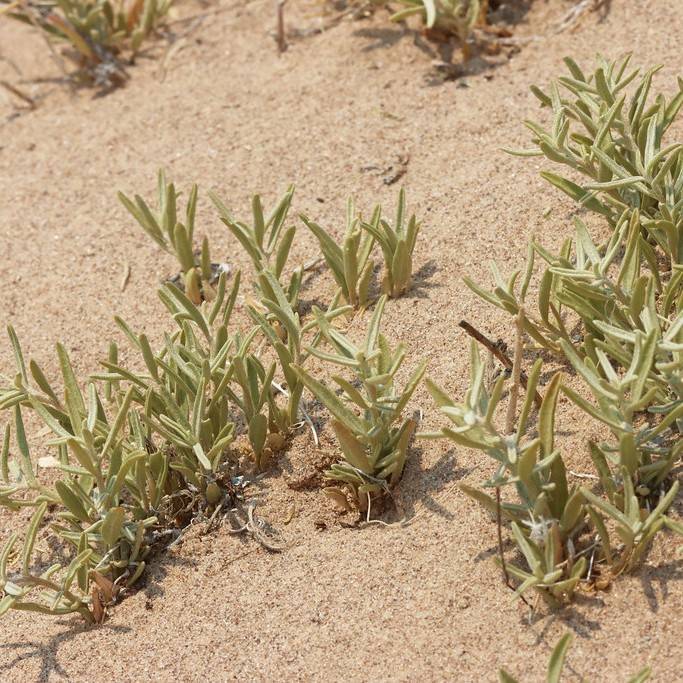
Four Wing Saltbush
Atriplex canescens
Overview
Four Wing Saltbush is a dense, evergreen to semi-evergreen shrub adapted to harsh, dry environments, with silvery-gray, scaly foliage that reflects sunlight to reduce water loss. Both male and female plants produce small, unremarkable greenish flowers, with female specimens bearing the characteristic winged seed pods that give the species its common name. It is exceptionally tolerant of saline, alkaline, and poor-quality soils, making it a keystone species in many desert and semi-desert ecosystems.
Care Guide
Watering
Four Wing Saltbush is extremely drought-tolerant once established, requiring only occasional deep watering during prolonged periods of extreme heat or drought. Newly planted shrubs need regular, light watering for the first 1-2 growing seasons to support root development, but overwatering or poorly drained soils will quickly cause root rot. In most of its native range, natural rainfall is sufficient to sustain mature plants without supplemental irrigation.
Light
This shrub thrives in full, direct sunlight, requiring a minimum of 6-8 hours of unobstructed light daily to maintain dense, healthy foliage and consistent seed production. It can tolerate very light, dappled shade for short periods, but prolonged shade will lead to sparse growth, legginess, and reduced tolerance to environmental stressors. It is well-adapted to intense desert sunlight and high UV exposure, with no risk of leaf scorch even in the hottest, sunniest locations.
Soil
Four Wing Saltbush is highly adaptable to a wide range of soil types, including sandy, loamy, clay, and rocky soils, as long as drainage is excellent. It thrives in highly alkaline, saline, and nutrient-poor soils where most other plants cannot survive, with a preferred soil pH range of 6.0 to 9.0. Heavy, waterlogged soils are the only unsuitable growing medium, as they cause rapid root decay and plant death.
Fertilizer
This species rarely requires fertilization, as it is adapted to low-nutrient desert soils, and excess nitrogen can lead to overly lush, weak growth that is more susceptible to drought and pest damage. If grown in extremely poor, degraded soils, a single application of a low-nitrogen, slow-release fertilizer in early spring can support gentle growth without overstimulating the plant. Avoid using high-nitrogen or water-soluble fertilizers, as these can disrupt the plant’s natural stress tolerance.
Temperature
Four Wing Saltbush is exceptionally cold and heat tolerant, thriving in hardiness zones 4 through 10, withstanding winter temperatures as low as -30°F (-34°C) and summer temperatures exceeding 110°F (43°C). It is well-adapted to extreme diurnal temperature fluctuations common in desert environments, with no additional protection needed for mature plants in its preferred growing range. Young plants may benefit from light frost protection during their first winter in colder regions to prevent tip damage.
Pruning
Pruning is rarely required for health, but can be done in late winter or early spring to shape the shrub, remove dead or damaged branches, or reduce size to fit a specific landscape space. Avoid heavy pruning that removes more than one-third of the plant’s total growth in a single season, as this can stress the shrub and reduce its drought tolerance. Regular removal of spent seed pods is not necessary, but can be done to prevent self-seeding if desired.
Propagation
Four Wing Saltbush is most commonly propagated from seed, which requires no stratification and can be sown directly in the fall or early spring in well-drained soil. Seed germination rates are typically high, with seedlings emerging quickly once soil temperatures reach 60°F (15°C). It can also be propagated from semi-hardwood cuttings taken in late summer, though rooting success rates are lower than seed propagation, and cuttings require consistent moisture until established.
Humidity
This shrub prefers low to moderate humidity levels, typical of its native arid and semi-arid habitats, and tolerates extremely dry air with no adverse effects. High humidity, especially combined with warm temperatures and poor air circulation, can increase the risk of fungal leaf spots and root rot, so it is not well-suited to tropical or consistently humid climates. Average indoor humidity levels are sufficient if grown as a container houseplant, but ensure adequate air flow around the foliage.
Repotting
Container-grown Four Wing Saltbush only needs repotting every 3-4 years, or when roots begin to emerge from the drainage holes of the pot, as it prefers slightly root-bound conditions to support its stress tolerance. Repot in early spring before new growth begins, using a well-drained, sandy or cactus potting mix, and select a pot only 1-2 inches larger in diameter than the current container to avoid excess moisture retention in unused soil. After repotting, water lightly and avoid fertilizing for 2-3 months to allow roots to adjust to the new medium.
Uses & Symbolism
Four Wing Saltbush is widely used in xeriscaping, erosion control, and reclamation of degraded or saline soils, as its extensive root system stabilizes soil and it can thrive in areas too harsh for most other vegetation. It provides critical food and shelter for desert wildlife, including browse for deer and pronghorn, seed for birds and small mammals, and habitat for pollinators and beneficial insects. Historically, Indigenous peoples of the American Southwest used its seeds as a food source, its leaves for medicinal remedies, and its ashes as a leavening agent for bread.
Diseases & Pests
Four Wing Saltbush is largely pest and disease resistant when grown in suitable conditions, with the most common issue being root rot caused by overwatering or poorly drained soils. In high-humidity environments, it may occasionally develop fungal leaf spots, which can be managed by improving air circulation and avoiding overhead watering. Rare pest infestations include aphids and spider mites, which can be controlled with insecticidal soap or neem oil, and are usually only a problem for stressed or overwatered plants.
Related plants
Other plants you might like if you grow Four Wing Saltbush.