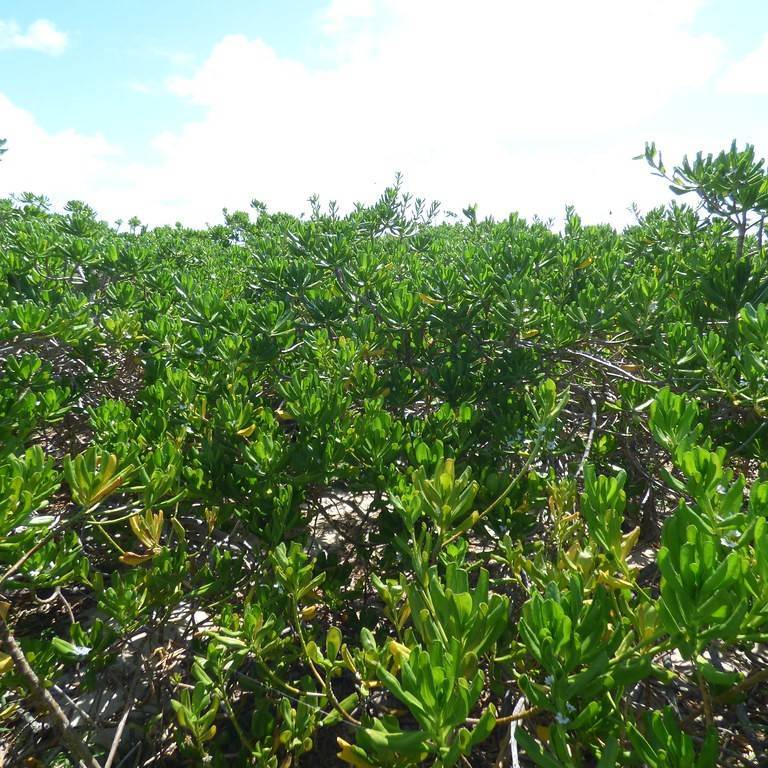
Beach Naupaka
Scaevola taccada
Overview
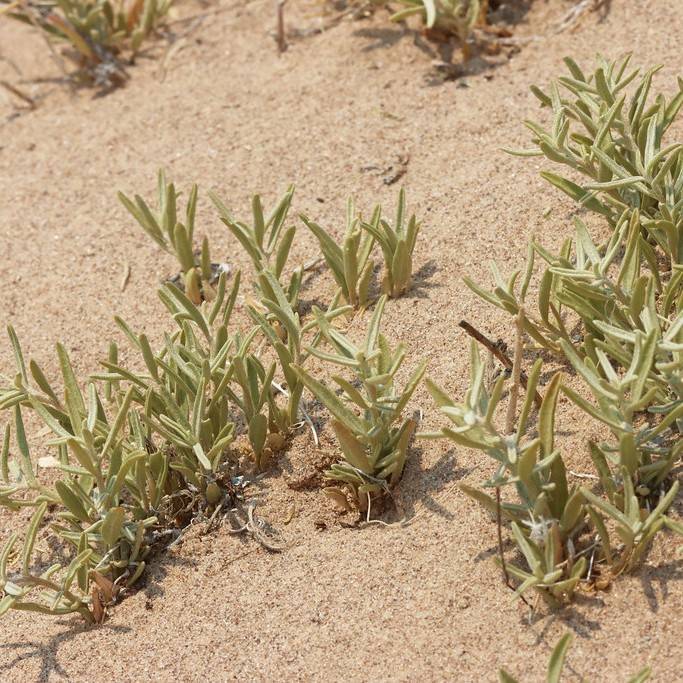
Beach Naupaka is a hardy, spreading evergreen shrub adapted to thrive in harsh coastal environments, where it tolerates salt spray, sandy soil, and intense sun. Its most recognizable feature is its small, white or pale purple flowers, which appear to be cut in half, a trait unique to the Scaevola genus. In its native range, it holds significant cultural importance in Polynesian and Hawaiian traditions, often associated with local folklore.
Care Guide
Watering
Beach Naupaka is highly drought-tolerant once established, requiring only occasional deep watering during extended dry periods; overwatering, especially in poorly drained soil, can lead to root rot. Newly planted shrubs need regular, light watering to encourage root development, but can be weaned off supplemental irrigation once they show new growth.
Light
This shrub grows best in full, direct sunlight, requiring a minimum of 6 hours of unfiltered light daily to produce dense foliage and abundant blooms. It can tolerate partial shade, but growth will become leggy, and flowering will be significantly reduced.
Soil
Beach Naupaka prefers well-drained, sandy or loamy soil with a neutral to slightly alkaline pH, and is highly tolerant of saline, nutrient-poor coastal soils. It will not survive in heavy, waterlogged clay soils, as its roots are prone to rot in consistently moist conditions.
Fertilizer
Fertilization is rarely necessary for established plants growing in their native coastal habitat, as they are adapted to low-nutrient soils. For potted specimens or plants grown in highly depleted soil, apply a balanced, slow-release fertilizer once annually in early spring to support healthy growth.
Temperature
Beach Naupaka thrives in warm tropical and subtropical climates, with ideal temperatures between 65-85°F (18-29°C). It is not frost-tolerant, and temperatures below 32°F (0°C) will damage or kill the plant, so it must be grown in containers and overwintered indoors in cooler regions.
Pruning
Prune Beach Naupaka annually in late winter to maintain its desired shape, remove dead or damaged branches, and encourage dense, bushy growth. It tolerates heavy pruning well, and can be cut back significantly to control size if it becomes overgrown, making it suitable for use as a low hedge.
Propagation
Beach Naupaka is most easily propagated from semi-hardwood cuttings taken in late spring or early summer; dip cut end in rooting hormone, plant in moist sandy soil, and keep in bright, indirect light until roots develop in 4-6 weeks. It can also be grown from fresh seed, though germination rates are often low, and seeds require warm, consistently moist conditions to sprout.
Humidity
This shrub is adapted to the moderate to high humidity of coastal tropical environments, thriving in humidity levels between 50-80%. It can tolerate lower humidity for short periods, but extended dry air may cause leaf browning and reduced flowering.
Repotting
Potted Beach Naupaka specimens should be repotted every 2-3 years in early spring, using a coarse, well-drained potting mix designed for succulent or coastal plants. Choose a pot with ample drainage holes, and increase the pot size by only 1-2 inches each time to prevent excess moisture retention around the roots.
Uses & Symbolism
Beach Naupaka is widely planted for coastal erosion control, as its extensive root system stabilizes sandy dunes, and its dense foliage buffers wind and salt spray for more sensitive adjacent plants. It is a popular landscaping choice for seaside gardens and roadside plantings in tropical regions, valued for its low maintenance and year-round evergreen appearance. In traditional medicine, parts of the plant have been used topically in Polynesian cultures to treat skin irritations, cuts, and insect bites.
Diseases & Pests
Beach Naupaka is relatively pest and disease resistant, but may be susceptible to root rot if grown in poorly drained soil or overwatered. Common occasional pests include aphids, scale insects, and mealybugs, which can be controlled with horticultural oil or insecticidal soap applications. In humid, poorly ventilated conditions, it may develop fungal leaf spot, which can be mitigated by removing affected foliage and improving air circulation around the plant.
Related plants
Other plants you might like if you grow Beach Naupaka.