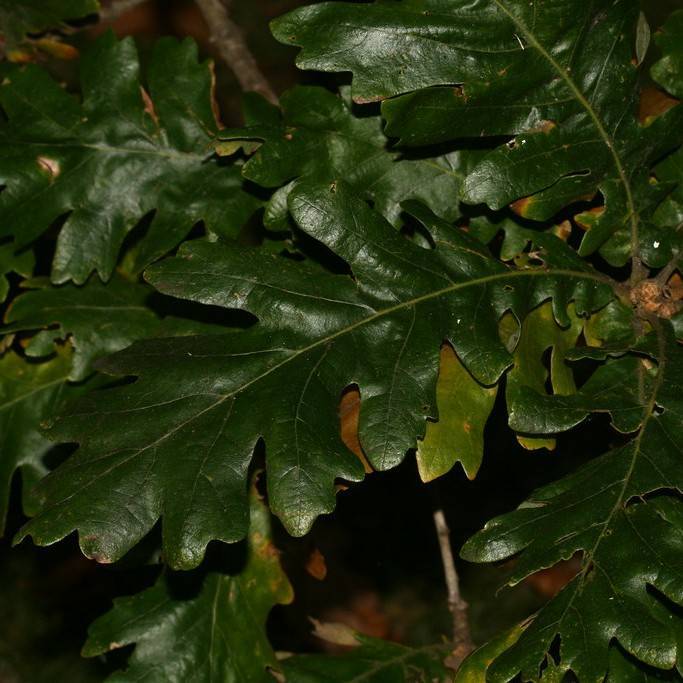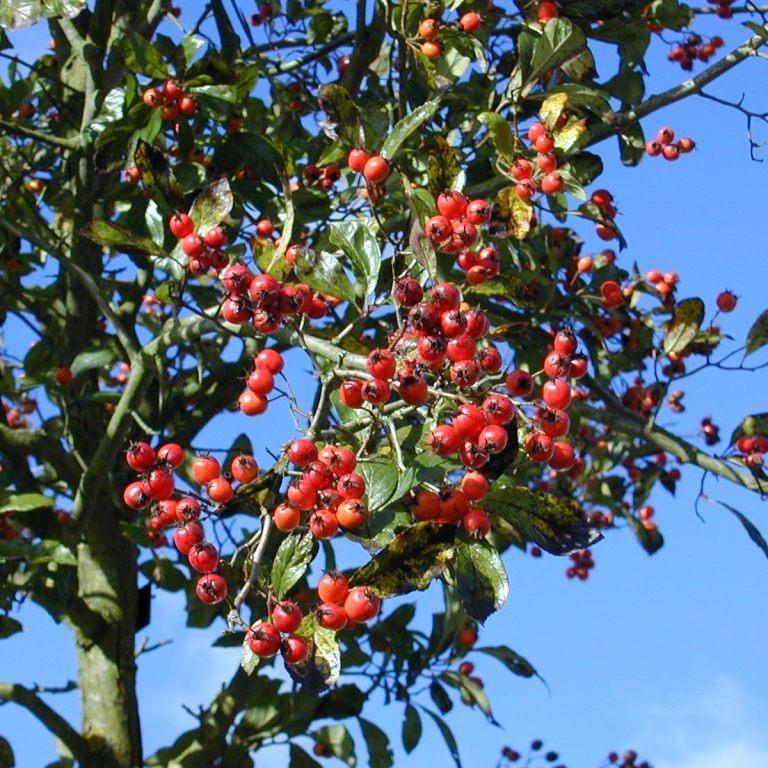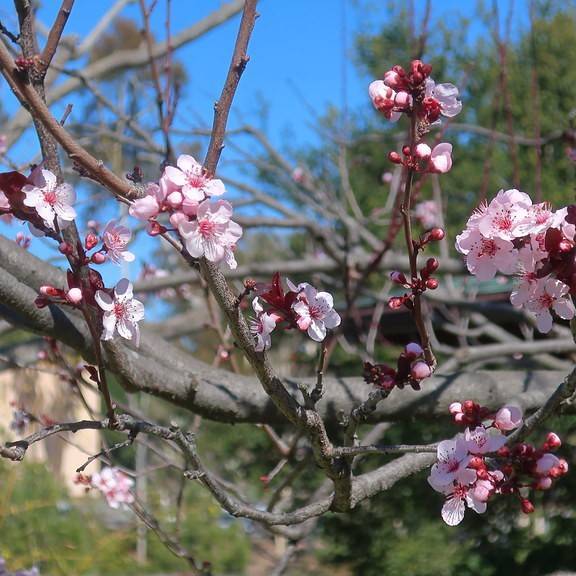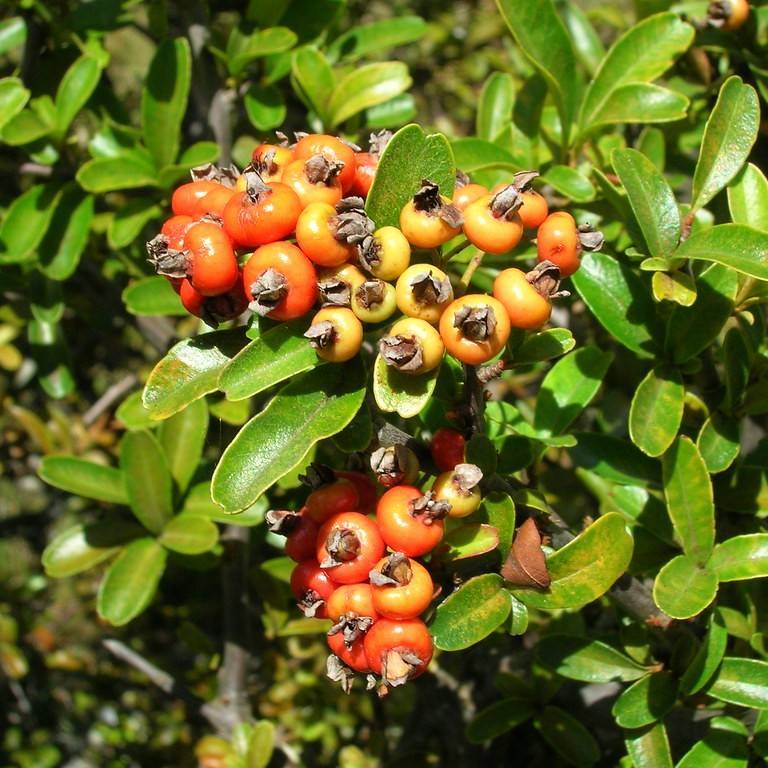
Formosa Firethorn
Pyracantha koidzumii
Overview
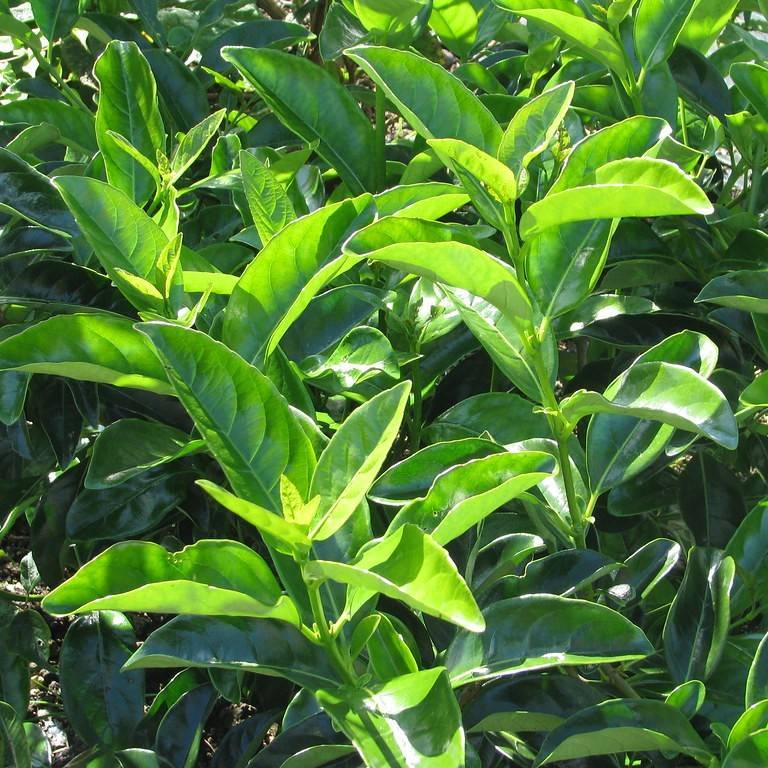
Formosa firethorn is a vigorous, evergreen shrub native to Taiwan, widely cultivated for its year-round ornamental interest and dense, thorny growth habit that makes it a popular choice for security hedges. In spring, it produces masses of small, fragrant white flowers that cover the branches, followed by abundant, long-lasting berry-like pomes that ripen to bright red or orange in fall and persist through winter, providing food for wild birds. Its sharp thorns and dense foliage create an impenetrable barrier, making it ideal for privacy plantings and border screens in temperate and subtropical landscapes.
Care Guide
Watering
Formosa firethorn is drought tolerant once established, requiring regular deep watering during its first growing season to develop a strong root system. After maturity, water only during prolonged dry periods, avoiding overwatering that can lead to root rot, and ensure the planting site has good drainage.
Light
This shrub thrives in full sun, which supports the most abundant flowering and fruiting, though it can tolerate partial shade. Too much shade will result in sparse growth, fewer blooms, and reduced berry production, so plant in a location that receives at least 6 hours of direct sunlight daily.
Soil
Formosa firethorn adapts to a wide range of soil types, including sandy, loam, and clay soils, as long as they are well-draining. It prefers a slightly acidic to neutral pH range of 6.0 to 7.5, and will not tolerate waterlogged or constantly saturated soils that can damage root health.
Fertilizer
Feed in early spring before new growth emerges with a balanced, slow-release granular fertilizer formulated for woody shrubs to support healthy foliage, blooms, and berry development. Avoid overfertilizing, especially with high-nitrogen products, as this can encourage excessive leaf growth at the expense of flowers and fruit.
Temperature
It is hardy in USDA zones 7 to 10, tolerating winter temperatures as low as 0°F (-18°C) once established. It can withstand high summer heat and humidity common in its native range, but young plants may need winter protection from extreme cold and harsh winds in the colder end of its hardiness range.
Pruning
Prune in late winter or early spring before new growth starts, removing dead, damaged, or crossing branches to improve air circulation and maintain the desired shape. You can shear it formally for hedge use, or prune lightly to preserve its natural form, taking care to avoid removing too many flowering branches that produce the seasonal berries.
Propagation
Formosa firethorn is most commonly propagated from semi-hardwood cuttings taken in late summer or early fall, dipped in rooting hormone and placed in a well-draining potting mix until roots develop. It can also be grown from fresh seeds sown in fall, though seeds require a period of cold stratification to germinate, and seed-grown plants may not retain the exact characteristics of the parent cultivar.
Humidity
This shrub tolerates a wide range of humidity levels, from the dry air of inland regions to the high humidity of coastal and subtropical areas. Good air circulation around the foliage is important to prevent fungal diseases in high-humidity environments, so avoid overcrowding plants when landscaping.
Repotting
If grown in containers, repot Formosa firethorn every 2 to 3 years in early spring, using a well-draining potting mix and a container with drainage holes to prevent waterlogging. Select a pot that is 2 to 3 inches larger in diameter than the current one, and prune back overgrown roots slightly during repotting to encourage healthy new root growth.
Uses & Symbolism
Formosa firethorn is most widely planted as a security hedge or privacy screen, as its dense, thorny growth creates an impenetrable barrier that deters trespassers and wildlife. Its showy blooms, persistent colorful berries, and evergreen foliage make it a popular ornamental shrub for landscape borders, foundation plantings, and erosion control on slopes. The berries are a valuable food source for native birds during winter months, supporting local wildlife in temperate and subtropical gardens.
Diseases & Pests
Formosa firethorn is highly susceptible to fire blight, a bacterial disease that causes blackened, wilted branches that appear burned, which can be managed by pruning infected branches well below affected areas and avoiding overhead watering. It may also be affected by scab, a fungal disease that causes dark spots on leaves and berries, and common pests include aphids, scale insects, and spider mites that feed on foliage, which can be controlled with horticultural oil or insecticidal soap.
Related plants
Other plants you might like if you grow Formosa Firethorn.