Fothergilla
Fothergilla spp.
Overview
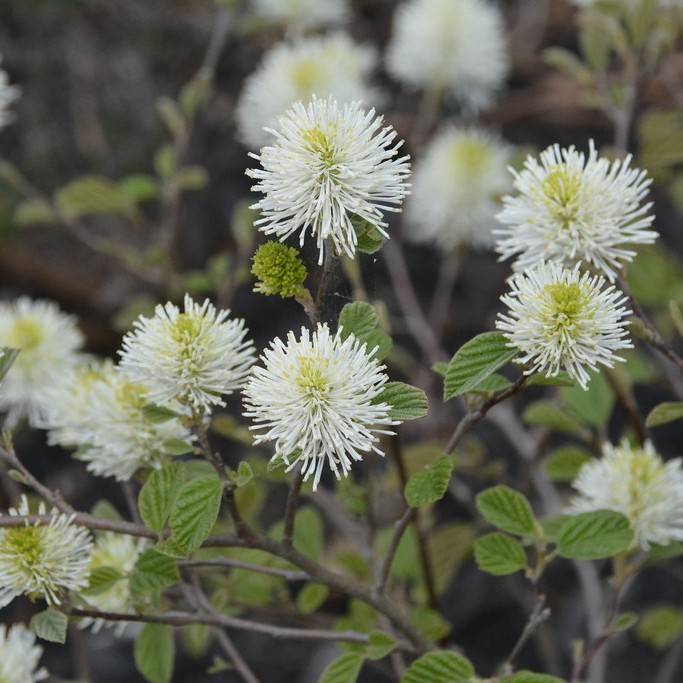
Fothergilla, also called witch alder, is a small genus of deciduous shrubs closely related to witch hazel, native to moist woodland edges and streambanks of the American Southeast. In spring, before leaves emerge, it produces dense, fluffy spikes of white to pale cream flowers with a sweet, honey-like fragrance that attracts pollinators including bees and butterflies. Its oval, dark green leaves shift to striking shades of orange, red, and yellow in autumn, making it a multi-season ornamental favorite for temperate gardens.
Care Guide
Watering
Fothergilla prefers consistently moist, well-drained soil, and should be watered deeply once weekly during dry spells, especially during its first two years of establishment to develop a strong root system. Once mature, it is moderately drought tolerant, though supplemental watering during prolonged dry periods will support better flowering and fall foliage color. Avoid overwatering or soggy soil, which can lead to root rot.
Light
This shrub thrives in full sun to partial shade, with at least 4-6 hours of direct sunlight daily to encourage abundant flowering and the most vivid fall foliage color. In hotter southern climates, it benefits from light afternoon shade to prevent leaf scorch during peak summer heat. Too much deep shade will reduce bloom production and result in weaker, sparser growth.
Soil
Fothergilla requires acidic, well-drained soil with a pH between 4.5 and 6.0, rich in organic matter such as peat moss, composted pine needles, or leaf mold to mimic its native woodland habitat. It does not tolerate alkaline soils, which can cause chlorosis (yellowing of leaves) and stunted growth. Amending heavy clay soils with organic matter prior to planting will improve drainage and support healthy root development.
Fertilizer
Feed fothergilla in early spring before new growth emerges with a slow-release, acidic fertilizer formulated for azaleas or rhododendrons, to maintain appropriate soil pH and supply essential nutrients. Avoid over-fertilizing, as excessive nitrogen can lead to lush foliage growth at the expense of flowering and reduce cold hardiness in northern regions. A 2-3 inch layer of organic mulch such as pine bark or shredded leaves applied around the root zone each year will slowly add nutrients and regulate soil moisture.
Temperature
Fothergilla is hardy in USDA zones 4 through 8, tolerating winter temperatures as low as -30°F (-34°C) once established, though young plants may benefit from a protective winter mulch layer in the coldest parts of its range. It prefers moderate summer temperatures between 60-85°F (15-29°C), and may require extra shade and watering during extended heatwaves above 90°F (32°C). Late spring frosts can damage emerging flower buds, so planting in a slightly sheltered location away from low-lying frost pockets is ideal.
Pruning
Fothergilla has a naturally neat, rounded growth habit and requires minimal pruning, only needing removal of dead, damaged, or crossing branches in late winter before new growth begins. If shaping is desired, prune immediately after flowering finishes in spring, as next year’s flower buds form on the current season’s growth, pruning later in the year will reduce the following spring’s bloom display. Avoid heavy pruning, as the shrub grows slowly and may take several years to recover from excessive cutting.
Propagation
Fothergilla is most commonly propagated by softwood cuttings taken in early summer, from new growth that has just begun to harden, dipped in rooting hormone and placed in a moist, acidic growing medium under high humidity until roots develop in 6-8 weeks. It can also be propagated by seed, though seeds require a 3-month period of cold stratification to germinate, and seed-grown plants may take 5-7 years to reach flowering maturity. Suckers that form around the base of mature shrubs can be dug up and transplanted in early spring for easy vegetative propagation that preserves the parent plant’s characteristics.
Humidity
Fothergilla adapts well to average ambient humidity levels between 40-60%, typical of its native temperate woodland habitat. It tolerates occasional dry air, but extended periods of very low humidity below 30% may cause leaf tip browning, which can be mitigated with supplemental watering and mulch to maintain root moisture. High humidity levels do not cause issues for this shrub as long as the soil is well-drained and there is adequate air circulation around the foliage to prevent fungal diseases.
Repotting
Fothergilla is rarely grown in containers long-term, as it develops a deep, spreading root system that requires ample space to grow. If grown in a pot, repot every 2-3 years in early spring before new growth emerges, using an acidic potting mix formulated for ericaceous plants and selecting a container 2-3 inches larger than the previous one to accommodate root growth. Ensure the container has adequate drainage holes to prevent waterlogging, and water thoroughly after repotting to settle the soil around the roots.
Uses & Symbolism
Fothergilla is a popular ornamental shrub for temperate gardens, often used in mixed borders, woodland gardens, foundation plantings, or as a low informal hedge, thanks to its compact size and multi-season interest. Its fragrant spring blooms support native pollinators, and its dense foliage provides shelter for small birds and beneficial insects. It is also well-suited for rain gardens, as it tolerates occasional periodic wet soil and helps filter stormwater runoff.
Diseases & Pests
Fothergilla is relatively pest and disease resistant, with few serious issues when grown in suitable conditions. It may occasionally be affected by fungal leaf spots, powdery mildew, or root rot, which are typically caused by poor air circulation, overwatering, or soggy soil. Aphids and spider mites may infest stressed plants, but can be controlled with insecticidal soap or neem oil applications, or by encouraging natural predators such as ladybugs.
Related plants
Other plants you might like if you grow Fothergilla.
%22%2F%3E%0A%20%20%20%20%20%20%3Ccircle%20cx%3D%22920%22%20cy%3D%22180%22%20r%3D%2290%22%20fill%3D%22%23cfe8d5%22%2F%3E%0A%20%20%20%20%20%20%3Cpath%20d%3D%22M600%20590c-90-180-215-255-310-280%200%20165%20118%20296%20270%20296h40z%22%20fill%3D%22%2379b88e%22%2F%3E%0A%20%20%20%20%20%20%3Cpath%20d%3D%22M600%20590c80-150%20198-212%20302-228-8%20142-123%20255-270%20255h-32z%22%20fill%3D%22%235c9f73%22%2F%3E%0A%20%20%20%20%20%20%3Cpath%20d%3D%22M600%20610V360%22%20stroke%3D%22%234f8c64%22%20stroke-width%3D%2218%22%20stroke-linecap%3D%22round%22%2F%3E%0A%20%20%20%20%20%20%3Ctext%20x%3D%22600%22%20y%3D%22700%22%20text-anchor%3D%22middle%22%20font-family%3D%22Arial%2C%20sans-serif%22%20font-size%3D%2244%22%20fill%3D%22%23365c45%22%3E%0A%20%20%20%20%20%20%20%20Plant%20image%20coming%20soon%0A%20%20%20%20%20%20%3C%2Ftext%3E%0A%20%20%20%20%3C%2Fsvg%3E%0A%20%20)