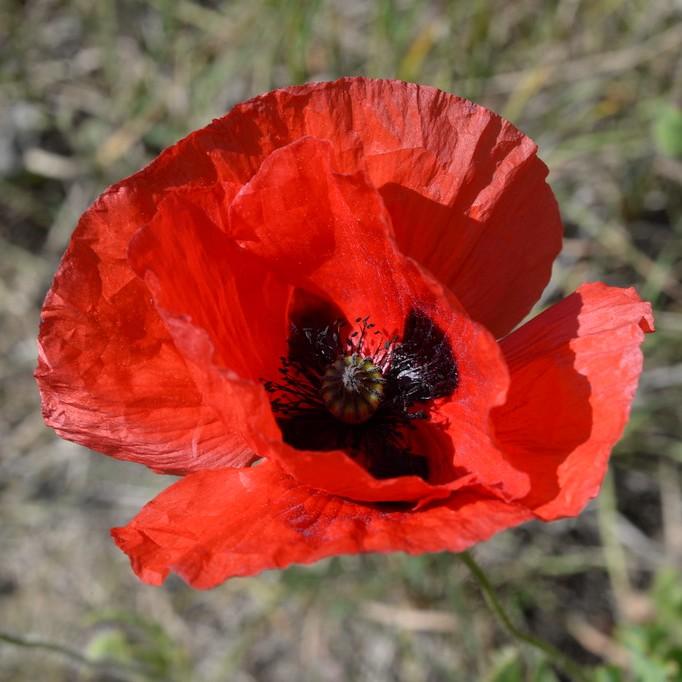
Corn Poppy
Papaver rhoeas
Overview
The corn poppy is a beloved wildflower recognizable by its crinkled, vivid red petals, often marked with a dark basal blotch, that unfurl from fuzzy, nodding buds atop slender, hairy stems. It has naturalized across much of the world, frequently colonizing fallow agricultural fields, roadsides, and disturbed ground. It gained global symbolic importance as the official flower of military remembrance following World War I, immortalized in the poem *In Flanders Fields*. Ripe, unprocessed corn poppy seeds are a common culinary ingredient, used in baked goods and spice blends across Europe and the Middle East.
Care Guide
Watering
Corn poppies have moderate water needs, requiring approximately 1 inch of water per week during active growth; allow the top 1-2 inches of soil to dry out between waterings to avoid root rot. Avoid overhead watering, as wet foliage can increase susceptibility to fungal diseases, and reduce watering once plants finish flowering. Drought-tolerant once established, mature plants can survive short dry spells without supplemental irrigation.
Light
Corn poppies require full sun, meaning a minimum of 6-8 hours of direct, unfiltered sunlight daily to produce abundant blooms. They will struggle in partial shade, producing leggy stems and sparse flowering, and will not thrive in full shade conditions. In regions with extremely hot summer sun, they may benefit from light afternoon shade to prevent petal scorch and extend bloom time.
Soil
Corn poppies adapt to a wide range of soil types, including poor, low-nutrient soils, but prefer well-drained, light, sandy or loamy soil with a neutral to slightly alkaline pH between 6.5 and 7.5. Heavy, waterlogged clay soils will cause root rot, so amend clay areas with sand or compost to improve drainage before planting. They do not require rich, fertile soil; high-nutrient soil will encourage excessive leaf growth at the expense of flowering.
Fertilizer
Corn poppies are light feeders and generally do not require regular fertilization if grown in average garden soil. If soil is extremely poor, apply a balanced, slow-release 10-10-10 fertilizer at half strength once at the beginning of the growing season to support initial growth. Avoid over-fertilizing, as high nitrogen levels will produce lush foliage and few flowers, and may weaken stems, leading to flopping.
Temperature
Corn poppies prefer cool growing temperatures between 50-75°F (10-24°C) and will tolerate light frosts down to 20°F (-7°C) during early spring growth. They are cool-season annuals that thrive in spring and early summer, and will die back once consistent temperatures exceed 85°F (29°C). They are typically sown in fall in mild winter climates, or early spring in regions with harsh winters, to align with their preferred cool growing window.
Pruning
Corn poppies require minimal pruning; deadhead spent blooms regularly by pinching off faded flowers just below the flower head to encourage continuous blooming throughout the season. If you wish to encourage self-seeding for the following year, leave a portion of spent flower heads on the plants at the end of the blooming period to allow seed pods to mature and disperse. Once plants die back at the end of summer, pull up and discard the entire plant to keep the garden tidy, leaving any fallen seeds in place if you want volunteer seedlings next year.
Propagation
Corn poppies are almost exclusively propagated from seed, as their long taproots make transplanting very difficult and frequently fatal. Direct sow seeds outdoors in late fall or early spring, pressing them lightly into the soil surface as they require light to germinate, and keep the soil consistently moist until seedlings emerge in 10-14 days. Thin seedlings to 6-12 inches apart once they develop 2-3 true leaves to give them room to grow; avoid moving seedlings once they are established to prevent taproot damage.
Humidity
Corn poppies prefer average to low humidity levels between 30-50%, and do not thrive in high humidity environments. Excessively humid conditions increase the risk of fungal infections such as downy mildew and powdery mildew on foliage and flowers. Ensure plants are spaced adequately to allow for good air circulation, which helps reduce humidity around the foliage and prevent disease.
Repotting
Corn poppies are rarely grown in containers due to their long taproots, and repotting is generally not recommended as it almost always damages the taproot and kills the plant. If growing in pots, use a deep container at least 12 inches deep to accommodate the taproot, and sow seeds directly in the final container to avoid transplanting. Do not attempt to move established corn poppies from one pot to another, as they will not recover from the root disturbance.
Uses & Symbolism
Corn poppies are widely grown as ornamental plants in wildflower meadows, cottage gardens, and memorial plantings, valued for their bright, cheerful blooms that attract pollinators including bees and butterflies. Ripe, processed poppy seeds are a common culinary ingredient, used to add flavor and texture to breads, pastries, salads, and spice mixes in many global cuisines. They hold deep cultural significance as the international symbol of remembrance for military veterans, with paper poppies sold annually to raise funds for veteran support organizations in many countries.
Diseases & Pests
Corn poppies are relatively pest-resistant, but can be affected by aphids, which suck sap from young stems and leaves, and can be controlled with insecticidal soap or a strong spray of water. Fungal diseases including powdery mildew, downy mildew, and root rot are common in wet, humid conditions or poorly drained soil, and can be prevented by ensuring proper spacing for air circulation, avoiding overhead watering, and planting in well-drained soil. Slugs and snails may feed on young seedlings, particularly in damp spring conditions, and can be deterred with copper tape, diatomaceous earth, or hand-picking in the early morning or evening.
Related plants
Other plants you might like if you grow Corn Poppy.