Floating Marsh Marigold
Caltha palustris var. radicans
Overview
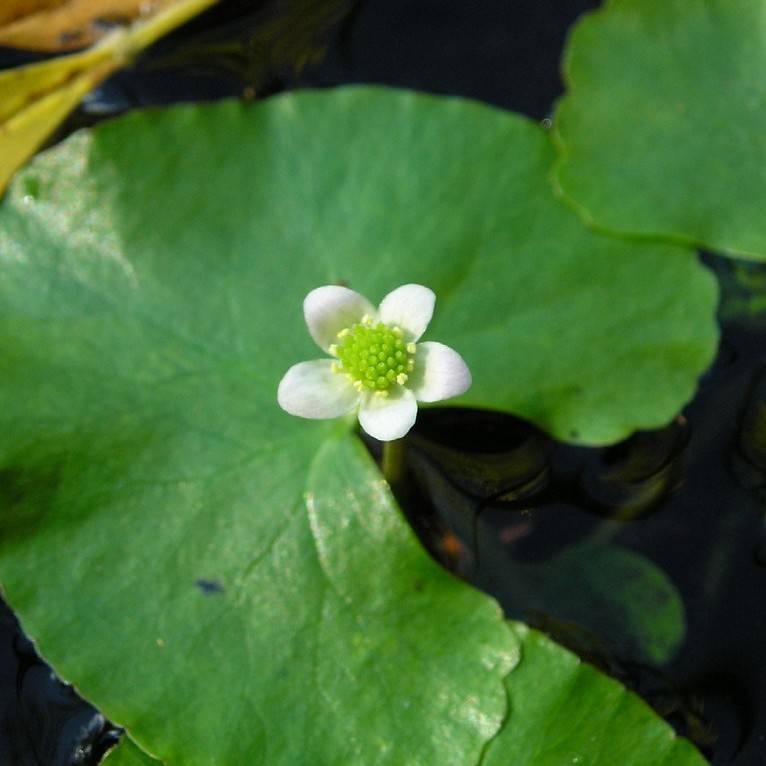
Floating marsh marigold is a mat-forming wetland perennial that grows in shallow ponds, marshes, and slow stream edges, with rounded, glossy green leaves that either float on the water surface or rise slightly above it. Its cheerful, bright yellow flowers bloom in spring, attracting native pollinators including bees and butterflies to wetland habitats. Unlike its upright terrestrial marsh marigold relative, this variety produces long, trailing, rooting stems that spread across water surfaces to form dense, vegetative mats that provide shelter for small aquatic organisms.
Care Guide
Watering
This obligate wetland plant requires consistent submersion in 1-6 inches of clean, slow-moving or still freshwater; never allow the roots or stems to dry out completely, as this will quickly kill the plant. Avoid placing it in fast-moving water or areas with frequent water level fluctuations, as these conditions disrupt root establishment and stress the plant. In container water gardens, maintain a consistent water level above the root zone throughout the growing season.
Light
Floating marsh marigold thrives in full sun to partial shade, requiring a minimum of 4 hours of direct sunlight daily to produce abundant blooms. In regions with very hot summer climates, provide light afternoon shade to prevent leaf scorch and reduce excessive water evaporation around the plant. Too much deep shade will reduce flowering and lead to sparse, leggy stem growth.
Soil
Roots should be anchored in rich, loamy, water-saturated wetland soil or heavy clay pond substrate with high organic matter content; it will not grow in standard well-draining potting soil. For container water garden cultivation, plant in a heavy, clay-based aquatic potting mix, not a lightweight potting blend that will float or disperse in water. The ideal soil pH is neutral to slightly acidic, ranging from 6.0 to 7.5.
Fertilizer
Fertilize once annually in early spring, just as new growth emerges, using a slow-release aquatic plant fertilizer tablet pressed into the substrate near the root zone. Never use standard water-soluble garden fertilizers, as these can leach excess nutrients into the water and trigger harmful algal blooms. Avoid over-fertilizing, as this will promote excessive foliage growth at the expense of flower production.
Temperature
This cold-hardy plant grows best in air temperatures between 50-75°F (10-24°C) and can withstand winter temperatures as low as -30°F (-34°C) when planted in water bodies that do not freeze solid to the root zone. In regions where ponds freeze completely solid in winter, move container-grown specimens to a protected, cool, frost-free location to keep roots from freezing. It does not tolerate sustained temperatures above 85°F (29°C), which can cause leaf dieback.
Pruning
Remove spent flower heads after blooming to prevent self-seeding if you do not want the plant to spread to other areas of your water feature. Trim back yellowed or damaged foliage and excess trailing stems in late fall to keep the plant tidy and reduce decaying organic matter in your pond over winter. Thin dense mats every 2-3 years to improve water circulation and prevent overcrowding of other aquatic plants.
Propagation
The easiest method of propagation is division in early spring before flowering: lift mature mats, cut sections with both stems and attached roots, and replant the sections in suitable wetland substrate at the same depth as the parent plant. You can also propagate from seed sown in saturated soil immediately after ripening in late summer, as seeds require a period of cold stratification to germinate and will not remain viable if stored dry. Stem cuttings taken in early summer will root readily if anchored in wet substrate and kept submerged in shallow water.
Humidity
Floating marsh marigold thrives in the high ambient humidity (60-90%) naturally present around wetland and water garden environments, so no supplemental humidity measures are needed when grown in its preferred aquatic habitat. If grown temporarily out of water for propagation, keep cuttings in a covered, high-humidity enclosure to prevent stem and leaf desiccation until roots are established. Low indoor humidity will quickly kill the plant, so it is not suitable for standard houseplant conditions.
Repotting
Container-grown specimens in water gardens should be repotted every 2-3 years in early spring to refresh the substrate and prevent root-bound growth. Use a wide, shallow aquatic planting pot lined with burlap to contain the heavy soil mix, and plant at the same depth as the previous container to avoid stressing the root system. After repotting, lower the container back into the pond to its original water depth gradually to avoid dislodging newly planted roots.
Uses & Symbolism
Floating marsh marigold is widely planted in rain gardens, naturalized pond edges, and shallow water features for its bright spring flowers and ability to stabilize shorelines and filter excess nutrients from runoff. Its dense vegetative mats provide shelter for tadpoles, small fish, and aquatic invertebrates, while its flowers serve as an early spring nectar source for native pollinators. Historically, cooked young leaves were used as a potherb in some regional cuisines, though raw consumption is toxic due to the presence of protoanemonin.
Diseases & Pests
Floating marsh marigold is relatively pest and disease resistant, but may be affected by fungal leaf spots and rust in overly humid, poorly circulated conditions, which can be managed by removing affected foliage and thinning dense mats to improve air flow. Aphids and spider mites may infest new growth during dry spells, and can be controlled by spraying foliage off with a strong stream of water or using insecticidal soap safe for aquatic environments. Root rot can occur if the plant is planted in stagnant, low-oxygen water, so ensure consistent water circulation in artificial water features to prevent this issue.
Related plants
Other plants you might like if you grow Floating Marsh Marigold.
%22%2F%3E%0A%20%20%20%20%20%20%3Ccircle%20cx%3D%22920%22%20cy%3D%22180%22%20r%3D%2290%22%20fill%3D%22%23cfe8d5%22%2F%3E%0A%20%20%20%20%20%20%3Cpath%20d%3D%22M600%20590c-90-180-215-255-310-280%200%20165%20118%20296%20270%20296h40z%22%20fill%3D%22%2379b88e%22%2F%3E%0A%20%20%20%20%20%20%3Cpath%20d%3D%22M600%20590c80-150%20198-212%20302-228-8%20142-123%20255-270%20255h-32z%22%20fill%3D%22%235c9f73%22%2F%3E%0A%20%20%20%20%20%20%3Cpath%20d%3D%22M600%20610V360%22%20stroke%3D%22%234f8c64%22%20stroke-width%3D%2218%22%20stroke-linecap%3D%22round%22%2F%3E%0A%20%20%20%20%20%20%3Ctext%20x%3D%22600%22%20y%3D%22700%22%20text-anchor%3D%22middle%22%20font-family%3D%22Arial%2C%20sans-serif%22%20font-size%3D%2244%22%20fill%3D%22%23365c45%22%3E%0A%20%20%20%20%20%20%20%20Plant%20image%20coming%20soon%0A%20%20%20%20%20%20%3C%2Ftext%3E%0A%20%20%20%20%3C%2Fsvg%3E%0A%20%20)