Broadleaf Arrowhead
Sagittaria latifolia
Overview
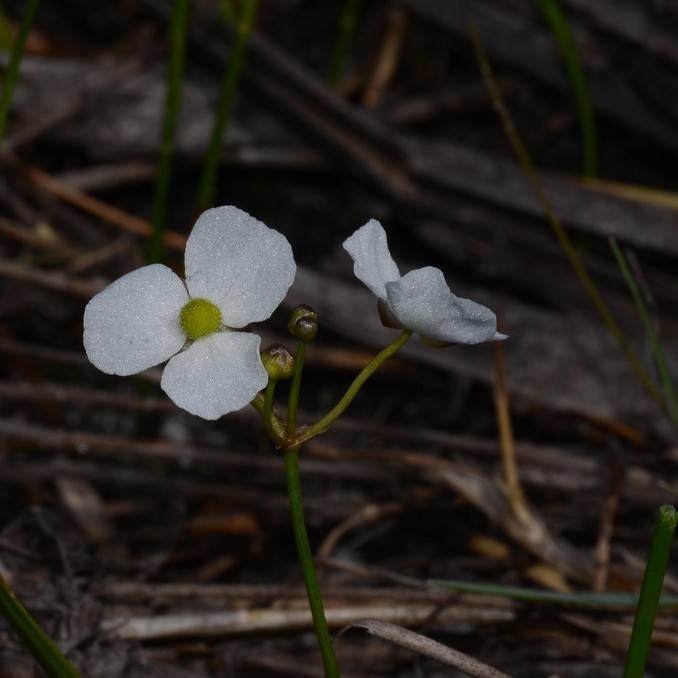
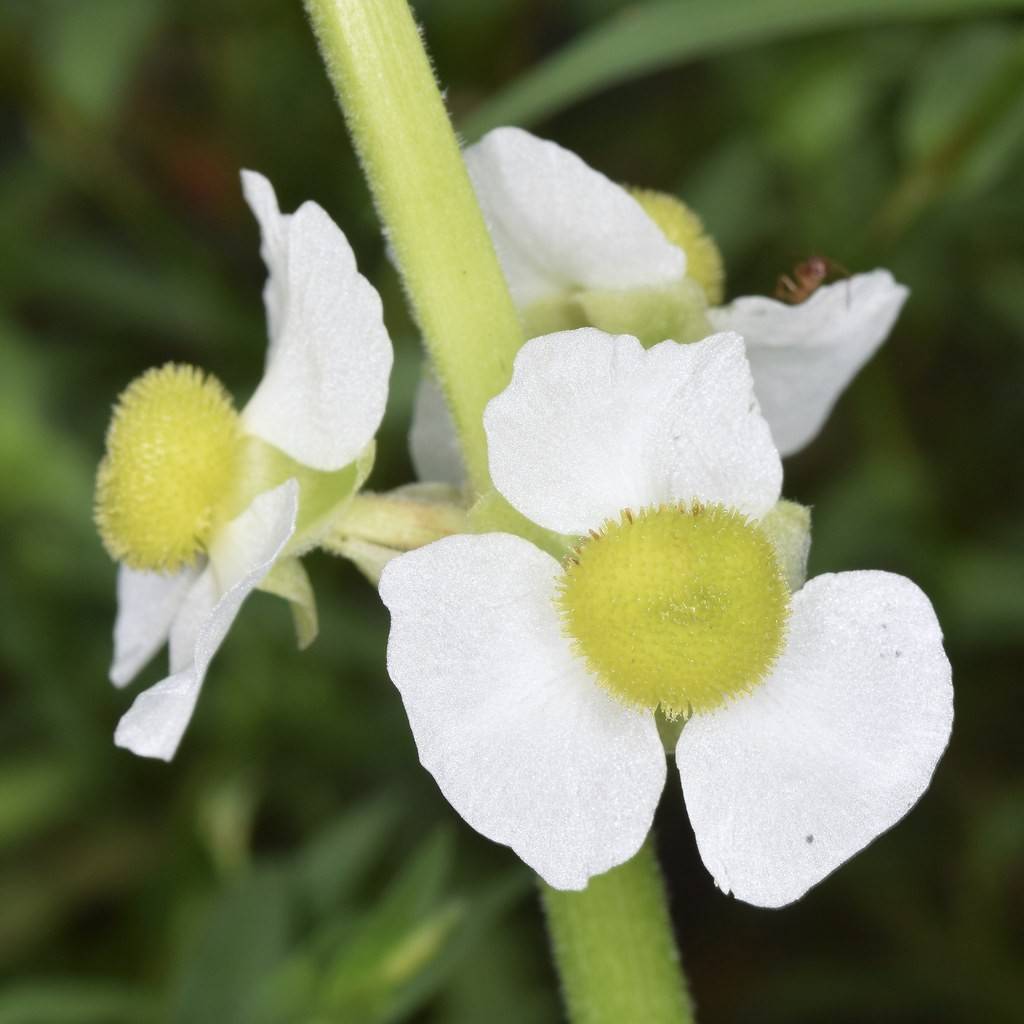
Broadleaf arrowhead is a marginal aquatic plant named for its broad, pointed, arrowhead-shaped emergent leaves that rise above shallow freshwater surfaces. It produces delicate white three-petaled flowers on tall stalks throughout the growing season, followed by clusters of small, dry seed pods. The plant develops starchy, potato-like tubers under the mud at the base of its roots, which are a critical food source for waterfowl, muskrats, and other wetland fauna.
Care Guide
Watering
As an aquatic plant, broadleaf arrowhead requires consistent submersion in 1 to 12 inches (2.5 to 30 cm) of shallow, standing or slow-moving freshwater; never allow its root system to dry out completely. When grown in containers, keep the water level consistently above the soil surface, replenishing evaporated water regularly to maintain appropriate depth. Avoid exposure to heavily polluted or fast-flowing water, which can damage foliage and disrupt root establishment.
Light
Thrives in full sun, requiring at least 6 hours of direct unfiltered sunlight daily to produce robust foliage and abundant flowers. It can tolerate partial shade, but growth will be slower, flowering will be reduced, and tubers may be smaller. Avoid deep shade, as this can cause the plant to become leggy and decline over time.
Soil
Prefers heavy, nutrient-rich muddy or silty loam soil typical of wetland margins, with a pH between 6.0 and 7.5. When grown in containers, use a heavy aquatic potting mix without perlite or other lightweight amendments that would float away when submerged. Avoid light, sandy soils that do not hold enough nutrients to support tuber development.
Fertilizer
Benefits from a slow-release aquatic fertilizer applied once at the start of the growing season in early spring to support foliage growth and tuber development. Avoid standard water-soluble fertilizers, which can leach into surrounding water and cause harmful algae blooms. Do not fertilize after mid-summer, as this can interfere with the plant’s natural dormancy preparation for winter.
Temperature
Grows best in air temperatures between 60 and 85°F (15 to 29°C) during its active growing season, and can survive winter water temperatures as low as 20°F (-7°C) if its root tubers are insulated by mud below the freeze line. In regions where water freezes solid to the root level, lift tubers in fall and store them in damp sand in a cool, frost-free location until spring. Extreme heat above 90°F (32°C) may cause leaf scorch if exposed for prolonged periods.
Pruning
Remove yellowed, damaged, or dead foliage regularly throughout the growing season to keep the plant tidy and prevent decaying organic matter from fouling surrounding water. Cut back all above-ground growth to just above the soil line after the first frost in fall, once the plant enters dormancy. Thin out overcrowded clumps every 2 to 3 years to improve air circulation and prevent stagnant growth.
Propagation
Most easily propagated by dividing mature tuber clumps in early spring before new growth emerges, separating individual tubers and planting them 2 to 3 inches (5 to 7.5 cm) deep in muddy soil. It can also be grown from seed, which should be sown on the surface of wet soil in spring and kept submerged in shallow water until germination, which typically occurs within 2 to 3 weeks. Wild plants often self-seed and spread naturally via drifting tubers in moving water.
Humidity
Adaptable to the high ambient humidity typical of wetland environments, tolerating humidity levels between 60 and 90% with no issues. When grown in outdoor pond settings, it does not require supplemental humidity, as surrounding water provides adequate moisture in the air. Indoor potted specimens benefit from occasional misting if ambient humidity drops below 50%.
Repotting
Container-grown specimens should be repotted every 2 to 3 years in early spring before new growth starts, to refresh soil and prevent overcrowding of tubers. Use a wide, heavy aquatic pot with drainage holes, and line the bottom with a layer of gravel to keep the pot anchored and prevent soil from washing out. After repotting, submerge the pot to its original water depth to minimize transplant shock.
Uses & Symbolism
The starchy tubers of broadleaf arrowhead, commonly called duck potatoes or wapato, are edible when cooked, and were a staple food source for many Indigenous North American groups for millennia. It is widely planted in constructed wetlands and pond margins for erosion control, water filtration, and to provide habitat and food for waterfowl, amphibians, and beneficial pollinators. It is also a popular ornamental plant for backyard water gardens and naturalized pond edges, valued for its attractive foliage and delicate white flowers.
Diseases & Pests
Broadleaf arrowhead is relatively pest-resistant, but may occasionally be affected by aphids and spider mites that feed on young foliage, which can be controlled with a gentle spray of water or insecticidal soap safe for aquatic environments. Fungal leaf spot and root rot can occur in stagnant, poorly aerated water, so ensure gentle water movement and avoid overcrowding plants to reduce risk. It may also be targeted by pond snails that chew small holes in leaves, though damage is rarely severe enough to require treatment.
Related plants
Other plants you might like if you grow Broadleaf Arrowhead.