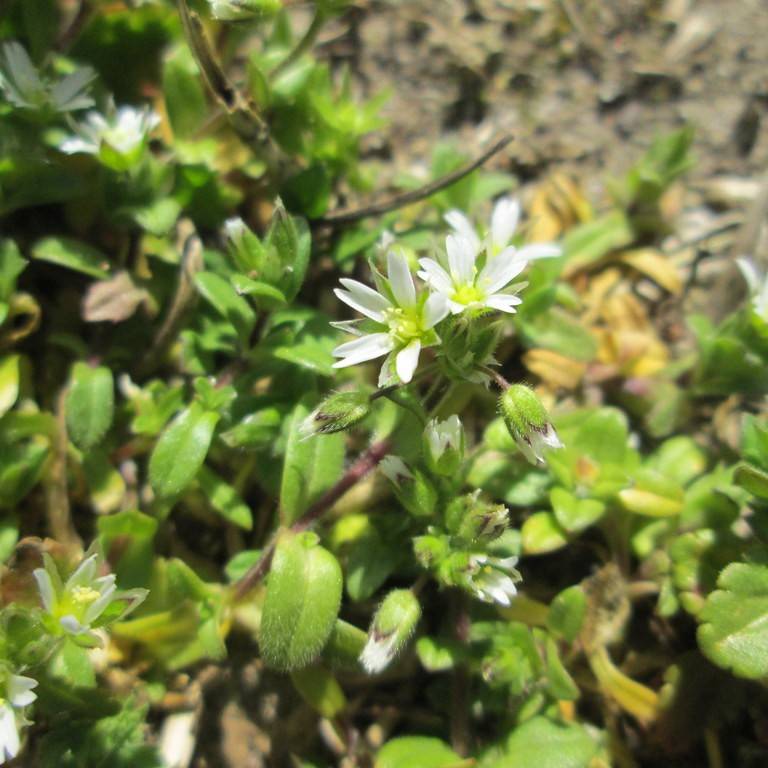
Five Stamen Chickweed
Stellaria pentandra
Overview
Five Stamen Chickweed is a small, spreading herb recognizable by its opposite, oval-shaped leaves and tiny, star-shaped white flowers that have five deeply notched petals and exactly five stamens, distinguishing it from other Stellaria species. It thrives in cool, moist environments, often colonizing lawns, garden beds, stream banks, and woodland edges in temperate regions. Though sometimes considered a minor garden weed, it supports early spring pollinators and serves as a food source for small songbirds and beneficial insects.
Care Guide
Watering
Five Stamen Chickweed prefers consistently moist, well-drained soil, and tolerates brief periods of light drought once established, though prolonged dryness will cause wilting and early dieback. Water regularly during dry spells to keep the top 1-2 inches of soil damp, avoiding overwatering that leads to soggy conditions which can cause root rot. It naturally thrives in areas with regular rainfall, so supplemental watering is rarely needed in regions with consistent spring precipitation.
Light
This species grows best in partial shade, such as dappled sunlight under tree canopies or along the edges of shaded garden beds, but can tolerate full sun in cooler, moister climates. Too much intense, direct sun in warm regions will scorch its delicate leaves and cause the plant to go to seed prematurely, while deep full shade will reduce flowering and lead to leggy, sparse growth. It is well adapted to low-light conditions in early spring before deciduous trees fully leaf out.
Soil
Five Stamen Chickweed is adaptable to a wide range of soil types, including loam, silt, clay, and sandy soils, as long as drainage is adequate and the soil retains moderate moisture. It prefers a neutral to slightly alkaline pH between 6.0 and 7.5, but can tolerate slightly acidic conditions as well. It commonly grows in disturbed, nutrient-poor soils, though it will produce lusher foliage and more blooms in soil amended with small amounts of organic matter.
Fertilizer
This low-growing wildflower has very low nutrient requirements, and typically does not need supplemental fertilization when grown in average garden soil. Excess nitrogen fertilization will encourage rapid, leggy foliage growth at the expense of flowering, and may cause the plant to spread more aggressively than desired. If grown in extremely poor, sandy soil, a single light application of balanced, slow-release fertilizer in early spring is sufficient to support healthy growth.
Temperature
Five Stamen Chickweed is a cool-season annual that thrives in temperatures between 40-65°F (4-18°C), and can tolerate light frosts down to 25°F (-4°C) without damage. It will bolt, go to seed, and die back once temperatures consistently exceed 75°F (24°C) in late spring or early summer, making it a short-lived plant in warmer regions. It germinates best in cool soil temperatures between 35-50°F (2-10°C) in early spring or late fall.
Pruning
Pruning is generally unnecessary for Five Stamen Chickweed, though if it is spreading beyond desired areas in a garden, you can pull up excess plants by hand easily, as they have shallow root systems. To prevent self-seeding and reduce unwanted spread, you can trim off spent flower heads before they develop seed pods, though this is rarely needed if the plant is grown in a contained wildflower patch. Dead or yellowed foliage can be plucked off periodically to keep the planting looking tidy, but is not required for plant health.
Propagation
Five Stamen Chickweed propagates readily from seed, which it produces in large quantities after flowering, with seeds naturally dispersing close to the parent plant to form dense mats over time. You can collect mature seed pods in late spring before they split open, then sow the seeds directly onto the surface of prepared soil in fall or early spring, as the seeds require a period of cold stratification to germinate successfully. It can also be propagated via stem cuttings taken in early spring, though seed propagation is far simpler and more reliable for this annual species.
Humidity
This species prefers moderate humidity levels between 40-60%, which are typical of its native temperate spring environments, and tolerates both slightly drier and more humid conditions as long as soil moisture is adequate. Very high humidity above 70% combined with poor air circulation can increase the risk of fungal leaf spots and powdery mildew on its delicate foliage. It does not require misting or supplemental humidity when grown outdoors, and struggles in the low-humidity environments of most heated indoor spaces.
Repotting
Five Stamen Chickweed is rarely grown in containers, as it is a low-spreading wildflower that prefers to spread in open garden soil, but if grown in a pot, it will not need repotting during its short single-season lifespan. If you do grow it in a container, use a standard well-draining potting mix, and ensure the pot has drainage holes to prevent soggy soil. Since it is an annual, you can remove the entire plant after it dies back in summer, and replant fresh seeds the following cool season.
Uses & Symbolism
Five Stamen Chickweed is edible, with its young leaves and tender shoots having a mild, slightly grassy flavor that can be eaten raw in salads or cooked as a potherb, similar to common chickweed. It is often included in native wildflower seed mixes for pollinator gardens, as its early spring blooms provide nectar and pollen for small native bees, hoverflies, and other beneficial insects before many other plants flower. It also serves as a forage food for wild birds, which eat its small, nutrient-dense seeds in late spring and early summer.
Diseases & Pests
Five Stamen Chickweed is relatively resistant to most pests and diseases, though it can occasionally be affected by aphids, which feed on its tender new growth, and spider mites in hot, dry conditions. Fungal issues such as powdery mildew and leaf spot can occur in overly humid, poorly ventilated growing areas, especially if plants are crowded and foliage remains wet for extended periods. Root rot may develop if the plant is grown in poorly drained, waterlogged soil for prolonged periods.
Related plants
Other plants you might like if you grow Five Stamen Chickweed.