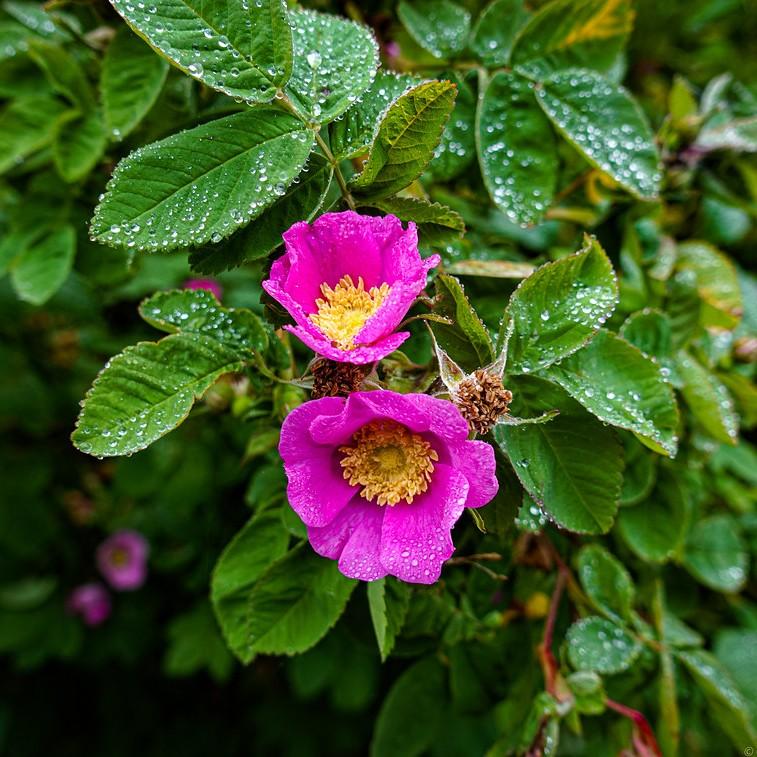
Clustered Wild Rose
Rosa pisocarpa
Overview
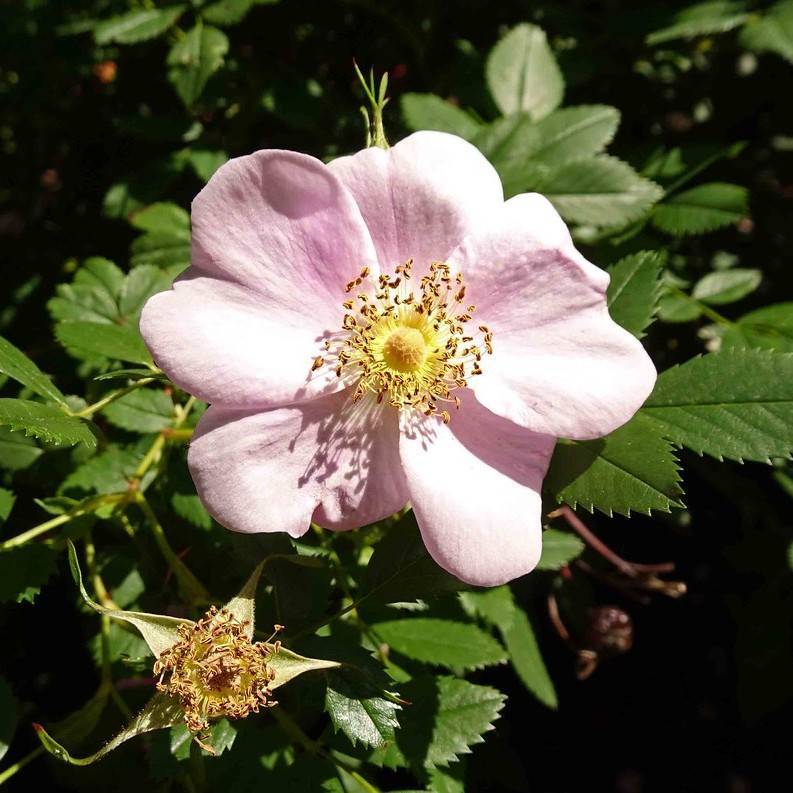
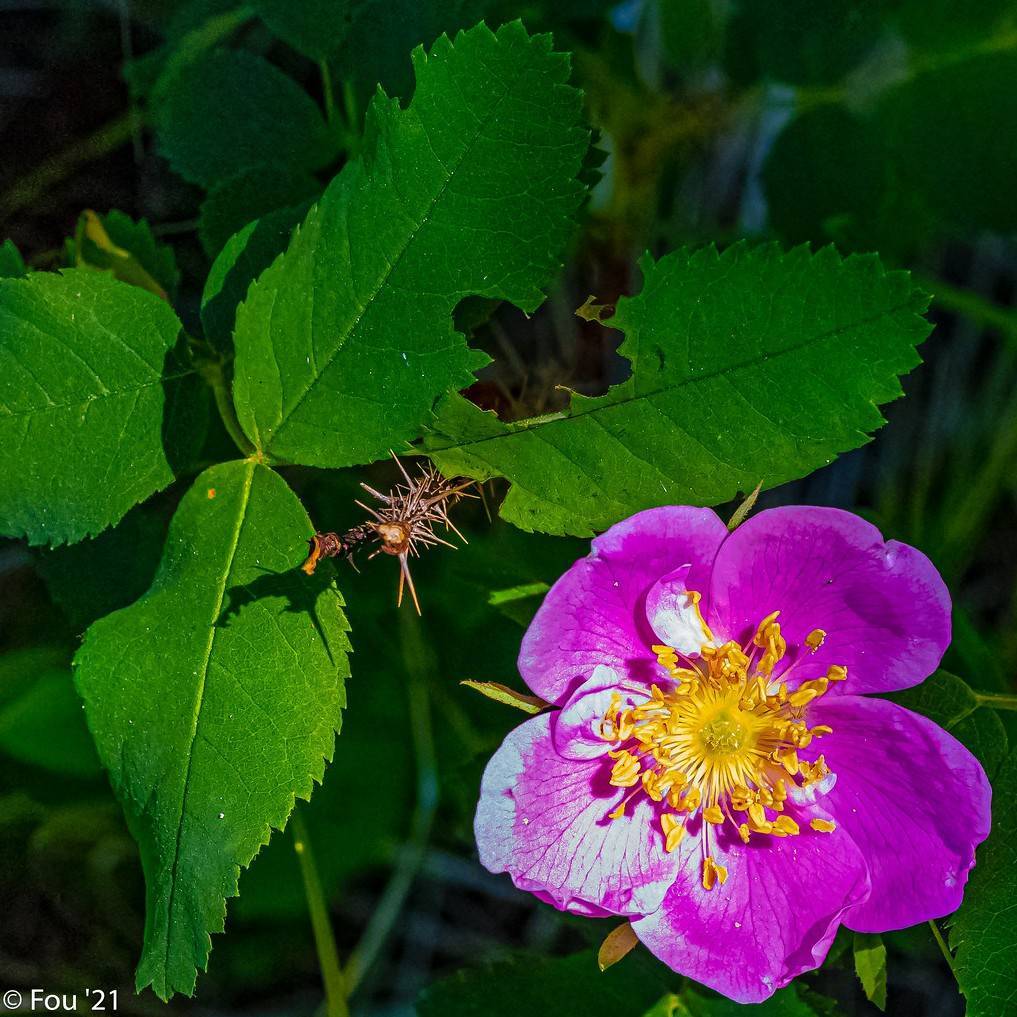
Clustered wild rose is a deciduous, suckering shrub distinguished by its arching, thorny stems and pinnate, serrated green leaves. It bears fragrant, pale to deep pink five-petaled flowers in dense clusters from late spring to mid-summer, followed by small, round, fleshy rose hips that ripen to a deep purple-red in autumn. It is well-adapted to moist, open habitats including streambanks, meadows, and forest edges, forming thickets that provide valuable wildlife shelter.
Care Guide
Watering
Prefers consistent, moderate moisture, especially during the growing season, thriving in soil that stays damp but not waterlogged. It tolerates occasional short periods of drought once established, but prolonged dryness will reduce flowering and hip production. Reduce watering frequency in winter when the plant is dormant.
Light
Grows best in full sun, which encourages maximum flower and fruit production and supports a dense, healthy growth habit. It can tolerate partial shade, though flowering will be less abundant and stems may become leggy as the plant stretches for light. Avoid deep, full shade, which will severely limit growth and make the plant vulnerable to fungal disease.
Soil
Adaptable to a wide range of soil types including sandy loam, clay, and silty soils, but performs best in rich, well-drained loam with a neutral to slightly acidic pH between 5.5 and 7.0. It tolerates wetter soils than many other rose species, making it suitable for rain gardens or poorly drained areas that other roses cannot tolerate. Adding organic matter such as compost at planting time will improve soil structure and support robust root growth.
Fertilizer
Benefits from a balanced, slow-release 10-10-10 fertilizer applied in early spring just as new growth emerges, to support foliage, flower, and hip development throughout the growing season. A second light application of compost or organic fertilizer can be added after flowering finishes to support root growth and winter hardiness. Avoid fertilizing late in the growing season, as this can stimulate tender new growth that will be damaged by early frost.
Temperature
Thrives in temperate climates within USDA hardiness zones 5 to 9, tolerating winter temperatures as low as -20°F (-29°C) when dormant. It prefers mild summer temperatures between 60 and 85°F (15-29°C), but can tolerate short periods of higher heat if provided with adequate moisture. Late spring frosts may damage new buds, so site plants away from low-lying frost pockets to minimize risk.
Pruning
Prune in late winter or early spring before new growth emerges, removing dead, damaged, or crossing stems to improve air circulation and reduce disease risk. Cut back older, woody stems by up to one-third every 2-3 years to encourage vigorous new growth and maintain a manageable, open shape. To control spread, remove suckering stems at the base if they grow outside the desired planting area.
Propagation
Most easily propagated from hardwood cuttings taken in late winter from dormant, year-old stems, planted in moist, well-drained medium until roots form in spring. It can also be grown from seed collected from ripe hips in fall, though seeds require a 3-month cold stratification period to break dormancy before germination will occur. Suckers that form around the base of established plants can be dug up and transplanted in early spring for quick, identical new specimens.
Humidity
Tolerates a wide range of humidity levels, performing well in both the moderate humidity of its native Pacific Northwest habitat and drier inland climates. Good air circulation around foliage is important to prevent fungal diseases such as powdery mildew, especially in areas with high summer humidity. It has no special humidity requirements when planted outdoors, making it adaptable to most growing regions within its hardiness range.
Repotting
Clustered wild rose is primarily grown outdoors in landscape settings, but if cultivated in a large container, repot every 2-3 years in early spring before new growth begins. Use a high-quality, well-drained potting mix with added organic matter, and select a container at least 2 inches larger in diameter than the current pot to accommodate root growth. Trim any circling or damaged roots during repotting to encourage healthy new root development, and water thoroughly after repotting to settle the soil.
Uses & Symbolism
Clustered wild rose is widely planted in native landscapes, pollinator gardens, and hedgerows, where its fragrant flowers attract bees, butterflies, and other beneficial insects, while its dense thickets provide shelter and nesting sites for birds. Its edible, vitamin C-rich rose hips are used to make jams, jellies, teas, and herbal remedies, and have long been used by Indigenous peoples of Western North America for food and medicinal purposes. It is also used for erosion control along streambanks and sloped sites, as its extensive root system holds soil in place and tolerates periodic flooding.
Diseases & Pests
Common fungal diseases include powdery mildew, which forms a white coating on foliage in humid, poorly ventilated conditions, and black spot, which causes dark lesions on leaves and can lead to defoliation if left untreated. Common pests include aphids, which cluster on new growth and suck sap, and rose slugs, the larvae of sawflies that skeletonize leaf tissue, both of which can be controlled with insecticidal soap or neem oil. Root rot can occur in poorly drained, waterlogged soil, so ensure planting sites have adequate drainage to prevent this fatal fungal condition.
Related plants
Other plants you might like if you grow Clustered Wild Rose.