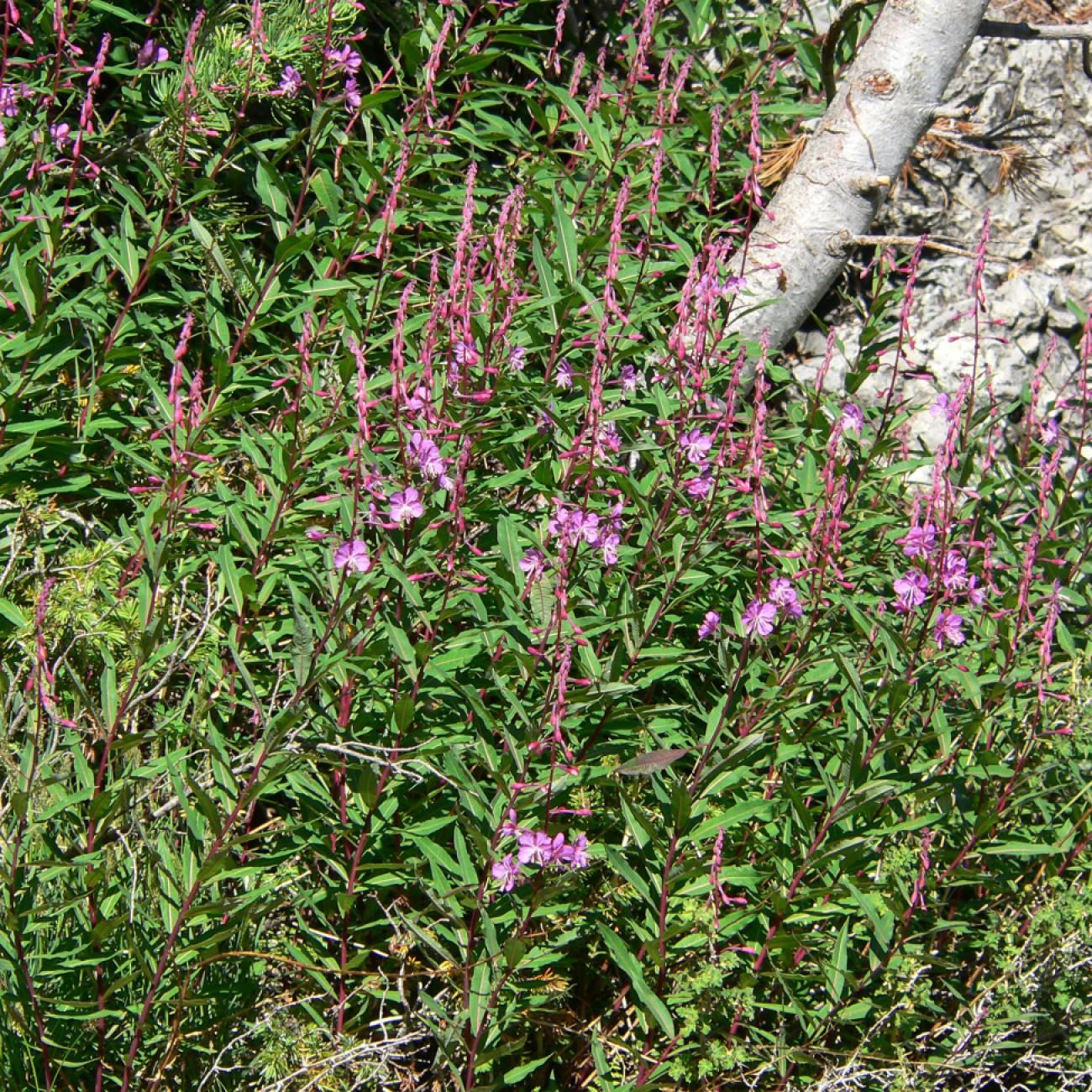
Fireweed
Chamaenerion angustifolium
Overview
Fireweed is a robust, clump-forming herbaceous perennial recognizable by its tall, upright stems, narrow willow-like leaves, and dense terminal spikes of four-petaled, magenta to pale pink flowers that bloom from the bottom of the spike upward. It earns its common name for its ability to quickly establish and thrive in areas recently scorched by wildfire, acting as a pioneer species that stabilizes soil and supports pollinator populations in recovering ecosystems. The plant spreads via both wind-dispersed fluffy seeds and aggressive underground rhizomes, allowing it to form large, dense colonies in suitable open habitats.
Care Guide
Watering
Fireweed prefers consistent moisture in its native habitats, though it is highly drought-tolerant once established, making it well-suited to dry, disturbed sites. Water newly planted specimens regularly to help roots establish, reducing frequency after the first growing season; avoid overwatering or waterlogged conditions, which can cause root rot. In very hot, arid climates, occasional supplemental watering during extended dry periods will support healthier foliage and longer blooming.
Light
This species thrives in full sun, requiring at least six hours of direct sunlight daily to produce abundant blooms and maintain sturdy, upright growth. It can tolerate partial shade, though plants grown in shadier conditions will produce fewer flowers, develop leggier stems, and spread less aggressively. Full sun exposure also helps reduce the risk of foliar fungal diseases by improving air circulation around the foliage.
Soil
Fireweed adapts to a wide range of soil types, including poor, sandy, gravelly, or low-nutrient soils common in disturbed or post-fire sites. It prefers well-drained soil with a slightly acidic to neutral pH (5.5 to 7.0), though it can tolerate mildly alkaline conditions as well. Heavy, compacted, or persistently waterlogged soils are unsuitable, as they can damage the plant’s shallow rhizomatous root system.
Fertilizer
As a pioneer species adapted to low-nutrient environments, fireweed rarely requires fertilization, and excess nutrients can lead to overly lush, weak growth and reduced flowering. If grown in extremely poor, depleted soil, a light application of balanced, slow-release fertilizer in early spring can support healthy growth, but is generally unnecessary for established plants. Avoid high-nitrogen fertilizers, which will prioritize foliage production over blooms and encourage aggressive spread that may outcompete neighboring plants.
Temperature
Fireweed is exceptionally cold-hardy, thriving in USDA zones 2 through 9, and can tolerate winter temperatures as low as -50°F (-46°C) without protection. It prefers cool to moderate summer temperatures, and may suffer from foliage scorch or reduced blooming in regions with sustained temperatures above 90°F (32°C), especially if paired with low moisture. The plant dies back completely to the ground in winter, with new shoots emerging from underground rhizomes in early spring once soil temperatures rise.
Pruning
Prune back spent flower spikes immediately after blooming if you wish to prevent self-seeding and limit aggressive spread, as each plant can produce thousands of wind-dispersed seeds. Cut the entire plant back to 3-4 inches above the soil line in late fall after foliage dies back, to keep the planting area tidy and reduce overwintering pest and disease habitat. To control the spread of rhizomatous colonies, dig up and remove unwanted outer clumps annually in early spring before new growth begins.
Propagation
Fireweed is most easily propagated by dividing established rhizomatous clumps in early spring, just as new shoots emerge; separate clumps into sections with at least one healthy shoot and a portion of root, then replant immediately at the same depth as the original plant. It can also be grown from seed, which requires no stratification to germinate, and can be sown directly outdoors in fall or early spring on the soil surface, as light is needed for successful germination. Cuttings of young, softwood stems taken in late spring or early summer can also root readily if placed in moist, well-drained growing medium and kept in partial shade until established.
Humidity
Fireweed adapts well to a wide range of humidity levels, thriving in the moderate humidity of its native temperate and boreal habitats, as well as the drier conditions of arid mountain regions. It has no specific humidity requirements, and high humidity levels are only problematic if paired with poor air circulation, which can increase the risk of foliar fungal diseases. In very dry, low-humidity environments, occasional misting is unnecessary, as the plant’s drought tolerance allows it to thrive without extra moisture in the air.
Repotting
Fireweed is rarely grown in containers, as its aggressive rhizomatous root system and large mature size make it better suited to outdoor landscape plantings. If grown in a pot, select a deep, wide container at least 18 inches in diameter to accommodate root spread, and repot every 1-2 years in early spring, trimming back excess root growth and refreshing the potting mix to prevent the plant from becoming root-bound. Use a lightweight, well-drained potting mix, and ensure the container has ample drainage holes to prevent waterlogging of the root system.
Uses & Symbolism
Fireweed has a long history of edible and medicinal use: young shoots and leaves can be eaten raw or cooked like asparagus or spinach, while the sweet nectar produces a highly prized, light, delicate honey. Indigenous peoples used the plant to treat a range of ailments, including skin irritations, burns, and respiratory issues, and its strong, fibrous inner bark was traditionally processed into cordage and woven textiles. In landscaping, it is valued for its bright, long-lasting blooms, ability to attract pollinators including bees, butterflies, and hummingbirds, and its utility for erosion control on disturbed or sloped sites.
Diseases & Pests
Fireweed is largely pest and disease resistant, though it can occasionally be affected by foliar fungal diseases including powdery mildew and rust, especially in humid conditions with poor air circulation or excessive shade. Aphids and spider mites may infest stressed plants, sucking sap from foliage and causing yellowing or distorted growth; these can be controlled with insecticidal soap or a strong spray of water to dislodge the pests. Root rot may occur in poorly drained or waterlogged soils, so ensuring proper soil drainage is critical to preventing this fatal condition.
Related plants
Other plants you might like if you grow Fireweed.