Bird's Foot Trefoil
Lotus corniculatus
Overview
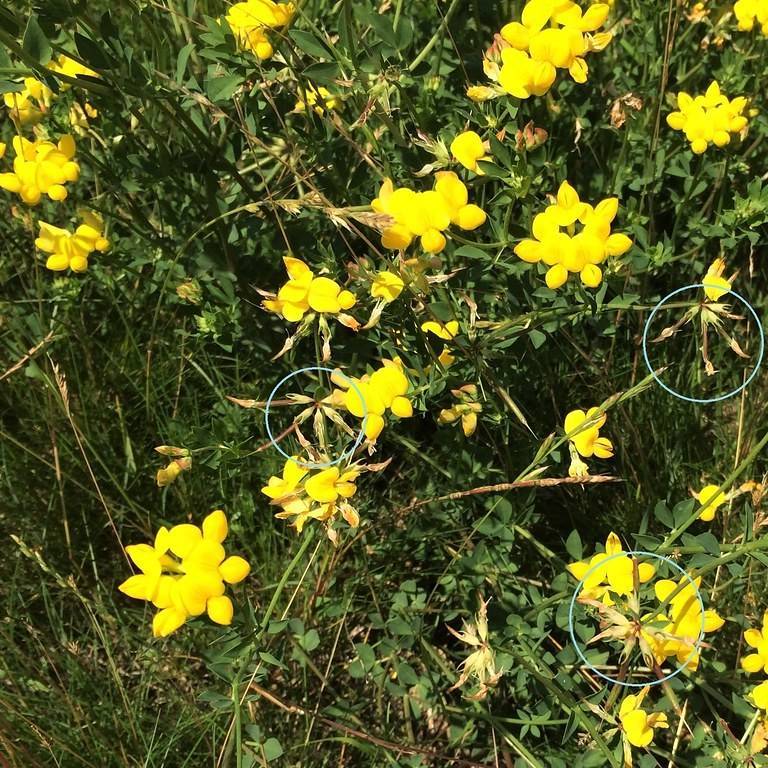
Bird's Foot Trefoil gets its common name from the elongated, claw-shaped seed pods that resemble a bird's foot. Its vibrant yellow, sometimes orange-tinged flowers bloom in dense rounded clusters from late spring to early fall, attracting a wide range of bees, butterflies, and other pollinators. A hardy, adaptable species, it thrives in poor, dry soils where many other forage plants cannot survive, making it a popular choice for roadside reclamation and wildflower mixes.
Care Guide
Watering
Drought-tolerant once established, requiring only occasional deep watering during extended periods of dry weather; overwatering can lead to root rot and fungal disease. Avoid soggy soil conditions, especially in winter, as this can damage the plant's deep taproot. New plantings need regular, light watering for the first 2-3 months to encourage root development.
Light
Prefers full sun exposure, requiring a minimum of 6 hours of direct sunlight daily to produce abundant blooms and dense foliage. It can tolerate light partial shade, but flowering will be reduced and stems may become leggy in low-light conditions. Full sun also helps prevent foliar fungal diseases by promoting air circulation around the plant.
Soil
Adaptable to a wide range of soil types, including sandy, loamy, clay, and nutrient-poor soils, with a preferred pH range of 6.0 to 7.5. It is well-suited to well-drained soils and can tolerate moderate salinity, making it suitable for coastal plantings. It does not perform well in waterlogged, poorly aerated soils.
Fertilizer
Requires little to no supplemental fertilizer, as it is a nitrogen-fixing legume that forms symbiotic relationships with soil bacteria to produce its own nitrogen. Over-fertilization, particularly with high-nitrogen products, can lead to excessive leaf growth at the expense of flowers and reduced nitrogen fixation. A light application of phosphorus-rich fertilizer at planting time can support healthy root development if soil is extremely poor.
Temperature
Hardy in USDA zones 3 to 9, tolerating winter temperatures as low as -40°F (-40°C) and summer highs up to 100°F (38°C) with adequate moisture. It goes dormant in regions with severe winter cold, re-sprouting from its taproot in early spring. It can withstand light frosts during the growing season without significant damage.
Pruning
Requires minimal pruning; mowing or cutting back to 2-3 inches in height after flowering finishes can prevent self-seeding if desired and encourage denser foliage growth. Deadheading spent flower clusters can extend the blooming period through the summer months. For pastures or hay fields, it is typically cut two to three times per growing season.
Propagation
Most commonly propagated from seed, which requires scarification (nicking or sanding the hard seed coat) to improve germination rates; seeds can be sown directly outdoors in early spring or fall. It can also be propagated by root cuttings taken from dormant plants in late winter or early spring, planted 1-2 inches deep in well-drained soil. Division of established clumps is possible but less common due to the plant's deep taproot.
Humidity
Tolerates a wide range of humidity levels, from arid to moderately humid climates, as long as soil drainage is adequate. High humidity combined with poor air circulation can increase the risk of foliar fungal diseases like powdery mildew. It does not require supplemental humidity when grown outdoors in its preferred hardiness zones.
Repotting
Rarely grown in containers, as its deep taproot makes container culture challenging; if grown in pots, use a deep, wide container of at least 12 inches in depth to accommodate root growth. Repot only when the plant becomes visibly root-bound, typically every 2-3 years, in early spring before new growth emerges. Use a well-drained, sandy loam potting mix when repotting to prevent waterlogging.
Uses & Symbolism
Widely planted as a forage crop for livestock, as it is high in protein and does not cause bloat in ruminants when consumed in moderation, unlike many other legumes. It is a common component of wildflower seed mixes, pollinator gardens, and erosion control plantings for roadsides, slopes, and disturbed sites. Historically, it has been used in traditional herbal medicine to treat digestive issues, skin conditions, and respiratory ailments, though modern clinical support for these uses is limited.
Diseases & Pests
Relatively resistant to most pests and diseases, though it can be susceptible to root rot in poorly drained, waterlogged soils. Foliar diseases including powdery mildew, rust, and leaf spot can occur in conditions of high humidity and poor air circulation. Common pests include aphids, leafhoppers, and weevils, which rarely cause significant damage to established, healthy plants.
Guides that mention Bird's Foot Trefoil
Related plants
Other plants you might like if you grow Bird's Foot Trefoil.
%22%2F%3E%0A%20%20%20%20%20%20%3Ccircle%20cx%3D%22920%22%20cy%3D%22180%22%20r%3D%2290%22%20fill%3D%22%23cfe8d5%22%2F%3E%0A%20%20%20%20%20%20%3Cpath%20d%3D%22M600%20590c-90-180-215-255-310-280%200%20165%20118%20296%20270%20296h40z%22%20fill%3D%22%2379b88e%22%2F%3E%0A%20%20%20%20%20%20%3Cpath%20d%3D%22M600%20590c80-150%20198-212%20302-228-8%20142-123%20255-270%20255h-32z%22%20fill%3D%22%235c9f73%22%2F%3E%0A%20%20%20%20%20%20%3Cpath%20d%3D%22M600%20610V360%22%20stroke%3D%22%234f8c64%22%20stroke-width%3D%2218%22%20stroke-linecap%3D%22round%22%2F%3E%0A%20%20%20%20%20%20%3Ctext%20x%3D%22600%22%20y%3D%22700%22%20text-anchor%3D%22middle%22%20font-family%3D%22Arial%2C%20sans-serif%22%20font-size%3D%2244%22%20fill%3D%22%23365c45%22%3E%0A%20%20%20%20%20%20%20%20Plant%20image%20coming%20soon%0A%20%20%20%20%20%20%3C%2Ftext%3E%0A%20%20%20%20%3C%2Fsvg%3E%0A%20%20)