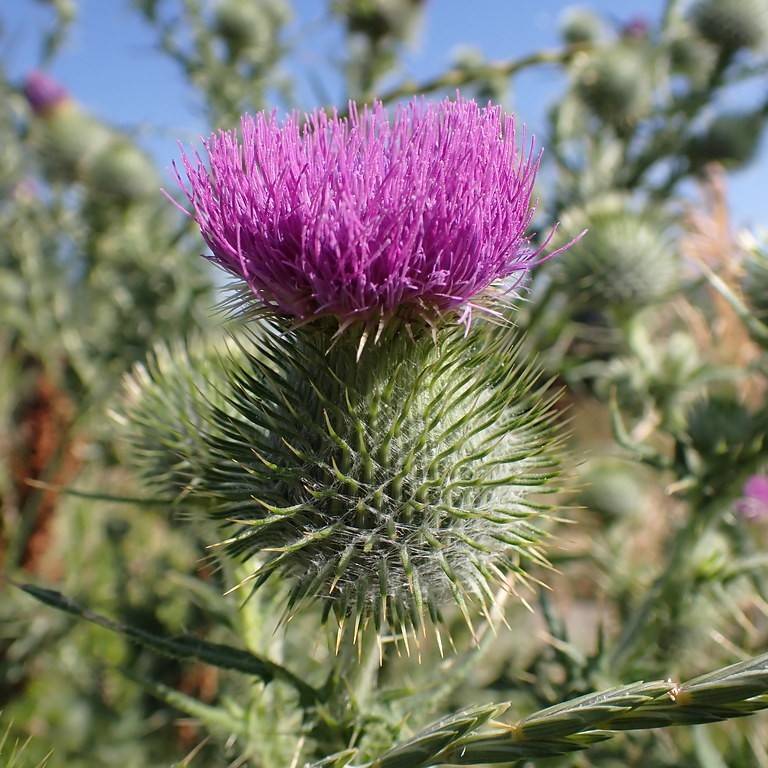
Bull Thistle
Cirsium vulgare
Overview
Bull thistle forms a low rosette of spiny, lobed leaves in its first year, then sends up a tall, branched flowering stalk in its second growing season. Its vibrant purple, composite flower heads bloom from mid-summer to early fall, producing thousands of wind-dispersed seeds that allow it to naturalize readily in disturbed areas, pastures, and roadsides. Though classified as an invasive noxious weed in many North American regions, it provides critical nectar for bees, butterflies, and other pollinators, and its seeds are a favored food source for goldfinches.
Care Guide
Watering
Bull thistle is highly drought-tolerant once established, requiring only natural rainfall in most climates; supplemental watering is rarely needed even in prolonged dry periods. Overwatering or waterlogged conditions can cause root rot, so avoid planting it in areas that hold standing water for extended periods.
Light
This species thrives in full, direct sunlight, requiring a minimum of 6 hours of unobstructed light daily to produce robust foliage and abundant flower heads. It can tolerate very light partial shade but will grow lankier and produce fewer blooms in low-light conditions.
Soil
Bull thistle adapts to nearly all well-drained soil types, including poor, sandy, gravelly, or clay soils, and tolerates a wide pH range from acidic to slightly alkaline. It does not require fertile soil, and actually grows more aggressively in nutrient-rich, disturbed ground, making it a common colonizer of recently cleared sites.
Fertilizer
Fertilizer is entirely unnecessary for bull thistle, as it can extract sufficient nutrients from even low-quality soil. Applications of nitrogen-rich fertilizer will only encourage overly lush, rapid growth that increases its spread as a weed, so avoid amending soil where it is growing.
Temperature
Bull thistle is hardy in USDA zones 3 through 9, tolerating winter temperatures as low as -40°F (-40°C) during its first-year rosette stage. It thrives in moderate summer temperatures between 60 and 85°F (15 and 29°C), and can survive short periods of extreme heat above 100°F (38°C) if soil moisture is minimal.
Pruning
To prevent unwanted spread, cut flowering stalks at the base before seed heads mature and disperse their wind-borne seeds. For small infestations, dig up entire first-year rosettes, including the deep taproot, to prevent regrowth; avoid leaving root fragments in soil, as they can resprout.
Propagation
Bull thistle propagates exclusively by seed, which is released from mature flower heads in late fall and germinates readily in disturbed, bare soil the following spring. Seeds can remain viable in the soil seed bank for up to 10 years, so even if existing plants are removed, new seedlings may emerge for many years after.
Humidity
This thistle tolerates a wide range of humidity levels, from arid continental climates to humid coastal regions, with no specific humidity requirements. Excessively high humidity combined with poor air circulation may increase susceptibility to foliar fungal diseases, but this is rarely a significant issue for the hardy plant.
Repotting
Bull thistle is almost never grown in containers, as its deep taproot requires significant space and it is primarily considered a weed in cultivated settings. If intentionally grown for pollinator habitat in a pot, use a deep, 5-gallon or larger container to accommodate its taproot, and only repot during its first-year rosette stage to avoid damaging the root system.
Uses & Symbolism
Bull thistle is valued in wild pollinator gardens as a high-nectar resource for bees, butterflies, and hummingbirds, and its seeds are a primary food source for goldfinches, which also use its downy seed fibers to line their nests. Young, tender first-year leaves, stripped of their spines, can be eaten cooked like spinach, and its roots are edible when harvested before the plant flowers, offering a mild, sweet flavor. In traditional herbal medicine, it has been used topically to soothe skin irritations and internally as a diuretic, though medical use is not widely practiced today.
Diseases & Pests
Bull thistle is relatively resistant to most pests and diseases, though it may occasionally be affected by powdery mildew and rust fungi in humid, poorly ventilated conditions. Aphids and thistle caterpillars may feed on its foliage, but infestations rarely cause significant damage to the hardy plant, and are often controlled by natural predators like ladybugs and parasitic wasps. The thistle head weevil, introduced as a biological control for invasive thistles, feeds on its developing seeds to reduce spread, though it may also impact native thistle species.
Related plants
Other plants you might like if you grow Bull Thistle.