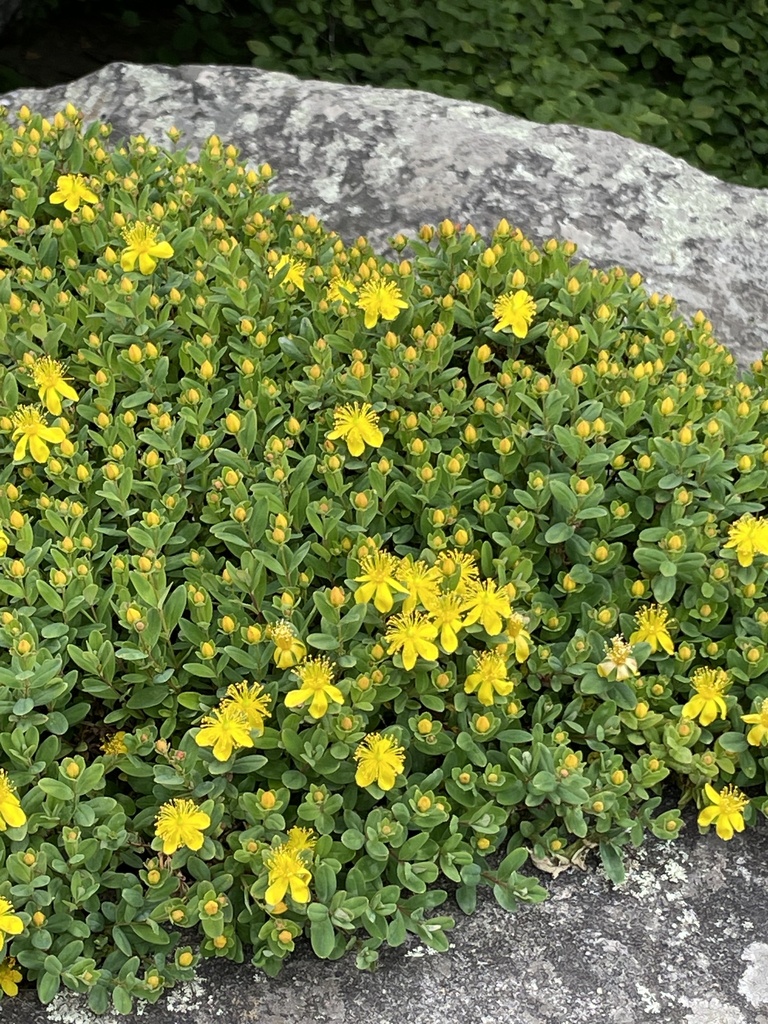
Buckley's St. Johnswort
Hypericum buckleyi
Overview
Buckley's St. Johnswort is a rare, cold-hardy herbaceous subshrub endemic to high-elevation rocky outcrops, balds, and open woodlands of the southern Appalachian Mountains. It forms dense, spreading mats of small, oval, blue-green evergreen foliage, dotted with bright yellow, five-petaled flowers from mid to late summer that attract native bees and butterflies. Adapted to harsh, well-drained mountain habitats, it is a species of conservation concern in parts of its native range due to habitat loss and trampling.
Care Guide
Watering
Buckley's St. Johnswort prefers consistently moist but well-drained soil, and is drought-tolerant once established; avoid overwatering or waterlogged conditions, which can cause root rot. Water deeply when the top 1-2 inches of soil feel dry, and reduce watering frequency in winter when the plant is semi-dormant. In its native rocky habitat, it receives frequent light rainfall, so mimicking this pattern with regular, small waterings is ideal for cultivated plants.
Light
Thrives in full sun to partial shade, with the most prolific flowering occurring in sites that receive at least 6 hours of direct sunlight daily. In hotter parts of its cultivation range, provide light afternoon shade to prevent foliage scorch and reduce moisture stress. Too much deep shade will cause sparse growth and reduced bloom production.
Soil
Requires sharply drained, low-fertility, acidic to neutral soil with a pH between 4.5 and 7.0, mimicking its native rocky, gravelly mountain soils. Heavy clay or rich, organic soils that retain moisture are unsuitable; amend planting sites with coarse sand, perlite, or crushed granite to improve drainage if needed. It can tolerate shallow, nutrient-poor soils where few other plants will grow.
Fertilizer
Buckley's St. Johnswort is adapted to low-nutrient soils and requires very little supplemental fertilization; overfertilization will cause leggy, weak growth and reduced flowering. If grown in poor soil, apply a thin layer of compost or a diluted, balanced slow-release fertilizer once in early spring at half the recommended strength. Avoid high-nitrogen fertilizers, as they promote excessive foliage growth at the expense of blooms.
Temperature
A cold-hardy plant adapted to high-elevation mountain climates, it tolerates winter temperatures as low as -20°F (-29°C), suitable for USDA hardiness zones 4 through 8. It prefers cool summer temperatures between 60°F and 75°F (15°C and 24°C), and may struggle in prolonged periods of heat above 90°F (32°C) without adequate shade and moisture. Winter snow cover is beneficial, but it can survive exposed winter conditions if planted in well-drained soil to prevent freeze-thaw root damage.
Pruning
Prune back any dead or damaged foliage in early spring before new growth emerges to encourage a dense, tidy habit. After flowering finishes in late summer, you can lightly shear the plant to remove spent blooms and prevent self-seeding if desired, though it is not an aggressive spreader. Avoid heavy pruning into old wood, as the plant may not regrow vigorously from bare, woody stems.
Propagation
Buckley's St. Johnswort is most easily propagated by division in early spring or late fall, when you can separate sections of its spreading root mat and replant them in prepared sites. It can also be grown from seed, which requires a 30-60 day cold stratification period to germinate, and should be sown on the surface of well-drained soil as light is required for germination. Softwood cuttings taken in early summer root readily when placed in a moist, sandy propagation medium under high humidity.
Humidity
Prefers moderate to high humidity levels between 40% and 70%, consistent with its native mountain habitat that receives regular rainfall and mist. It can tolerate short periods of low humidity, but prolonged dry air may cause leaf browning at the edges, especially when combined with high temperatures. When grown in containers indoors, mist occasionally or place the pot on a tray of pebbles filled with water to raise ambient humidity.
Repotting
If grown in containers, repot every 2-3 years in early spring, using a sharply draining potting mix formulated for rock garden or alpine plants. Choose a wide, shallow pot with ample drainage holes to accommodate its spreading, shallow root system and prevent waterlogging. Gently loosen the root ball when repotting, and avoid planting it deeper than it was growing in its previous container to prevent stem rot.
Uses & Symbolism
Buckley's St. Johnswort is primarily used in native plant rock gardens, alpine gardens, and green roof plantings, where its low-growing mat habit and bright summer flowers provide ground cover and ornamental value. It is also planted in pollinator gardens to support native bees, butterflies, and other beneficial insects. Due to its rarity in the wild, cultivated specimens are sometimes used in conservation and habitat restoration projects in its native Appalachian range.
Diseases & Pests
Buckley's St. Johnswort is relatively pest and disease resistant when grown in suitable conditions, but overwatering or poor drainage can lead to root rot, the most common issue affecting cultivated plants. It may occasionally be affected by rust, powdery mildew, or leaf spot in humid, poorly ventilated conditions, which can be treated by improving air circulation and removing affected foliage. Aphids and spider mites may infest stressed plants, particularly those grown indoors or in hot, dry conditions, and can be controlled with insecticidal soap or neem oil.
Related plants
Other plants you might like if you grow Buckley's St. Johnswort.