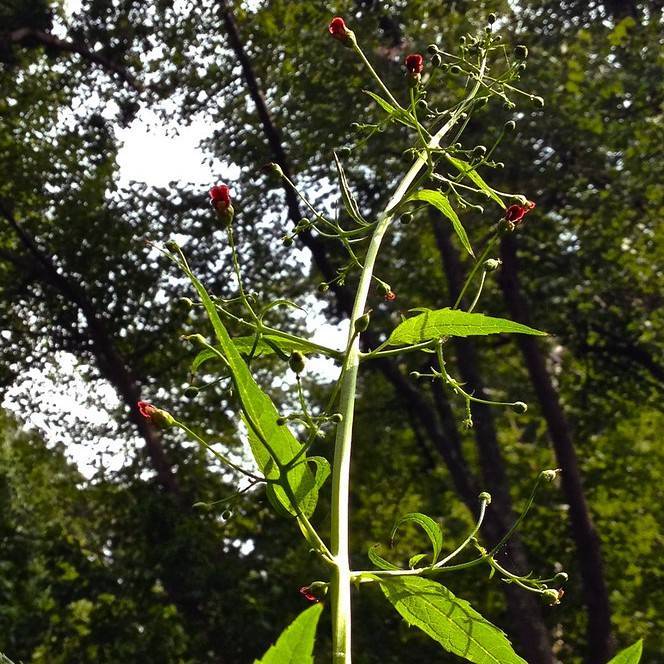
Common Figwort
Scrophularia nodosa
Overview
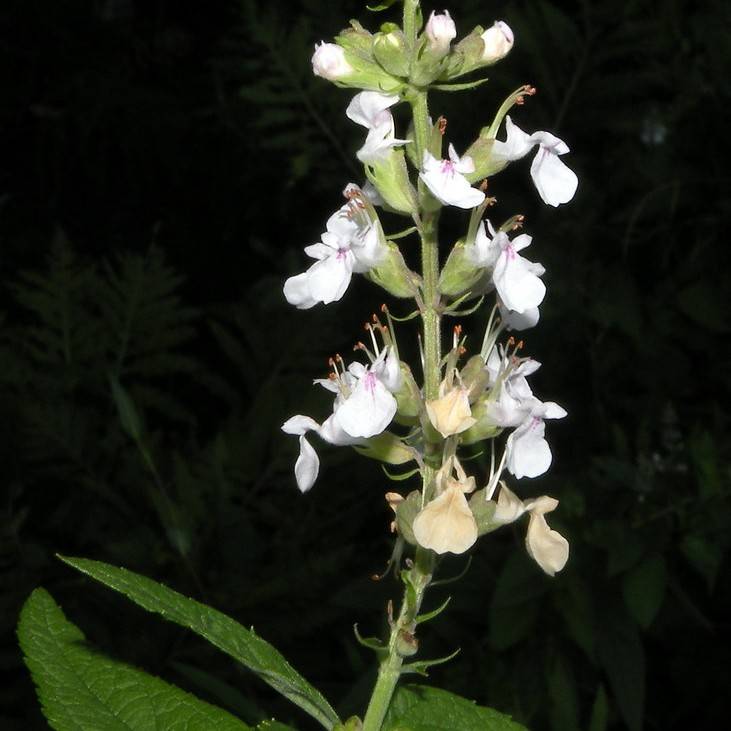
Common figwort is a clump-forming wildflower distinguished by its square, grooved stems, opposite ovate leaves with toothed margins, and tiny two-lipped maroon or brownish-purple blooms that appear in loose terminal clusters. It thrives in damp, partially shaded habitats such as woodland edges, stream banks, and hedgerows, where it supports a wide range of pollinators including bees, wasps, and specialized figwort weevils. The plant gets its common name from its historical association with treating scrofula, a form of tuberculosis affecting the lymph nodes, per the medieval doctrine of signatures.
Care Guide
Watering
Figwort prefers consistently moist, well-drained soil and should be watered regularly to prevent the root zone from drying out completely, especially during periods of extended drought or high heat. Avoid overwatering or allowing the plant to sit in standing water, as this can lead to root rot, particularly in heavy, poorly draining soils. In naturalistic garden settings, it often requires minimal supplemental watering once established, as long as it is planted in a site with access to consistent soil moisture.
Light
This species grows best in partial shade, such as the dappled light found under open tree canopies or along north-facing garden borders, where it receives 2-6 hours of direct sunlight daily. It can tolerate full sun if planted in consistently moist, cool soil, but prolonged exposure to intense, unfiltered sunlight may cause leaf scorch and stunted growth, especially in warmer climates. It will also grow in deep shade, though flowering will be reduced and stems may become leggy as the plant stretches toward available light.
Soil
Figwort adapts to a wide range of soil types, including loam, clay, and sandy soils, as long as the substrate is moisture-retentive and high in organic matter. It prefers a neutral to slightly alkaline pH between 6.5 and 7.5, though it can tolerate mildly acidic conditions as well. Prior to planting, amending the site with well-rotted compost or leaf mold will improve soil structure and moisture retention, supporting healthier, more vigorous growth.
Fertilizer
Figwort is not a heavy feeder and typically thrives without regular fertilization if planted in organically rich soil. A single application of balanced, slow-release granular fertilizer in early spring, as new growth emerges, is sufficient to support growth for the entire growing season in nutrient-poor soils. Over-fertilization can lead to excessive, leggy foliage growth at the expense of flowering and may make the plant more susceptible to pest infestations.
Temperature
Common figwort is cold-hardy in USDA zones 4 through 8, tolerating winter temperatures as low as -30°F (-34°C) when dormant. It prefers cool to moderate summer temperatures between 60-75°F (15-24°C) and may go dormant early if exposed to extended periods of temperatures above 90°F (32°C), especially if soil moisture is low. In regions with very hot summers, planting in partial shade will help protect the plant from heat stress and extend its growing season.
Pruning
Minimal pruning is required for figwort; spent flower stalks can be cut back to the base of the plant after blooming to prevent unwanted self-seeding, if desired. In late autumn or early spring, cut back all dead, browned foliage to the ground to make way for new growth and reduce overwintering sites for pests and disease pathogens. If the plant becomes overly large or leggy mid-season, it can be cut back by up to one-third to encourage bushier, more compact growth.
Propagation
Figwort is most easily propagated by seed, which can be sown directly outdoors in autumn or cold-stratified for 4-6 weeks and sown indoors in early spring, with germination typically occurring within 2-3 weeks. It can also be propagated by division in early spring or late autumn, when the plant is dormant; dig up the entire root clump, separate it into smaller sections with at least one growing bud and a portion of healthy roots, and replant immediately at the same depth as the original plant. Softwood cuttings taken from new growth in late spring can also root successfully if placed in moist, sterile potting mix under high humidity.
Humidity
Figwort tolerates a wide range of humidity levels, from moderate outdoor ambient humidity to the slightly drier conditions found in open, exposed sites. It does not require additional humidity in garden settings, as long as its soil moisture needs are met. Very high, prolonged humidity combined with poor air circulation may increase the risk of foliar fungal diseases, so ensure plants are spaced adequately to allow for airflow around the foliage.
Repotting
Figwort is rarely grown in containers, as it develops a deep, fibrous root system and prefers permanent garden placement. If grown in a pot, it should be repotted every 1-2 years in early spring, moving to a container one size larger with fresh, organically rich potting mix to accommodate root growth. Ensure the container has ample drainage holes to prevent waterlogging, and avoid planting figwort in pots smaller than 5 gallons to give its root system room to spread.
Uses & Symbolism
Historically, figwort has been used in traditional herbal medicine to treat skin conditions, swollen lymph nodes, and throat inflammations, typically prepared as a topical ointment, tincture, or tea. In ecological gardens, it is valued as a pollinator plant that supports a wide range of beneficial insects, including specialist pollinators that feed exclusively on its nectar and foliage. It is also a popular choice for native wildflower gardens, rain gardens, and damp, shaded border plantings where other flowering species may struggle to grow.
Diseases & Pests
Figwort is relatively resistant to most pests and diseases, though it may occasionally be affected by powdery mildew in conditions of high humidity and poor air circulation, which presents as a white, powdery coating on the upper surfaces of leaves. Aphids and figwort weevils may feed on the foliage and stems, causing minor leaf distortion and stunted growth, though infestations are rarely severe enough to harm established plants. Root rot can occur if the plant is grown in poorly draining, waterlogged soil, leading to yellowing foliage, wilting, and eventual death if the drainage issue is not corrected.
Related plants
Other plants you might like if you grow Common Figwort.