Butterbur
Petasites hybridus
Overview
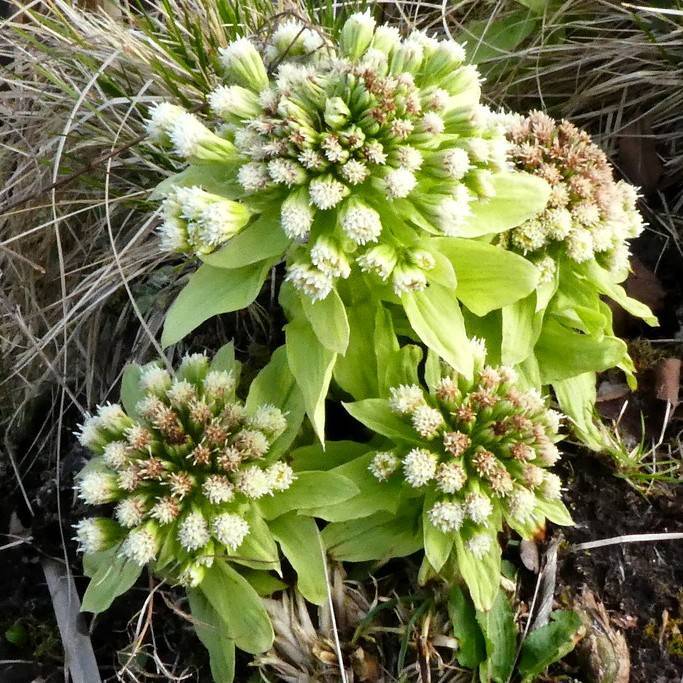
Butterbur is a herbaceous perennial named for its large, fuzzy, soft leaves historically used to wrap butter for transport in warm weather. It produces dense, spike-like clusters of pink or purple flowers in early spring before its foliage emerges, making it a distinctive early-season bloomer in damp, shaded habitats. Its aggressive rhizomatous root system allows it to spread rapidly, leading to classification as a noxious weed in parts of North America where it has escaped cultivation.
Care Guide
Watering
Butterbur thrives in consistently moist to wet soil, requiring regular watering to prevent the root zone from drying out completely; it tolerates temporary flooding and poorly drained conditions better than many other perennials. Reduce watering slightly in winter when the plant is dormant, but never allow the soil to become fully arid, as this can stress the shallow rhizome system.
Light
It grows best in partial to full shade, making it ideal for woodland gardens, shaded stream banks, and low-light damp areas where few other plants thrive. Too much direct sunlight can scorch its large, thin leaves, causing brown edges and stunted growth, so avoid planting it in locations that receive more than 2 hours of harsh midday sun per day.
Soil
Butterbur prefers rich, loamy, moisture-retentive soil with a neutral to slightly acidic pH between 6.0 and 7.0, though it adapts to heavier clay soils as long as moisture is consistent. It does not perform well in sandy, fast-draining soils, which dry out too quickly and fail to support its shallow, spreading root system.
Fertilizer
Apply a balanced, slow-release 10-10-10 fertilizer in early spring just as flower spikes emerge, to support healthy foliage development after blooming. Avoid over-fertilizing, as excess nitrogen can encourage overly aggressive rhizome spread and may lead to weaker foliage that is more prone to pest damage. No additional fertilization is needed for the rest of the growing season if planted in nutrient-rich soil.
Temperature
It is hardy in USDA zones 4 through 8, tolerating winter temperatures as low as -30°F (-34°C) when dormant. Summer temperatures above 85°F (29°C) may cause leaf scorch if the plant is exposed to direct sun, but it remains healthy in high heat as long as it is shaded and receives adequate moisture.
Pruning
Remove spent flower spikes after blooming to prevent unwanted self-seeding, which can contribute to its invasive spread in suitable climates. Cut back dead foliage in late fall or early winter to keep the planting area tidy and reduce overwintering sites for pests and fungal pathogens. To contain its spread, install root barriers 12 to 18 inches deep around planting areas to prevent rhizomes from spreading beyond desired bounds.
Propagation
Butterbur is most easily propagated by division in late fall or early spring, when the plant is dormant; dig up sections of the rhizome, ensuring each division has at least one growth bud, and replant immediately in moist, shaded soil. It can also be grown from seed, though seed-grown plants take 2 to 3 years to reach mature size and may not be true to the parent plant's characteristics. Note that propagating this plant is prohibited in some regions due to its invasive classification, so check local guidelines before attempting to grow or spread it.
Humidity
It tolerates a wide range of humidity levels, thriving in the moderate to high humidity of its native riparian and woodland habitats. It does not require additional humidity in average garden conditions, but indoor potted specimens may benefit from occasional misting if grown in dry, heated indoor spaces. It will show signs of stress, such as wilting or leaf curling, if exposed to very dry air for extended periods without adequate soil moisture.
Repotting
If grown in containers to control its spread, repot butterbur every 1 to 2 years in early spring before new growth emerges, dividing overcrowded rhizomes as needed to prevent the plant from becoming root-bound. Use a large, heavy pot with drainage holes, filled with a rich, moisture-retentive potting mix amended with compost to support its vigorous growth. Ensure the pot is large enough to accommodate 1 to 2 years of rhizome spread, as its fast-growing root system can quickly outgrow smaller containers.
Uses & Symbolism
Historically, butterbur leaves were used topically to treat skin irritations, wounds, and joint pain, while processed, alkaloid-free extracts are used in modern herbal medicine to reduce migraine frequency and alleviate hay fever symptoms. Its large, dense foliage makes it an effective ground cover for shaded, damp areas where erosion control is needed, though it requires containment to prevent unwanted spread. In some regions, its early spring flowers provide a valuable nectar source for emerging pollinators such as bumblebees.
Diseases & Pests
Butterbur is relatively pest-resistant, but it may be susceptible to aphid infestations on new growth and flower spikes, which can be controlled with insecticidal soap or a strong jet of water. Fungal diseases such as powdery mildew and leaf spot may occur in overly humid, poorly ventilated conditions, especially if foliage remains wet for extended periods; improve air circulation around plants and avoid overhead watering to reduce risk. Slugs and snails are attracted to its tender young foliage, particularly in damp, shaded locations, and can be controlled with bait, copper barriers, or handpicking.
Related plants
Other plants you might like if you grow Butterbur.