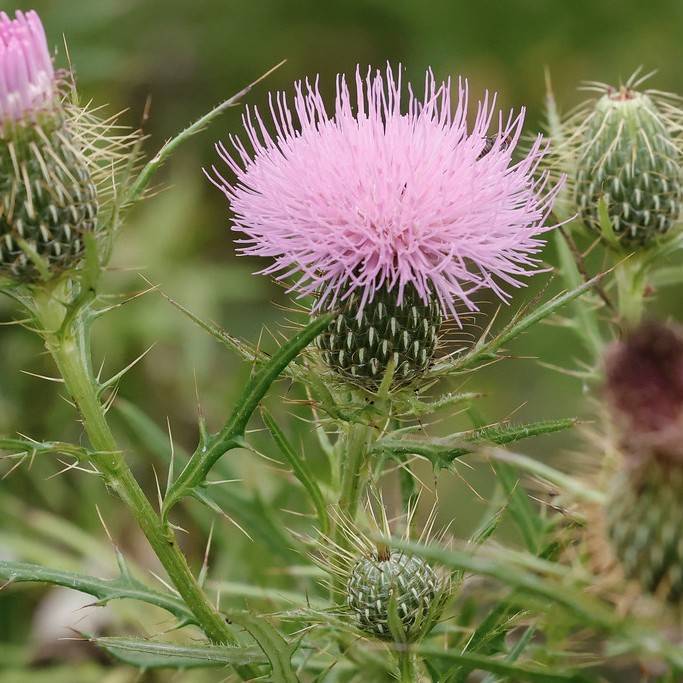
Field Thistle
Cirsium discolor
Overview
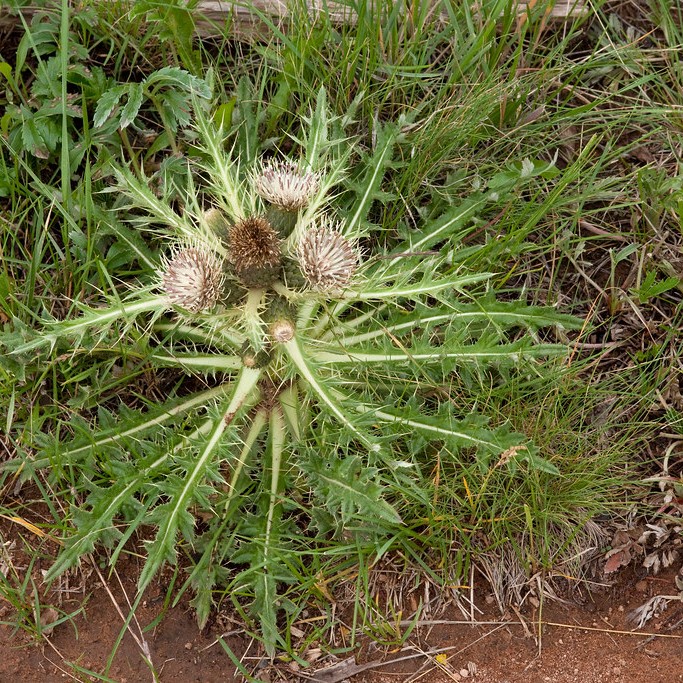
Field thistle is a herbaceous biennial that forms a low rosette of spiny, lobed leaves in its first growing season, then sends up a tall, branching flowering stalk in its second year. Its showy, rounded purple to pale lavender flower heads bloom from mid to late summer, attracting a wide range of beneficial pollinator species. Unlike non-native invasive thistles, this species is well-behaved in native plant gardens and supports local ecosystem health.
Care Guide
Watering
Field thistle is highly drought-tolerant once established, requiring only natural rainfall in most regions; supplemental watering is only needed during extended periods of severe drought to prevent excessive wilting. Overwatering or poorly drained conditions will quickly lead to root rot, so avoid frequent, shallow irrigation.
Light
This plant thrives in full sun, requiring at least 6 hours of direct, unfiltered sunlight daily to produce robust flowering stalks and abundant blooms. It can tolerate very light partial shade, but plants grown in shadier conditions will become leggy, produce fewer flowers, and may be more prone to flopping.
Soil
Field thistle adapts to a wide range of soil types, including sandy, loamy, and clay soils, as long as the site provides adequate drainage. It tolerates neutral to slightly acidic pH levels and even thrives in poor, low-nutrient soils where many other ornamental plants struggle to grow.
Fertilizer
Fertilization is rarely necessary for field thistle, as it is adapted to low-nutrient soils; excessive nitrogen will encourage overly lush, weak foliage growth that is prone to flopping and pest infestations. If grown in extremely depleted soil, a single application of balanced, slow-release fertilizer in early spring of its second year is sufficient to support flowering.
Temperature
This hardy species thrives in temperate North American climates, tolerating winter temperatures as low as -40°F (-40°C) in USDA hardiness zones 3 through 9. It tolerates high summer heat and humidity well, as long as its root zone is not sitting in saturated soil during warm weather.
Pruning
Pruning is minimal for field thistle; spent flower heads can be deadheaded after blooming if you wish to prevent self-seeding and limit spread in the garden. If you want to support local bird populations, leave dried seed heads standing through fall and winter, as goldfinches and other seed-eating birds feed heavily on its mature seeds.
Propagation
Field thistle is most easily propagated from seed, which can be sown directly outdoors in fall or stratified in the refrigerator for 30 days before sowing in early spring. It develops a deep taproot that does not tolerate disturbance well, so transplanting mature specimens is rarely successful.
Humidity
Field thistle adapts well to the natural humidity levels of its native range, tolerating both dry continental air and moderate summer humidity with no additional care. High humidity combined with poor air circulation and saturated soil can increase risk of fungal foliar diseases, so space plants appropriately to promote airflow.
Repotting
Field thistle is almost exclusively grown in outdoor garden settings rather than containers, so repotting is not a standard part of its care. If grown in a large pot for a native plant display, use a deep container to accommodate its long taproot, and only repot in its first year before the taproot becomes fully established.
Uses & Symbolism
Field thistle is a staple of native pollinator gardens, meadow plantings, and wildlife habitat restoration projects, as its nectar supports bees, monarch butterflies, and hummingbirds, while its seeds provide food for goldfinches and other songbirds. Historically, Indigenous peoples used parts of the plant for medicinal purposes, including treating skin irritations and digestive issues, and the young, peeled stems and roots are edible when cooked. It is also used in erosion control plantings for sloped sites, as its deep taproot stabilizes soil effectively.
Diseases & Pests
Field thistle is relatively pest and disease resistant, but may occasionally be affected by aphids, thistle caterpillars, and weevils, which can be controlled with insecticidal soap or by leaving natural predator populations intact to manage infestations. Fungal diseases such as powdery mildew and rust may occur in overly crowded, poorly ventilated growing conditions or during extended periods of cool, wet weather. Root rot is the most serious issue for this species, and is almost always caused by overwatering or planting in heavy, poorly drained soil.
Related plants
Other plants you might like if you grow Field Thistle.