Drummond's Thistle
Cirsium drummondii
Overview
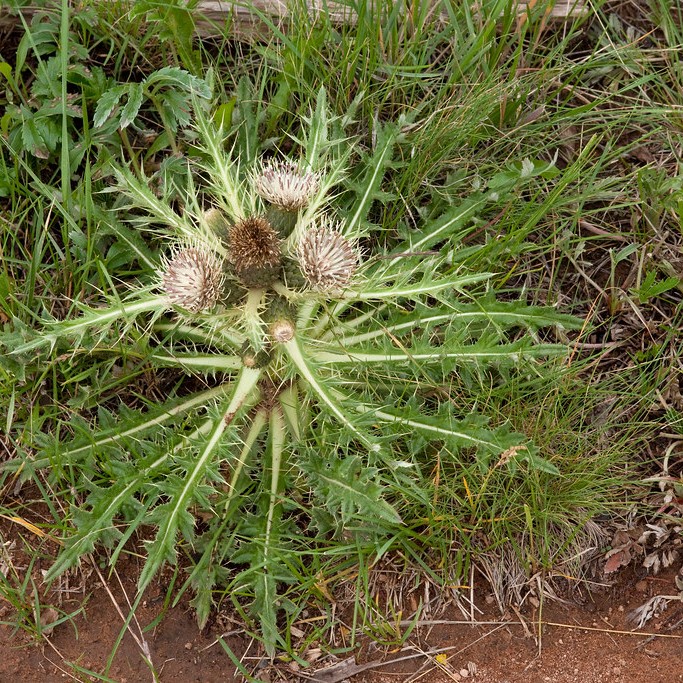
Drummond's Thistle is a herbaceous biennial that forms a low rosette of fuzzy, spiny leaves in its first year, before sending up an upright, branching flowering stalk in its second growing season. Its rounded, vibrant purple flower heads bloom from mid to late summer, attracting bumblebees, butterflies, and native solitary bees, while its seeds are a critical food source for goldfinches and other seed-eating birds. Adapted to dry, grasslands, meadows, and open woodland edges, it is well-suited to native pollinator gardens and xeriscaping projects, despite its sharp spines that deter browsing by deer and other large herbivores.
Care Guide
Watering
Drummond's Thistle is highly drought-tolerant once established, requiring only occasional deep watering during prolonged dry spells in its first growing season. Overwatering, especially in poorly drained soil, will cause root rot, so allow the top several inches of soil to dry out completely between waterings. Mature plants rarely need supplemental irrigation, thriving on natural rainfall in its native range.
Light
This species requires full sun, meaning a minimum of 6 hours of direct, unfiltered sunlight per day to produce robust growth and abundant flower heads. It will tolerate very light partial shade, but plants grown in shadier conditions will become leggy, produce fewer flowers, and be more susceptible to pest infestations. Avoid planting it in areas with consistent dappled or deep shade for best results.
Soil
Drummond's Thistle adapts to a wide range of soil types, including sandy, loamy, and clay soils, as long as the site has excellent drainage. It prefers neutral to slightly alkaline soil pH, but will tolerate mildly acidic conditions as well. It thrives in poor, low-nutrient soils that many other ornamental plants struggle in, making it ideal for marginal garden areas.
Fertilizer
This thistle does not require regular fertilization, as it is adapted to low-nutrient prairie soils, and excess nitrogen will cause overly lush, weak foliage growth and reduced flowering. If grown in extremely poor soil, a single light application of a balanced, slow-release fertilizer in early spring of its second year is sufficient to support flowering. Avoid high-nitrogen formulas entirely to prevent leggy growth.
Temperature
Drummond's Thistle is cold-hardy to USDA zones 3, tolerating winter temperatures as low as -40°F (-40°C) in its dormant rosette stage. It tolerates extreme summer heat up to 100°F (38°C) and dry conditions with no additional protection, as long as its soil remains well-drained. It is not suited to tropical or subtropical climates with high year-round humidity, which will promote fungal disease.
Pruning
Pruning is rarely required for Drummond's Thistle, though you can snip off spent flower heads after blooming if you wish to prevent self-seeding and spread in the garden. Wear thick gloves when handling the plant to avoid injury from its sharp spines on leaves and stems. If you want to support local bird populations, leave spent seed heads intact through fall and winter to provide a natural food source.
Propagation
Drummond's Thistle is most easily propagated from seed, which can be sown directly outdoors in fall or early spring, as the seeds require a 30-60 day cold stratification period to germinate reliably. Surface-sow the seeds, as they need light to germinate, and keep the soil lightly moist until seedlings emerge, which typically takes 14-21 days under ideal conditions. The plant will self-seed readily in suitable growing conditions, forming small colonies if seed heads are left to mature.
Humidity
This species prefers low to moderate humidity levels, typical of its native prairie and mountain habitats, and tolerates very dry air well. High humidity, especially combined with poor air circulation, increases the risk of powdery mildew and other fungal leaf diseases on the foliage. Ensure plants are spaced adequately to allow good air flow around leaves and stems to reduce moisture-related issues.
Repotting
Drummond's Thistle is rarely grown in containers, as it develops a long taproot that requires deep soil to thrive, making it well-suited to in-ground planting only. If started in a seed pot to transplant, move seedlings to their permanent location before they develop more than 4 true leaves, as older plants do not tolerate root disturbance well. Once planted in the ground, it should not be dug up and repotted, as this will usually kill the plant.
Uses & Symbolism
Drummond's Thistle is a popular addition to native pollinator gardens, xeriscapes, and prairie restoration projects, providing a critical nectar source for native bees and butterflies, and seed for birds. Its spiny foliage makes it an effective deer-resistant barrier plant along property edges or garden borders, and its bright purple flowers add unique textural and color interest to naturalistic plantings. Some Indigenous North American groups historically used parts of the plant for medicinal purposes, including treatments for digestive issues and skin irritations, though consumption is not recommended without expert guidance due to its spiny structures.
Diseases & Pests
Drummond's Thistle is relatively pest and disease resistant, though it can be affected by powdery mildew in humid, poorly ventilated conditions, which presents as a white, dusty coating on leaf surfaces. Aphids may occasionally colonize new growth, though they can be controlled with a strong spray of water or insecticidal soap, and rarely cause significant damage to healthy plants. Root rot is the most serious issue, which occurs when the plant is grown in poorly drained, waterlogged soil, so proper site selection is critical to avoid this fatal condition.
Related plants
Other plants you might like if you grow Drummond's Thistle.
%22%2F%3E%0A%20%20%20%20%20%20%3Ccircle%20cx%3D%22920%22%20cy%3D%22180%22%20r%3D%2290%22%20fill%3D%22%23cfe8d5%22%2F%3E%0A%20%20%20%20%20%20%3Cpath%20d%3D%22M600%20590c-90-180-215-255-310-280%200%20165%20118%20296%20270%20296h40z%22%20fill%3D%22%2379b88e%22%2F%3E%0A%20%20%20%20%20%20%3Cpath%20d%3D%22M600%20590c80-150%20198-212%20302-228-8%20142-123%20255-270%20255h-32z%22%20fill%3D%22%235c9f73%22%2F%3E%0A%20%20%20%20%20%20%3Cpath%20d%3D%22M600%20610V360%22%20stroke%3D%22%234f8c64%22%20stroke-width%3D%2218%22%20stroke-linecap%3D%22round%22%2F%3E%0A%20%20%20%20%20%20%3Ctext%20x%3D%22600%22%20y%3D%22700%22%20text-anchor%3D%22middle%22%20font-family%3D%22Arial%2C%20sans-serif%22%20font-size%3D%2244%22%20fill%3D%22%23365c45%22%3E%0A%20%20%20%20%20%20%20%20Plant%20image%20coming%20soon%0A%20%20%20%20%20%20%3C%2Ftext%3E%0A%20%20%20%20%3C%2Fsvg%3E%0A%20%20)