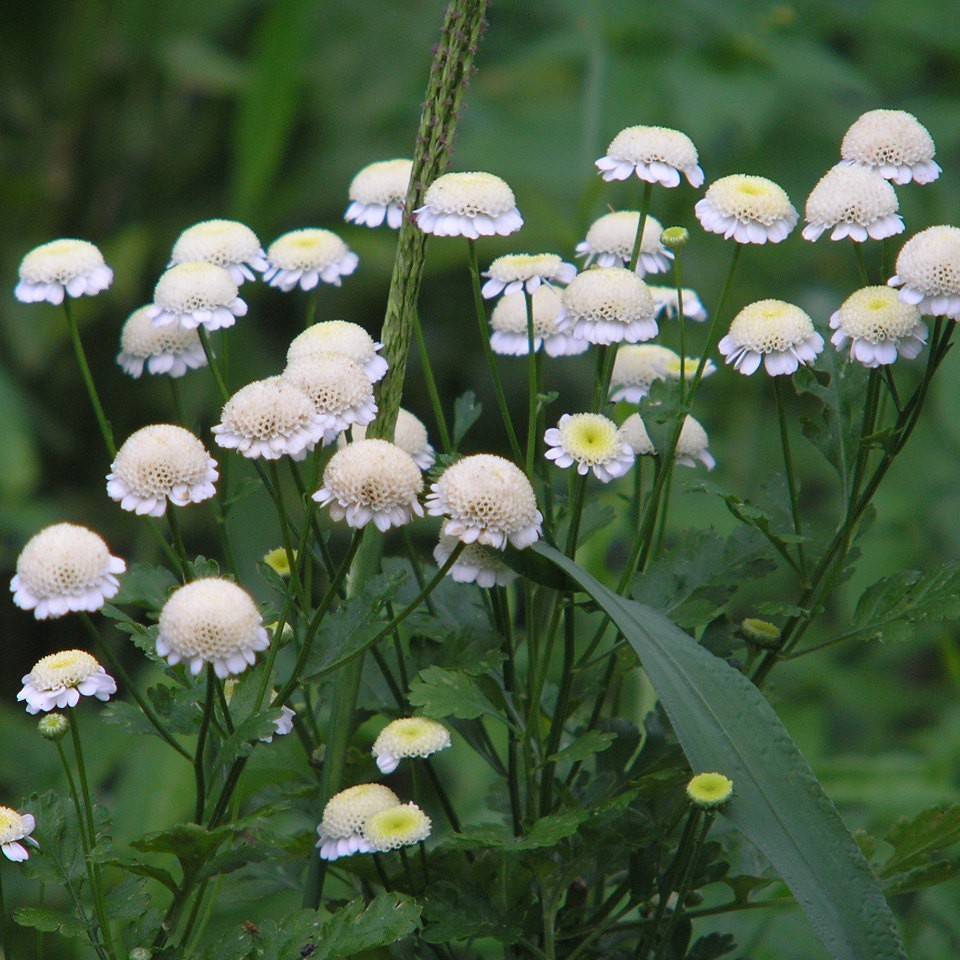
Feverfew
Tanacetum parthenium
Overview
Feverfew is a bushy, herbaceous perennial with aromatic, lobed green foliage and clusters of small, white, daisy-like flowers with yellow centers that bloom throughout summer. It has a long history of use in folk medicine, with modern research supporting its potential to reduce the frequency and severity of migraine headaches when consumed regularly. It naturalizes readily in temperate climates, often spreading in garden beds, roadsides, and disturbed areas.
Care Guide
Watering
Water newly planted feverfew regularly to keep soil consistently moist but not waterlogged for the first growing season. Once established, it is drought-tolerant, requiring watering only during extended periods of dry, hot weather, as overwatering can cause root rot. Avoid overhead watering to reduce fungal disease risk, directing water at the base of the plant instead.
Light
Feverfew thrives in full sun, requiring a minimum of 6 hours of direct sunlight daily to produce dense foliage and abundant blooms. It can tolerate partial shade, especially in regions with extremely hot summer afternoons, but shaded plants may become leggy and produce fewer flowers. Indoor-grown specimens should be placed in a south-facing window or under grow lights to meet light requirements.
Soil
This adaptable herb grows best in well-drained, loamy or sandy soil with a neutral to slightly alkaline pH between 6.0 and 7.5. It tolerates poor, rocky, or low-nutrient soils well, as long as drainage is adequate, as heavy clay soils that retain moisture will cause root rot. Amending heavy soils with sand or compost before planting will improve drainage and support healthy growth.
Fertilizer
Feverfew has low nutrient requirements and typically thrives without regular fertilization, especially when planted in average garden soil. Over-fertilization will lead to excessive, leggy foliage growth at the expense of flower production, so fertilize only once per year in early spring with a balanced, slow-release 10-10-10 fertilizer at half the recommended rate. Potted feverfew can be given a diluted liquid balanced fertilizer once every 4 to 6 weeks during the growing season if growth appears stunted.
Temperature
Feverfew is hardy in USDA zones 5 to 9, tolerating winter temperatures as low as -20°F (-29°C) when established. It prefers moderate growing temperatures between 60°F and 75°F (15°C to 24°C), and will die back to the ground in winter in colder climates, re-emerging in spring. High summer temperatures above 90°F (32°C) may cause wilting, so provide afternoon shade in very hot regions to prevent stress.
Pruning
Deadhead spent flower clusters regularly throughout the blooming season to encourage continuous flowering and prevent aggressive self-seeding that can lead to the plant spreading beyond desired areas. Cut back the entire plant to 2 to 3 inches above the soil line after the first hard frost in fall to tidy the garden bed and promote healthy new growth the following spring. If plants become leggy mid-season, trim back up to one-third of their height to encourage bushier, more compact growth.
Propagation
Feverfew is most easily propagated by seed, sown directly outdoors in early spring after the last frost, or started indoors 6 to 8 weeks before the last expected frost date, with seeds requiring light to germinate so they should be pressed gently into the soil surface rather than covered. It can also be propagated by root division in early spring or fall, digging up mature clumps, separating them into smaller sections with healthy roots and foliage, and replanting immediately. Softwood cuttings taken from new growth in late spring or early summer will root readily in moist, well-drained potting mix when kept in a warm, humid environment.
Humidity
Feverfew tolerates a wide range of humidity levels, thriving in the moderate humidity typical of temperate outdoor environments, between 40% and 60% relative humidity. It does not require high humidity, and overly humid, stagnant air can increase the risk of powdery mildew and other fungal diseases, so ensure plants are spaced adequately for good air circulation. Indoor-grown feverfew does not need additional humidity, as average household humidity levels are sufficient for healthy growth.
Repotting
Potted feverfew should be repotted every 1 to 2 years in early spring, before new growth emerges, to refresh the soil and prevent root binding. Choose a pot that is 1 to 2 inches larger in diameter than the current container, with drainage holes to prevent waterlogging, and use a well-drained, sandy potting mix amended with a small amount of compost. If the plant has outgrown its space, you can divide the root ball during repotting to create new, smaller specimens instead of moving it to a larger pot.
Uses & Symbolism
Feverfew is most well-known for its medicinal uses, with dried leaves and flowers commonly consumed in capsule, tea, or tincture form to reduce migraine frequency, ease inflammation, and relieve mild pain. It is also grown as an ornamental garden plant, its dainty white flowers adding airy texture to cottage gardens, border edges, and wildflower meadows, and the blooms make long-lasting cut flowers for arrangements. The aromatic foliage repels many common garden pests, so it is often planted as a companion plant near vegetables and roses to deter aphids, whiteflies, and beetles.
Diseases & Pests
Feverfew is relatively pest and disease resistant, but can be affected by aphids, spider mites, and whiteflies, which suck sap from foliage, causing yellowing and stunted growth; these can be controlled with insecticidal soap or neem oil applications. Fungal diseases such as powdery mildew and root rot may occur in overly wet, poorly drained conditions or when plants are crowded with poor air circulation, so ensure proper spacing and avoid overwatering to prevent these issues. Leaf spot can also develop in humid conditions, causing brown lesions on foliage; infected leaves should be removed promptly, and copper fungicide can be applied to severe cases to stop spread.
Related plants
Other plants you might like if you grow Feverfew.