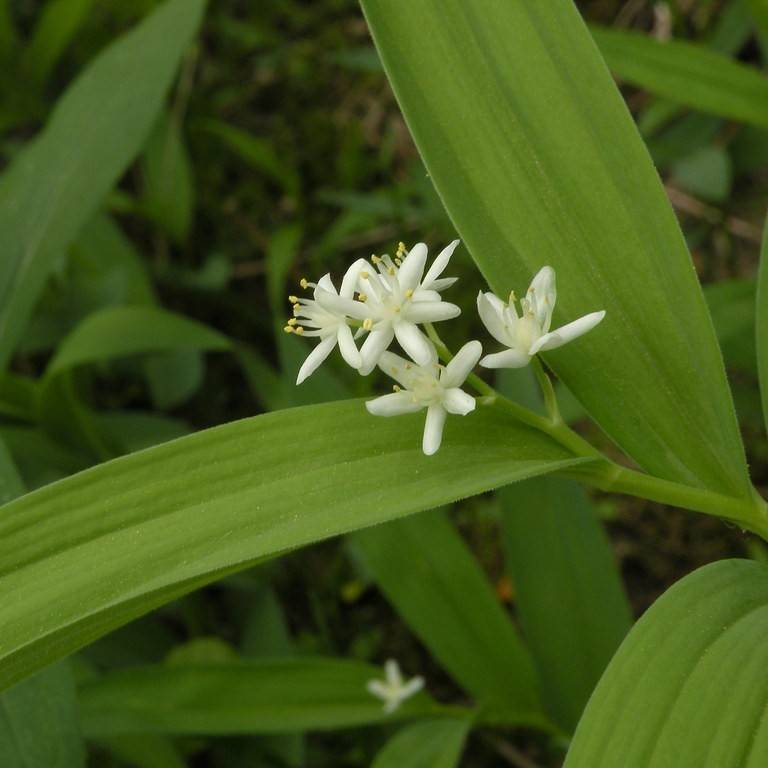
False Solomon's Seal
Maianthemum racemosum
Overview
False Solomon's seal is a clumping woodland native valued for its graceful, arching foliage and low-maintenance nature, thriving in dappled shade under tree canopies. In mid to late spring, it produces clusters of tiny, fragrant creamy-white flowers at the tips of stems, followed by glossy red berries in late summer that persist into fall. Unlike true Solomon's seal (Polygonatum species), which bears flowers along the underside of stems, false Solomon's seal blooms only at stem terminals, making identification simple.
Care Guide
Watering
Prefers consistently moist, well-drained soil, mimicking its native woodland habitat; water regularly during dry spells to prevent soil from drying out completely. Reduce watering frequency in fall and winter once foliage dies back, only providing enough moisture to keep the root zone from becoming bone dry. Avoid overwatering, as saturated soil can cause rhizome rot in dormant plants.
Light
Thrives in partial to full shade, making it ideal for shaded garden beds, woodland gardens, or north-facing landscapes. It can tolerate small amounts of dappled morning sun, but harsh direct afternoon sun will scorch its delicate leaves and stunt growth. For indoor cultivation, place in a bright spot with indirect light, avoiding unfiltered southern exposure.
Soil
Requires rich, loamy, well-drained soil with high organic matter content, similar to the forest floor it naturally grows in. A slightly acidic to neutral pH range of 5.5 to 7.0 is optimal for healthy root development and nutrient uptake. Amend heavy clay or sandy soils with compost, leaf mold, or well-rotted manure before planting to improve structure and fertility.
Fertilizer
Feed lightly in early spring just as new growth emerges, using a balanced, slow-release organic fertilizer or a top-dressing of compost or leaf mold. Avoid high-nitrogen synthetic fertilizers, which can encourage excessive weak foliage growth at the expense of flowers and berries. No additional fertilization is needed during the growing season if the soil is already rich in organic matter.
Temperature
Adaptable to USDA hardiness zones 3 through 9, tolerating winter temperatures as low as -40°F (-40°C) when dormant. It prefers cool, mild growing season temperatures between 60 and 75°F (15 to 24°C), and will go dormant naturally in fall as temperatures drop. Extended periods of heat above 85°F (29°C) can cause foliage to wilt, so provide extra shade and moisture during heatwaves.
Pruning
Pruning is minimal: simply cut back dead, yellowed foliage to the ground in late fall or early winter after the plant goes dormant. Remove any damaged or diseased stems as soon as they appear throughout the growing season to prevent the spread of pathogens. Avoid pruning healthy green stems during the growing season, as this will remove the current year's flowers and berries.
Propagation
Easiest to propagate by dividing mature clumps in early spring before new growth emerges, or in fall after foliage dies back; carefully dig up rhizomes, separate into sections with at least one growth bud, and replant at the same depth. It can also be grown from fresh seed sown in fall, but seed-grown plants take 3 to 4 years to reach flowering maturity. Rhizome cuttings have a near 100% success rate when planted in moist, rich soil in shaded conditions.
Humidity
Prefers moderate to high humidity levels between 50 and 70%, typical of its native woodland environment. Dry indoor air can cause leaf browning at the edges, so mist regularly or place a pebble tray with water beneath indoor specimens to raise ambient humidity. Outdoors, it will naturally receive adequate humidity in shaded, mulched garden beds with consistent soil moisture.
Repotting
If grown in containers, repot every 2 to 3 years in early spring before new growth emerges, using a rich, peat-free potting mix with added perlite for drainage. Choose a wide, shallow pot to accommodate the spreading rhizome root system, as false Solomon's seal grows horizontally rather than deeply. Avoid repotting during the active growing season, as this can damage delicate new shoots and disrupt flowering.
Uses & Symbolism
Widely used in shaded native plant gardens, woodland landscapes, and pollinator gardens, where its spring flowers support native bees and other beneficial insects, and its berries feed songbirds and small mammals. Young shoots are edible raw or cooked, with a flavor similar to asparagus, and ripe berries have a mild, sweet taste suitable for fresh eating or jams, though unripe berries can cause mild digestive upset. It is also a popular cut foliage for floral arrangements, with arching stems that add texture and grace to both fresh and dried bouquets.
Diseases & Pests
Generally pest and disease resistant, but can be susceptible to fungal leaf spots and powdery mildew in poorly ventilated, overly humid conditions, especially if foliage stays wet for extended periods. Slugs and snails may feed on young, tender emerging shoots in early spring, so use organic slug bait, copper barriers, or hand-pick to prevent damage. Root rot can occur in poorly drained, waterlogged soil, so ensure planting sites or containers have ample drainage to avoid this issue.
Related plants
Other plants you might like if you grow False Solomon's Seal.